• Zur Metanavigation
  • Zur Hauptnavigation
  • Zur Suche
  • Zum Inhalt
  • Zur Subnavigation
  • Zum Seitenfuß
  • University of Hamburg
  • For journalists
  • Staff Service Portal0
  • STiNE
https://www.kus.uni-hamburg.de/aktuelles.json?recentnews=true
  • Institutions and target groups
    • Einrichtungen
      • Faculties

        • Faculty of Law
        • Faculty of Business, Economics and Social Sciences
        • Faculty of Medicine
        • Faculty of Education
        • Faculty of Humanities
        • Faculty of Mathematics, Informatics and Natural Sciences
        • Faculty of Psychology and Human Movement Science
        • University of Hamburg Business School
      • Services

        • Study Information Net STiNE
        • Surfmail
        • Exchange
        • Staff Service Portal
        • Learning Platforms
        • Katalogplus – Catalogue of Hamburg Libraries
        • SharePoint
      • Student facilities and services

        • Campus Center
        • Career Center
        • PIASTA
        • AStA (student council)
        • University Sports
        • University Music
        • Family Office
        • University Language Center
        • General Languages
        • Office of Affairs for Students with Disabilities or Chronic Diseases
        • Departmental libraries
        • Healthy Campus
      • Further facilities and services

        • The Cluster of Excellence CLICCS
        • The Cluster of Excellence CUI
        • The Cluster of Excellence Quantum Universe
        • The Cluster of Excellence Understanding Written Artefacts
        • Hamburg Research Academy
        • Pier Plus
        • Hamburg Center for University Teaching and Learning (HUL)
        • Hub for Crossdisciplinary Learning (HCL)
        • CEN
        • Museums and collections
        • University Archives (in German)
        • Regional Computing Center (RRZ)
        • University Administration
        • Knowledge Exchange Agency
        • The Unikontor Shop (in German)
    • Target groups

      • Prospective students
      • Students
      • International prospective students
      • Young researchers
      • Researchers
      • Instructors
      • Staff
      • Prospective continuing education students
      • Alumni
      • Journalists
      • Refugees (in German only)
    Close
  • /sitemap.json
University of Hamburg - to research, to teach, to educate and form, to homepage

CSMC

CSMCCentre for the Study of Manuscript Cultures
  • About
    • People
    • News
    • Ethics
    • Equity & Diversity
    • Sustainability
    • Logbook: The CSMC Blog
    • Contact & Newsletter
    • Vacant Positions
    • Intranet
  • Research
    • Concepts & Methods Units
    • Project Groups
    • Individual Research Projects
    • Working Groups
    • Affiliated Projects
    • Fellowships
    • Research Events
    • UWA I (2019–2025)
    • SFB (2012–2020)
  • Core Units
    • Laboratories
    • Graduate School
    • Cultural Heritage
    • Library
  • Collaboration
    • with Research Partners
    • with Archives, Libraries, and Museums
    • with Artists
    • with Companies
    • with Schools
    • within the HALM and PIER Networks
  • Publications
    • manuscript cultures
    • Studies in Manuscript Cultures
    • Occasional Papers
    • Software
    • Research Data and Information Systems
    • Written Artefact Profiling Guide
    • Artefact of the Month
    • Mesopotamian Bulletins
    • Videos
    • More Publications

Photo: UHH/Denstorf

  1. UHH
  2. CSMC
  3. Publications
  4. Mesopotamian Bulletins

Mesopotamian Bulletins

The Assyriologist Cécile Michel is Director of Research at the CNRS in the Archaeology and Sciences of Antiquity Laboratory (Nanterre), and serves as a professor at the University of Hamburg (Germany). She was president of the International Association for Assyriology (2014-2018). A decipherer of cuneiform tablets from Upper Mesopotamia and Anatolia that date from the second millennium BCE, she conducts research on ancient economies, commerce and society, the history of women and gender, everyday life and material culture, historical chronology and geography, education, and the practice of writing and arithmetic calculation. In addition to publishing numerous scientific works and articles, she is highly committed to the transmission of knowledge to young (and not so young) people. (Le tour du monde des écritures, Les écritures cunéiformes et leur déchiffrement, Histoire de déchiffrements, Les débuts de l’histoire; and a film: L’écriture cunéiforme, écrire et compter.)

About this blog

Cuneiform scribe (Drawing: Xavier Faivre)

This blog came into being as a wake-up call to raise awareness of the importance of safeguarding cultural heritage in Iraq and Syria. With the destruction of ancient sites, monuments and museums that shelter the relics of ancient Mesopotamia, it is in fact our own past which is irretrievably lost. In order to help us to better understand what links us to the ancient Near East, this blog will present the discoveries and advances made through research in the field of Assyriology and Near Eastern Archaeology. Assyriology, a historical discipline based on the decipherment of cuneiform texts (i.e. in the shape of a wedge), makes it possible to address a wide range of topics, including society, law, literature, technical issues, economics, handicrafts, mathematics, astronomy, medicine, art, and so on.

Welcome to the blog that aims to help you discover three thousand years of the Near East’s history — a history with multiple, highly complex roots.
The French original articles of the blog can be found here.

14 June 2026|Mesopotamian Bulletins

Can Artificial Intelligence Decipher Cuneiform Tablets?

img 02

Photo: The Trustees of the British Museum CC BY-BC-SA 4.0 (BM 108569)

A very large number of cuneiform texts still need to be deciphered, edited, and analysed in order to reconstruct the history of the ancient Near East and Middle East. Will AI replace Assyriologists in a few years? The question is coming up more and more.
9 May 2026|Mesopotamian Bulletins

Going Back to the Origins of the World to Heal a Tooth Abscess

img 03

Photo: R. Campbell Thomson

The Mesopotamians regularly questioned the origin of existence, whether it was the creation of human beings, the genesis of the universe, or the origins of supernatural creatures.
19 April 2026|Mesopotamian Bulletins

Shalimma, a Venturesome Woman

img 02

Photo: Cécile Michel

Shalimma lived 4,000 years ago in Assur, in northern Iraq, south of what is now Mosul. She belonged to a family of Assyrian merchants engaged in long-distance trade.
15 February 2026|Mesopotamian Bulletins

They Were Mistaken!

img 02

Photo: Bibliothèque Nationale de France

In the 19th century, alongside the first decipherers of cuneiform scripts, many scholars dreamed of making their mark on history by uncovering the secrets hidden in these ‘nail-shaped’ drawings. Some of them got stuck in dead ends, while others had no qualms about letting their imagination run wild.
17 January 2026|Mesopotamian Bulletins

The Zodiac: An Inheritance of Mesopotamian Astrology

img 03

Photo: Musée du Louvre

On 17 February, the Chinese zodiac will enter the Year of the Fire Horse. The Horse is the seventh of twelve Zodiac signs in China. The Fire Horse comes around every sixty years and is accompanied by a kind of astrological curse that is said to affect the births of girls. But what about our Zodiac?
19 October 2025|Mesopotamian Bulletins

The Power of Stones

img 02

Photo: The Trustees of the British Museum

Lithotherapy – one of today’s forms of unconventional medicine – rests on the belief that crystals emit beneficial energy. This power attributed to stones goes back to the earliest antiquity. In the ancient Near East already, stones were credited with magical properties.
12 September 2025|Mesopotamian Bulletins

Informal Education Tailored to the Needs of Trade

img 02

Photo: Cécile Michel

Thanks to the thousands of practice tablets discovered at Nippur, a major cultural centre, learning to read and write Sumerian, as well as mathematics, in the south of Mesopotamia in the early second millennium BCE has been reconstructed in detail.
6 August 2025|Mesopotamian Bulletins

Etana and the Creation of Kingship

img 03

Photo: Musée du Louvre

While many heads of state around the world cling to their office by any means – changing their country’s constitution at the risk of erasing democracy – power in other countries is passed on to the sons who succeed their father.
22 June 2025|Mesopotamian Bulletins

Jules Oppert was born 200 years ago

2025-06-22

Photo: Carl Reutlinger

Jules Oppert, one of the four scholars who, in 1857, deciphered the cuneiform characters transcribing the Akkadian language, was born on 9 July 1825.
25 April 2025|Mesopotamian Bulletins

The funeral of Gilgamesh, the deified hero

2025-04-25

Photo: Cuneiform monographs 19, Styx Publications, 2000

Pope Francis has died, and the aura surrounding a pope is so great that the whole world will follow his funeral, even though his last wish was for it to be as simple as possible. He may be canonised in a few decades, like some of his predecessors:
26 February 2025|Mesopotamian Bulletins

Every day has its own activity

2025-02-26

Photo: Vorderasiatisches Museum, Berlin

The calendars of the inhabitants of ancient Mesopotamia list the days (hemerologies) or months (menologies) that are favourable or unfavourable for undertaking certain activities, starting with ritual acts.
22 December 2024|Mesopotamian Bulletins

Syria’s archaeological sites between life and death

2024-12-22

Photo: Herbert Frank CC BY 2.0

On 8 December 2024, the Assad dictatorship fell. After almost fourteen years of civil war and nearly 500,000 deaths, what is left of Syria and its archaeological remains, from Palmyra to Ebla and Idlib?
21 November 2024|Mesopotamian Bulletins

Wine, a drink for the elite in Mesopotamia

2024-11-21

Photo: Kültepe Archaeological Mission

In a Roman tomb dating from the 1st century CE, archaeologists discovered a glass urn containing what is believed to be the oldest preserved wine. But winemaking has been known to humans for much longer, as Assyriologist Cécile Michel explains in this post on the Brèves Mésopotamiennes blog.
9 October 2024|Mesopotamian Bulletins

Tomography reveals the contents of letters sealed 4,000 years ago

2024-10-09

Photo: UWA/CSMC

Thanks to a high-precision instrument that is easy to transport, Assyriologist Cécile Michel has been able to decipher letters enclosed in clay envelopes preserved in Turkey for several millennia.
25 July 2024|Mesopotamian Bulletins

At Sîn-nada and Nuttuptum in Ur in 1850 BCE

2024-07-25

Photo: Maya Czupo

Since 2015, archaeologists have been returning to the site of Tell Muqayyar, in southern Iraq, which corresponds to ancient Ur. It was to the south of the city that a German team recently unearthed the house of Sîn-nada and Nuttuptum, providing an insight into the private life of a wealthy couple in this city in the 19th century BCE.
23 June 2024|Mesopotamian Bulletins

A substitute king to deflect divine wrath

2024-06-23

Photo: The Trustees of the British Museum

On the evening of the European elections in June 2024, the President of the French Republic decided to dissolve the National Assembly, leaving the country in a state of stupefaction. He could just as easily have resigned, which would no doubt have had a similar effect. In Assyria, the king sometimes chose to disappear, but it was to save his life, and his disappearance was temporary.
27 May 2024|Mesopotamian Bulletins

Maps drawn on clay

2024-05-27

Photo: Augusta McMahon

In this new post, Assyriologist Cécile Michel talks about the large-scale plans and maps made by the ancient Mesopotamians, including the oldest known map of the world, drawn in clay.
24 April 2024|Mesopotamian Bulletins

The Hittite king prayed in Hurrian

2024-04-24

Photo: C. Michel

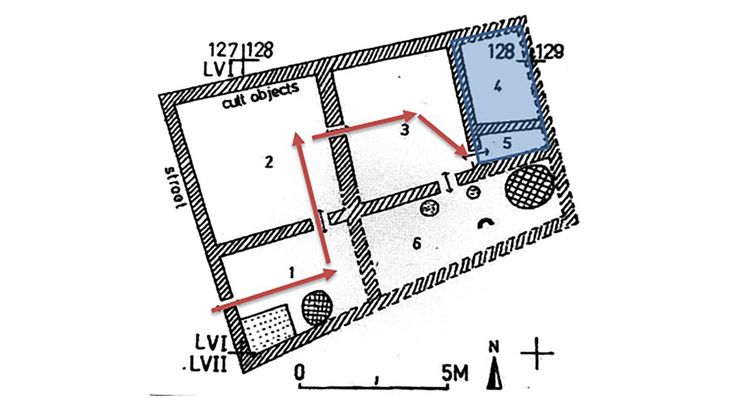
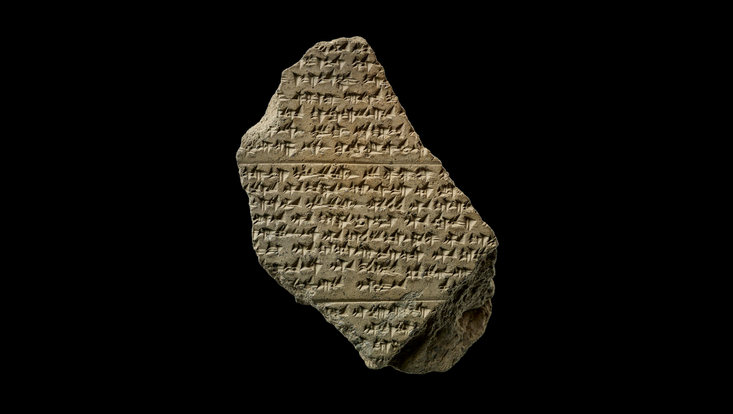
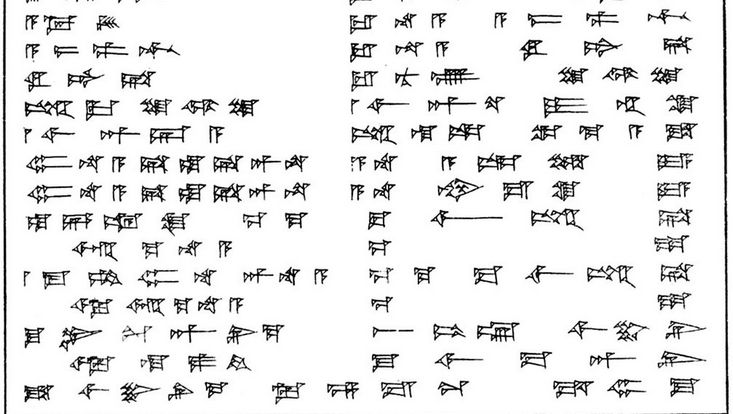
In this new post, Assyriologist Cécile Michel tells us about a 3,300-year-old bilingual cuneiform tablet recently discovered in Anatolia. The first lines, in Hittite, describe a foreign invasion of the empire, while the following lines, in Hurrian, are a prayer to the God of Storms.
24 March 2024|Mesopotamian Bulletins

Architectural plans on clay

2024-03-24

Photo: 2011 Musée du Louvre / Philippe Fuzeau

Architects have always drawn up plans, graphic representations of the buildings they were commissioned to construct. Mesopotamian architects left plans drawn on clay tablets. These documents constitute a unique corpus that bears witness to the working methods of this profession, which was at the origin of buildings that have now disappeared.
18 February 2024|Mesopotamian Bulletins

The Louvre looks inside sealed clay envelopes

2024-02-18

Photo: C. Michel

A tomographic scanner, specially designed to provide a high-definition view of cuneiform tablets enclosed in their clay envelopes, has completed its first mission at the Louvre Museum. The adventure of this novel instrument began during a retreat at the German centre of excellence, Understanding Written Artefact, in Hamburg.
13 January 2024|Mesopotamian Bulletins

The oldest peace treaties

2024-01-13

Photo: 2011 RMN-Grand Palais (Musée du Louvre) / Franck Raux

Although wars and conflicts date back to the origins of humanity, the oldest peace treaties date back to the 3rd millennium BCE. Assyriologist Cécile Michel invites us to discover these cuneiform texts in this new post on the blog Brèves Mésopotamiennes.
29 November 2023|Mesopotamian Bulletins

A personal seal to authenticate and protect one’s assets

2023-11-29

Photo: C. Michel

A seal is an object on which figures are engraved in negative, and whose imprint is affixed to documents or objects to authenticate and seal them inviolably. Seals have existed since ancient times, and in Mesopotamia they were applied to fresh clay to leave their imprint.
27 October 2023|Mesopotamian Bulletins

Discovery in Anatolia of a new language written in cuneiform

2023-10-27

Photo: C. Michel

Cuneiform writing, invented by the Sumerians in the second half of the fourth millennium BCE, was used to record a dozen different languages. The archaeological team excavating the site of Boğazköy in Central Anatolia, the ancient Hattusha capital of the Hittites, has just unearthed a cuneiform tablet with text in a hitherto unknown language.
13 September 2023|Mesopotamian Bulletins

How did the ancient Mesopotamians archive their cuneiform tablets?

2023-09-13

Photo: C. Michel

In the digital age, our archives are increasingly compact and ephemeral: we have partly replaced paper with files on the computer, organised in folders, which we sometimes keep backed up on external hard drives. Paper documents and letters are nevertheless still part of our environment.
27 June 2023|Mesopotamian Bulletins

False testimony: the role of witnesses in Mesopotamia

False Testimony

Photo: C. Michel

Cuneiform documents from Mesopotamia suggest that witnesses were an essential part of the legal system from the earliest times, and that perjury was punishable by death. Find out more in this new blog post by Assyriologist Cécile Michel.
24 April 2023|Mesopotamian Bulletins

The Hittite holy city of Zippalanda finally identified

Zippalanda

Photo: C. Michel

Historians who decipher cuneiform texts regularly come across the names of ancient cities that they are unable to locate on a map. They likewise have difficulty identifying the ancient names of many Near and Middle Eastern sites excavated by archaeologists. Discovering the name by which an archaeological site was known in Antiquity provides a better understanding of its history, its evolution and even its abandonment.
26 February 2023|Mesopotamian Bulletins

Earthquakes damage archaeological sites

Earthquakes

Photo: C. Michel

In the two earthquakes that devastated south-east Turkey and north-west Syria on 6 February 2023, many of the inhabitants of high-rises built haphazardly by unscrupulous property developers were buried alive. Entire families perished under the rubble, while others lost everything. In addition to the terrible human toll, archaeological sites and historical buildings were badly damaged.
22 January 2023|Mesopotamian Bulletins

Agatha Christie, a novelist on the digs

Agatha Christie

Photo: C. Michel

In the 1930s, Agatha Christie accompanied her husband to several archaeological sites in Iraq and Syria. These trips were to inspire the novelist, as Assyriologist Cécile Michel recounts in this post on her blog Brèves Mésopotamiennes, now available on CNRS le Journal.
30 November 2022|Mesopotamian Bulletins

The Assyrian hieroglyphs

The Assyrian hieroglyphs

Photo: C. Michel

This year we are celebrating the 200th anniversary of the deciphering of the Egyptian hieroglyphic script by Jean-François Champollion. The figurative nature of this writing has always been a source of fascination. In ancient times, it already had a significant influence on the Assyrian rulers who invented their own hieroglyphic system.
29 October 2022|Mesopotamian Bulletins

Reading and writing, a matter for men... and women in Mesopotamia

Reading and writing, a matter for men... and women in Mesopotamia

Photo: C. Michel

The history of ancient Mesopotamia is based on more than a million cuneiform texts unearthed to date. Until the end of the 20th century CE, this history was above all one of men, based on ancient texts mainly written by men. However, Assyriologists have a significant number of direct sources written by women, making it possible to clarify their place in Mesopotamian society.
26 September 2022|Mesopotamian Bulletins

New discoveries on the first writings in Anatolia

New discoveries on the first writings in Anatolia

Photo: C. Michel

While two distinct forms of writing developed in the second half of the 4th millennium BCE in Mesopotamia and Egypt, there is no record of writing in Anatolia before the very beginning of the 2nd millennium. Cuneiform writing was taken by Assyrian traders to Central Anatolia and was used to transcribe their language.
18 July 2022|Mesopotamian Bulletins

Drought reveals a city in Mittani

Drought reveals a city in Mittani

Photo: C. Michel

In this period of heat waves when the earth is cracking and the rivers are at their lowest, archaeologists sometimes make unexpected discoveries. The significant drop in the water level of the Mosul dam built in the 1980s has thus revealed, on the eastern bank of the Tigris, the remains of the ancient Zakhiku, a city of the Mittani empire, on the site of Kemune, in the province of Dahuk (Iraqi Kurdistan).
29 May 2022|Mesopotamian Bulletins

Looted antiquities and restitutions

The looting of antiquities is increasingly making the headlines. There are several reasons for this. Impressive quantities of archaeological artefacts are sometimes involved, And social media facilitate trafficking. Controls have however been tightened in several countries, and more and more scientists, politicians and others are taking action to combat this phenomenon.
28 March 2022|Mesopotamian Bulletins

Why engrave a cuneiform text on metal?

Why engrave a cuneiform text on metal?

Photo: C. Michel

The vast majority of cuneiform texts discovered on sites in the ancient Near East were written on fresh clay shaped into pads that we call "tablets". However, other materials were also used as a medium for this writing, such as wooden tablets covered with wax, which have now disappeared, objects made of stone or metal, and rare objects made of shell, bone, ivory or glass.
29 January 2022|Mesopotamian Bulletins

Excavations and restorations: Iraq (re)discovers its archaeological heritage

Excavations and restorations: Iraq (re)discovers its archaeological heritage

Photo: C. Michel

Archaeologists are back in Iraq. First in Iraqi Kurdistan since the mid-2000s, they have also resumed their activities in the south of the country where they are making important discoveries. Archaeological excavations and restoration work are increasing significantly in a country that has been ravaged by decades of war.
26 September 2021|Mesopotamian Bulletins

Clay manuscripts in 3D

You may have been surprised, when reading some of the texts of the Mesopotamian Bulletin blog, to discover the use of the word "manuscript" to denote clay tablets covered with cuneiform characters.
24 August 2021|Mesopotamian Bulletins

Thousands of cuneiform tablets returned to their country of origin

Thousands of cuneiform tablets returned to their country of origin

Photo: C. Michel

On Tuesday, 3 August 2021, crates from the United States were the focus of a ceremony in Baghdad. They arrived on the plane carrying the Iraqi Prime Minister and contained more than 17,000 archaeological objects, cultural goods returned by the United States to Iraq, including a large majority of clay tablets covered with cuneiform characters.
31 May 2021|Mesopotamian Bulletins

Some news from Iraq

While the world has been slowed down by the pandemic, archaeologists, many of whom were unable to do fieldwork in 2020, are taking stock of their previous work and planning future work in Iraq. On site, the reconstruction work continues, sometimes with a bitter assessment of the state of certain sites.
25 February 2021|Mesopotamian Bulletins

In the realm of the blind the one-eyed man is king

The equivalent of this Latin proverb can already be found in Mesopotamia as: "In the city of the lame, a cripple is the messenger." Similarly, the Sumerian proverb "You are like an elephant trying to raise a sunken ship" evokes our "bull in the china shop" which contrasts cumbrous with delicate.
31 January 2021|Mesopotamian Bulletins

Libraries to preserve scholarly works

Libraries are a common cultural asset. They are currently some of the last places of culture still open in these times of lockdown and curfews due to the pandemic. In these libraries, collections of writings are preserved and consulted, and have been since antiquity. Libraries were first established in the 2nd millennium BCE and developed throughout the following millennium in Mesopotamia. One of the most famous is the one built by Ashurbanipal in Nineveh in the 7th century BCE.
30 November 2020|Mesopotamian Bulletins

Mass production of forgeries

Today, every French scientific institution has a scientific integrity contact person (Référent·e Intégrité Scientifique) in charge of investigating scientific misconduct. This mainly concerns forgery and fabrication of data, or plagiarism. In archaeology and history, the fabrication of data can take the form of a text written on an artificially aged medium, in a language that is no longer used, with a writing system that is no longer in use either.
31 October 2020|Mesopotamian Bulletins

Taram-Kubi, Assyrian housewife and businesswoman

Taram-Kubi, Assyrian housewife and businesswoman

Photo: C. Michel

Taram-Kubi lived in Assur (not far from Mosul in Iraq) in the first half of the 19th century BCE. She was probably still young when she married Innaya, a merchant engaged in long-distance trade with Anatolia.
31 August 2020|Mesopotamian Bulletins

The extinction of cuneiform writing

The extinction of cuneiform writing

Photo: X. Faivre

Cuneiform scripts, in use throughout the Near East for more than three millennia, slowly died out during the first millennium BCE and finally disappeared in the first century CE. It was not until the 19th century that they were rediscovered. How can we explain this disappearance of a script that had been used to transcribe languages belonging to different linguistic families, and especially the oblivion surrounding it?
30 June 2020|Mesopotamian Bulletins

Assyrian rock reliefs discovered in Iraq

Assyrian rock reliefs discovered in Iraq

Photo: C. Michel

Among the numerous archaeological excavations carried out in Iraqi Kurdistan over the past decade, in September 2019 an Italian team led by Daniele Morandi Bonacossi (University of Udine) uncovered Assyrian rock reliefs dating from the 8th and 7th centuries BCE. Since 2012, archaeologists have been exploring the site of Faydah, about 50 km north of Mosul in Iraq.
30 May 2020|Mesopotamian Bulletins

Looting of antiquities in times of pandemic

Looting of antiquities in times of pandemic

Photo: C. Michel

The lockdown imposed on a large part of the world's population due to the COVID-19 pandemic has forced archaeologists, like so many others, to continue their activities from a distance, from their homes. Archaeological sites, deserted by scientists, have become the prey of antiquities looters who no longer hesitate to traffic in broad daylight, on the Internet, while justice is slow.
29 February 2020|Mesopotamian Bulletins

Controlling epidemics in the Ancient Near East

As the coronavirus epidemic, after having developed in China, is spreading at an increasing rate in the rest of the world, one may wonder what measures the inhabitants of the Ancient Near East took in similar conditions.
28 September 2019|Mesopotamian Bulletins

Can computers be taught to decipher cuneiform writing?

Historians and archaeologists of antiquity are increasingly using digital humanities to archive, organise and interrogate their data. What if computers could do the work of Assyriologists and decipher cuneiform scripts? Several projects in Europe and America are working towards this goal.
31 August 2019|Mesopotamian Bulletins

What can we learn from fingerprints on clay?

What can we learn from fingerprints on clay?

Photo: C. Michel

Dishes, labels on containers or bundles of goods, even cuneiform tablets, all objects made of finely prepared clay, regularly show imprints of other materials. This may be the weft of a textile that was used to close a vase or protect a tablet, or traces of reeds from a basket or wood from a chest. Occasionally, we also find the imprint of a leaf or a feather that was lying near the clay object when it was drying.
30 April 2019|Mesopotamian Bulletins

A Babylonian kudurru seized in Britain

The invention of the dictionary: Sumerian lexical lists

Photo: C. Michel

In early March, a stone stele inscribed in cuneiform and decorated with reliefs – a kudurru – dating from the late 12th century BCE was seized at Heathrow airport as its buyer attempted to bring it into Britain. The label on the crate read: "cut stone for interior decoration made in Turkey".
31 March 2019|Mesopotamian Bulletins

A new cuneiform archive discovered in 2018 at Kunara in Iraqi Kurdistan

The invention of the dictionary: Sumerian lexical lists

Photo: C. Michel

On the right bank of the Tanjaro River in Iraqi Kurdistan, in the foothills of the Zagros, 5 km south-west of the city of Souleymaniyeh, lies the site of Kunara. Little historical data exists on this region, which was inaccessible during the time of Saddam Hussein.
Show all news
  • Publications

  • manuscript cultures
  • Studies in Manuscript Cultures
  • Occasional Papers
  • Software
  • Research Data and Information Systems
  • Written Artefact Profiling Guide
  • Artefact of the Month
  • Mesopotamian Bulletins
    • Videos
    • More Publications

    Last update: 3 April 2025

    • Feedback
    • Legal notice
    • Privacy statement
    • Accessibility
    • Site map

    University of Hamburg

    Innovating and Cooperating for a Sustainable Future in a Digital Age

    • Follow us on Instagram.
    • Follow us on Facebook.
    • Connect with us on LinkedIn.
    • Follow us on Mastodon.
    • Follow us on Bluesky.
    • Subscribe to our channel on YouTube.
      • Studies
      • Prospective students
      • Continuing education
      • Research
      • Teaching at UHH
      • Doctoral studies
      • Job opportunities
      • Knowledge exchange
      • University
      • Excellence
      • Faculties
      • Alumni
      • Contact
      • Campus Navigator
      • UHHApp
      • Emergencies, safety and security
      • Antidiscrimination
    Go to family-friendly higher education institution audit
    Go to internationalisation re-audit
    Go to the Sustainability Audit page
    Go to Diversity Audit
    Go to System accreditation

    © 2026 University of Hamburg. All rights reserved