Keeping Note(book)s
Research Field G
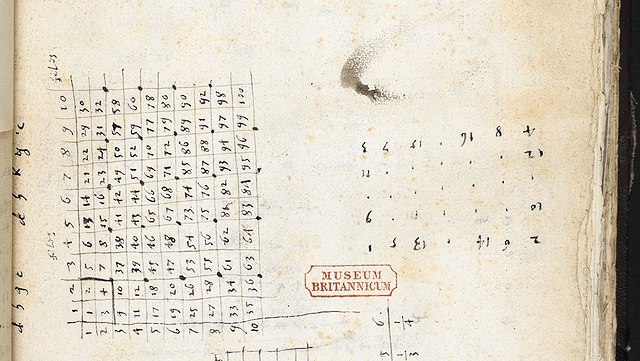
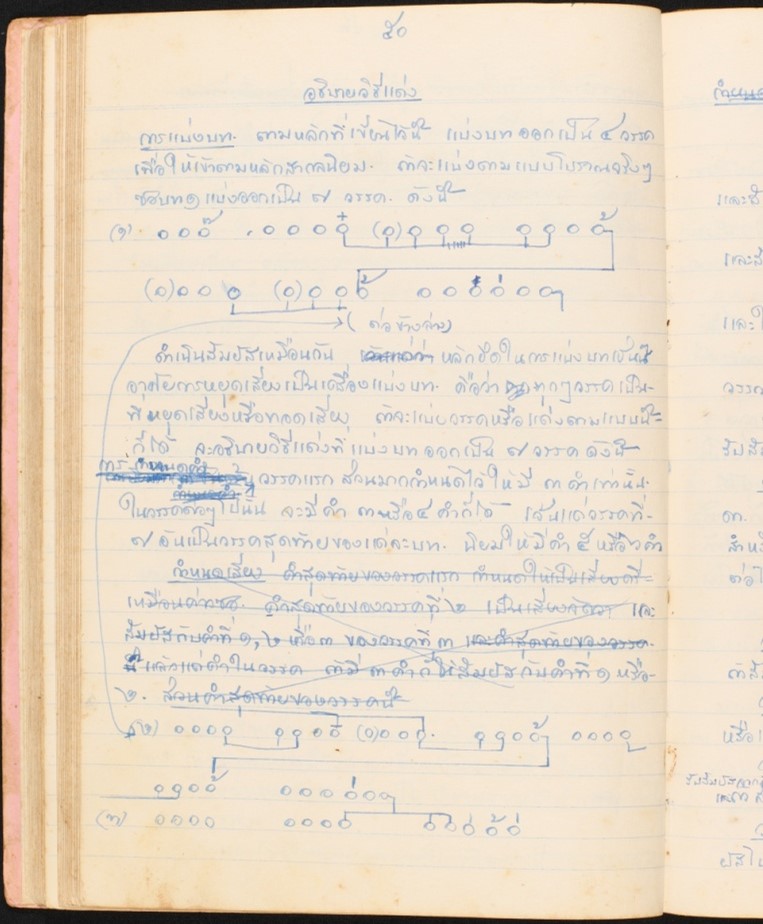
People write notes in different contexts and for different reasons: to remember information, to organise their thoughts and activities, or to prepare drafts of more systematised projects. As brief written observations or thoughts related to everyday activities, notes take the form of ephemeral manuscripts such as a slip of paper with a shopping list. When producers keep notes of this type for longer periods of time, they may compile them in manuscripts especially made for such purpose, as, for example, notebooks, diaries, and logs. Understood in a different way, namely as an exegetical annotation or comment on a work, the process of writing a note may lead to the modification of an extant written artefact by the addition of new content in the open spaces of a manuscript of any kind. An example for this is the addition of exegetical ‘paracontent’ around the core text of a codex. Different aspects of the production, transmission, and preservation of either type of notes and the artefacts that contain them were the focus of RFG.
David Durand-Guédy and Jürgen Paul studied the dynamics at play in the production of written artefacts that were conceived as open or ongoing projects. In the Introduction to the edited volume on Personal Manuscripts: Copying, Drafting, Taking Notes, David Durand-Guédy and Jürgen Paul have laid out some of the universal aspects of the material and contents of notebooks, diaries, and related written artefacts. Adopting a codicological approach, Jürgen Paul also discussed possible formats, visual organisations, and multilayered dimensions in Central Asian notebooks in a paper included in the same volume.
Christian Brockmann, José Maksimczuk, Olivier Bonnerot, and Katerina Grigoriadou investigated the complexities of adding long apparatuses of exegetical notes in open areas of Byzantine manuscripts. Combining approaches from the humanities (codicology, palaeography, textual criticism) and the natural sciences (the chemical composition of the ink), they have obtained insights into the different stages of production of the notes (see here and here).
Said Aljoumani and Benedikt Reier have investigated the use of notes compiled as preparatory material for more and more systematised content in a paper that examines a rediscovered type of document: audition attendance lists of a public reading of the Ṣaḥīḥ al-Bukhārī. They discussed in depth the role of the attendance lists in the production process of a better-known type of document, the audition certificates. A similar research question is pursued by José Maksimczuk with regard to Greek manuscripts. In two papers, he explores the philological connections between a lost manuscript transmitting a corpus of exegetical notes on Aristotle’s Categories (today preserved in three codices) and Georgios-Gannadios Scholarios’ long commentary on that treatise. Focusing on a corpus of palm-leaf and mulberry paper manuscripts of liturgical content that were used as drafts for printed books, Silpsupa Jaengsawang has reconstructed the different steps in the printing process by analysing the numerous notes the printers wrote in the manuscripts.
The main collective achievement of the Research Field was the edited volume Accumulating Notes: Note-taking and Multilayered Written Artefacts. This volume explores the act of note-taking from a global perspective. It includes eleven chapters studying manuscripts with notes and annotated manuscripts from Asia, Africa and Europe and covering a chronological fork between the 14th up to the 20th century CE. Moreover, the book includes a theoretical introduction aiming at conceptualise the phenomenon of note-taking by detecting universal and specific characteristics in the case studies discussed in the volume.
Spokesperson: José Maksimczuk