• Zur Metanavigation
  • Zur Hauptnavigation
  • Zur Suche
  • Zum Inhalt
  • Zur Subnavigation
  • Zum Seitenfuß
  • University of Hamburg
  • For journalists
  • Staff Service Portal0
  • STiNE
https://www.kus.uni-hamburg.de/aktuelles.json?recentnews=true
  • Institutions and target groups
    • Einrichtungen
      • Faculties

        • Faculty of Law
        • Faculty of Business, Economics and Social Sciences
        • Faculty of Medicine
        • Faculty of Education
        • Faculty of Humanities
        • Faculty of Mathematics, Informatics and Natural Sciences
        • Faculty of Psychology and Human Movement Science
        • University of Hamburg Business School
      • Services

        • Study Information Net STiNE
        • Surfmail
        • Exchange
        • Staff Service Portal
        • Learning Platforms
        • Katalogplus – Catalogue of Hamburg Libraries
        • SharePoint
      • Student facilities and services

        • Campus Center
        • Career Center
        • PIASTA
        • AStA (student council)
        • University Sports
        • University Music
        • Family Office
        • University Language Center
        • General Languages
        • Office of Affairs for Students with Disabilities or Chronic Diseases
        • Departmental libraries
        • Healthy Campus
      • Further facilities and services

        • The Cluster of Excellence CLICCS
        • The Cluster of Excellence CUI
        • The Cluster of Excellence Quantum Universe
        • The Cluster of Excellence Understanding Written Artefacts
        • Hamburg Research Academy
        • Pier Plus
        • Hamburg Center for University Teaching and Learning (HUL)
        • Hub for Crossdisciplinary Learning (HCL)
        • CEN
        • Museums and collections
        • University Archives (in German)
        • Regional Computing Center (RRZ)
        • University Administration
        • Knowledge Exchange Agency
        • The Unikontor Shop (in German)
    • Target groups

      • Prospective students
      • Students
      • International prospective students
      • Young researchers
      • Researchers
      • Instructors
      • Staff
      • Prospective continuing education students
      • Alumni
      • Journalists
      • Refugees (in German only)
    Close
  • /sitemap.json
University of Hamburg - to research, to teach, to educate and form, to homepage

CSMC

CSMCCentre for the Study of Manuscript Cultures
  • About
    • People
    • News
    • Ethics
    • Equity & Diversity
    • Sustainability
    • Logbook: The CSMC Blog
    • Contact & Newsletter
    • Vacant Positions
    • Intranet
  • Research
    • Concepts & Methods Units
    • Project Groups
    • Individual Research Projects
    • Working Groups
    • Affiliated Projects
    • Fellowships
    • Research Events
    • UWA I (2019–2025)
    • SFB (2012–2020)
  • Core Units
    • Laboratories
    • Graduate School
    • Cultural Heritage
    • Library
  • Collaboration
    • with Research Partners
    • with Archives, Libraries, and Museums
    • with Artists
    • with Companies
    • with Schools
    • within the HALM and PIER Networks
  • Publications
    • manuscript cultures
    • Studies in Manuscript Cultures
    • Occasional Papers
    • Software
    • Research Data and Information Systems
    • Written Artefact Profiling Guide
    • Artefact of the Month
    • Mesopotamian Bulletins
    • Videos
    • More Publications

Photo: CSMC

  1. UHH
  2. CSMC
  3. UWA 2019–2025
  4. Research Fields
  5. Research Field A: Artefact Profiling
  6. Recovery of Damaged Writing

Recovery of Damaged Writing
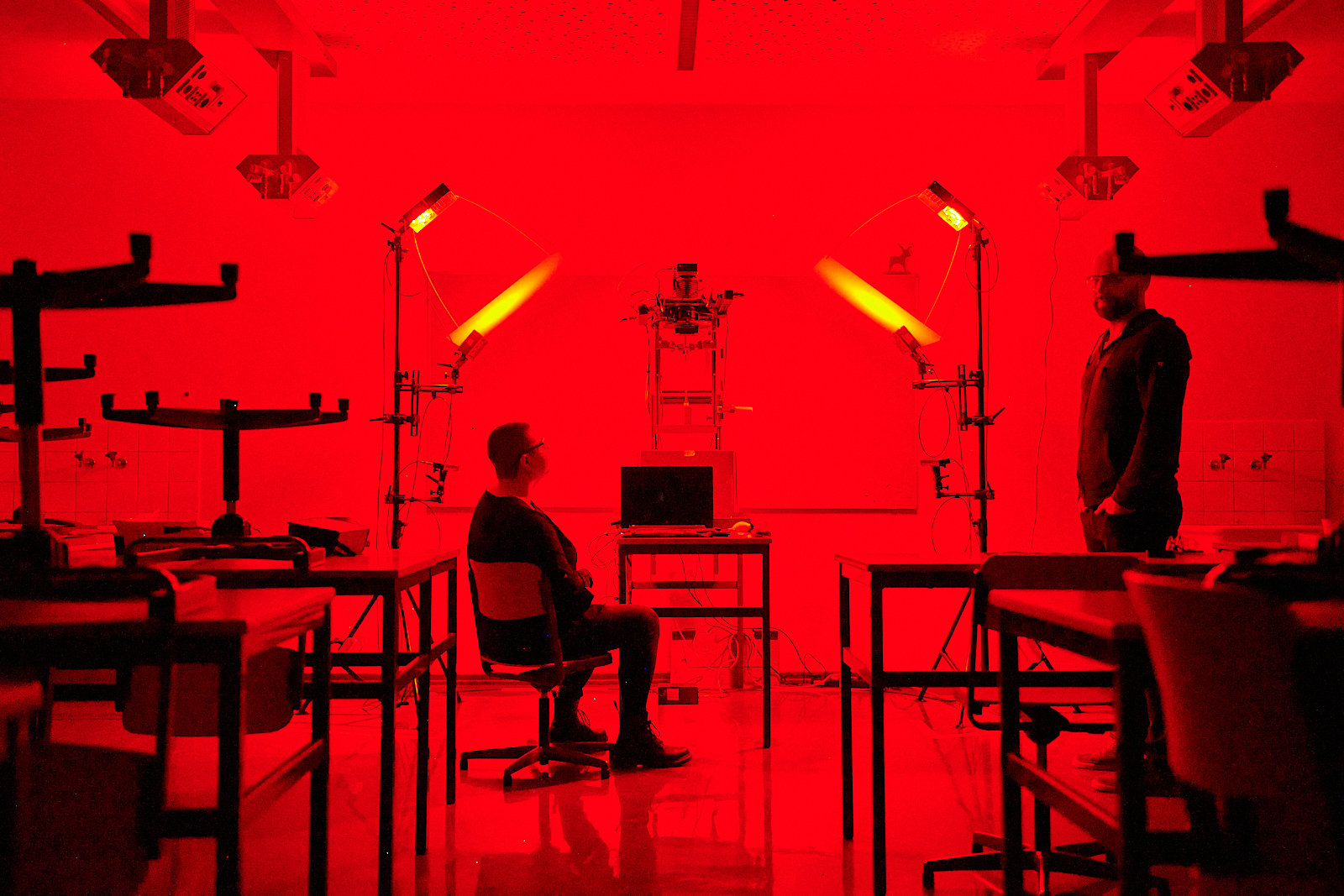
Kyle Ann Huskin and Ivan Shevchuk preparing the multispectral imaging camera

In the work on recovering damaged writing, imaging hardware has made huge progress in the last decade. Besides multispectral imaging that uses imaging sensors with high spatial resolution (many pixels) and new, powerful narrowband LEDs at 19 (or more) wavelengths for illumination in the UV, visible and NIR portions of the electromagnetic spectrum, many different systems for spectral imaging, such as hyperspectral and XRF, have been designed and successfully applied. All these systems possess quality control operation charts and can deliver high-quality image data. We expect that in the next 5 years further commercial multispectral imaging systems optimized for easy set up and operation will appear on the market. Yet, capturing images constitutes only the first step towards the recovery of damaged writing. The second step consists of image processing, that is, the selection of the most appropriate methods of statistical analysis to enhance the contrast in the raw images and visualize the text. Unfortunately, in terms of automated procedures and quality control operations, the state of the art of automated statistical image processing is far behind that of the hardware for image capture.

In the past decade a single software package, ENVI (current version 5.5) of Harris Geospatial has emerged as a primary tool for statistical image processing of multispectral data of objects of cultural heritage. ENVI was initially developed as an imaging tool to enhance details in imagery from the Mariner probes to Mars in the 1970s. It has since been developed into a market leader across remote sensing scientific and military fields and applications that rely on satellite and aerial spectral information capture and feature extraction using statistical methods. ENVI is also widely used in the field of cultural heritage imaging, including 44% of the European community in this field in 2017.

Besides ENVI, a new software tool for treating and extracting features from multi-, hyperspectral and X-Ray Fluorescence image data is being developed. This independent HOKU software has a graphical user interface (GUI) allowing the automatization of statistical processing steps as well as basic image treatment for multiple datasets. Though less powerful than ENVI, it is free of charge and user-friendly, which makes it highly attractive to scholars and scientists alike.  This project aims at further development of the processing tools in collaboration with the project RFA05 as well as external partners from the Cambridge University Library, Rochester Institute of Technology and the Early Manuscripts Electronic Library.

Project Overview

Project lead: Oliver Hahn, Ira Rabin

Research Associates: Kyle Ann Huskin, Ivan Shevchuk

Status: completed (2019–2023)

Project affiliation: Cluster of Excellence Understanding Written Artefacts (UWA I)

Research Field: Artefact Profiling (RFA) 

Project number: RFA10

  • UWA 2019–2025

Last update: 28 October 2026

  • Feedback
  • Legal notice
  • Privacy statement
  • Accessibility
  • Site map

University of Hamburg

Innovating and Cooperating for a Sustainable Future in a Digital Age

  • Follow us on Instagram.
  • Follow us on Facebook.
  • Connect with us on LinkedIn.
  • Follow us on Mastodon.
  • Follow us on Bluesky.
  • Subscribe to our channel on YouTube.
    • Studies
    • Prospective students
    • Continuing education
    • Research
    • Teaching at UHH
    • Doctoral studies
    • Job opportunities
    • Knowledge exchange
    • University
    • Excellence
    • Faculties
    • Alumni
    • Contact
    • Campus Navigator
    • UHHApp
    • Emergencies, safety and security
    • Antidiscrimination
Go to family-friendly higher education institution audit
Go to internationalisation re-audit
Go to the Sustainability Audit page
Go to Diversity Audit
Go to System accreditation

© 2026 University of Hamburg. All rights reserved