• Zur Metanavigation
  • Zur Hauptnavigation
  • Zur Suche
  • Zum Inhalt
  • Zur Subnavigation
  • Zum Seitenfuß
  • University of Hamburg
  • For journalists
  • Staff Service Portal0
  • STiNE
https://www.kus.uni-hamburg.de/aktuelles.json?recentnews=true
  • Institutions and target groups
    • Einrichtungen
      • Faculties

        • Faculty of Law
        • Faculty of Business, Economics and Social Sciences
        • Faculty of Medicine
        • Faculty of Education
        • Faculty of Humanities
        • Faculty of Mathematics, Informatics and Natural Sciences
        • Faculty of Psychology and Human Movement Science
        • University of Hamburg Business School
      • Services

        • Study Information Net STiNE
        • Surfmail
        • Exchange
        • Staff Service Portal
        • Learning Platforms
        • Katalogplus – Catalogue of Hamburg Libraries
        • SharePoint
      • Student facilities and services

        • Campus Center
        • Career Center
        • PIASTA
        • AStA (student council)
        • University Sports
        • University Music
        • Family Office
        • University Language Center
        • General Languages
        • Office of Affairs for Students with Disabilities or Chronic Diseases
        • Departmental libraries
        • Healthy Campus
      • Further facilities and services

        • The Cluster of Excellence CLICCS
        • The Cluster of Excellence CUI
        • The Cluster of Excellence Quantum Universe
        • The Cluster of Excellence Understanding Written Artefacts
        • Hamburg Research Academy
        • Pier Plus
        • Hamburg Center for University Teaching and Learning (HUL)
        • Hub for Crossdisciplinary Learning (HCL)
        • CEN
        • Museums and collections
        • University Archives (in German)
        • Regional Computing Center (RRZ)
        • University Administration
        • Knowledge Exchange Agency
        • The Unikontor Shop (in German)
    • Target groups

      • Prospective students
      • Students
      • International prospective students
      • Young researchers
      • Researchers
      • Instructors
      • Staff
      • Prospective continuing education students
      • Alumni
      • Journalists
      • Refugees (in German only)
    Close
  • /sitemap.json
University of Hamburg - to research, to teach, to educate and form, to homepage

CSMC

CSMCCentre for the Study of Manuscript Cultures
  • About
    • People
    • News
    • Ethics
    • Equity & Diversity
    • Sustainability
    • Logbook: The CSMC Blog
    • Contact & Newsletter
    • Vacant Positions
    • Intranet
  • Research
    • Concepts & Methods Units
    • Project Groups
    • Individual Research Projects
    • Working Groups
    • Affiliated Projects
    • Fellowships
    • Research Events
    • UWA I (2019–2025)
    • SFB (2012–2020)
  • Core Units
    • Laboratories
    • Graduate School
    • Cultural Heritage
    • Library
  • Collaboration
    • with Research Partners
    • with Archives, Libraries, and Museums
    • with Artists
    • with Companies
    • with Schools
    • within the HALM and PIER Networks
  • Publications
    • manuscript cultures
    • Studies in Manuscript Cultures
    • Occasional Papers
    • Software
    • Research Data and Information Systems
    • Written Artefact Profiling Guide
    • Artefact of the Month
    • Mesopotamian Bulletins
    • Videos
    • More Publications

Photo: CSMC

  1. UHH
  2. CSMC
  3. UWA 2019–2025
  4. Research Fields
  5. Research Field A: Artefact Profiling

Artefact Profiling

Research Field A

Written artefacts can tell us much more than what meets the eye. Apart from their written content or design, the materials used, and their great variety, they store a wealth of information – regarding production and preparatory treatment, writing practices, use and reuse, storage and deterioration, as well as possible traces of conserving intervention. The concept of material memory, which describes the stratified sum of these traces, tallies with recent developments in codicology under the term ‘stratigraphy’ (‘archaeology of the manuscript book’). Material analysis can uncover this wealth of information and shed light on the physical, chemical, and biological identity, provenance, and history of a written artefact by identifying its original and its acquired properties.

In ‘Artefact Profiling’ (RFA), we develop, implement, and assess novel chemical and physical methods to investigate organic/biological systems, e.g. via non-targeted panomic approaches, and inorganic ones, for example ancient Mesopotamian cylinder seals. Such technologies and experiments allow us to understand how and from which materials written artefacts have been produced, used, and altered in the course of time.

Many written artefacts are invaluable cultural assets whose examination is subject to high ethical standards. A central concern of RFA is therefore the development of non-invasive or minimally invasive methods of analysis that can nevertheless provide precise information about the material properties of written artefacts. By better understanding their materiality, we also help to better protect, store, and preserve fragile written artefacts and other cultural goods in the long term.

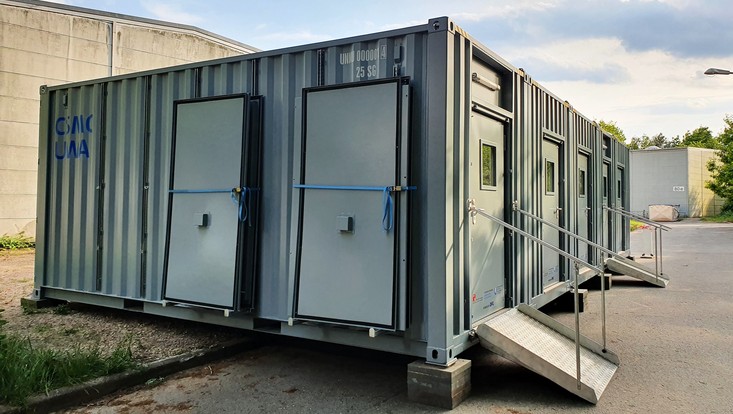
Often, written artefacts that are stored in a museum, library, or archive cannot be transported to other locations. They can therefore only be analysed using mobile analysis devices. In RFA, we have been developing new methods and tools that make such on-site analyses possible. Our Mobile Lab plays a central role here, as does the Container Lab, which was developed from scratch in RFA, including the design, construction, and first use in the field to analyse historical palm-leaf manuscripts in south-east India.

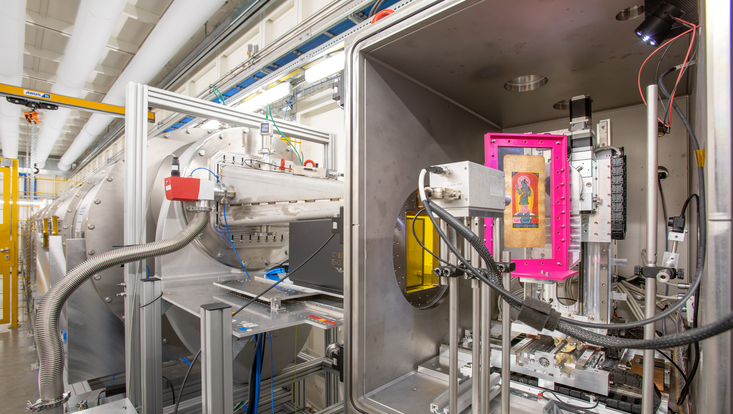
Together with the Deutsches Elektronensynchrotron (DESY), our local partner with a world-leading research infrastructure in the field of X-ray physics, we are carrying out several innovative pilot projects. One example of this is the development of ENCI, the world’s first mobile CT scanner to analyse cultural heritage objects in archives and museums. The device has been in use since 2023 and is currently being employed to read sealed cuneiform tablets from ancient Mesopotamia.    

Spokesperson: Markus Fischer

Research Projects


RFA02
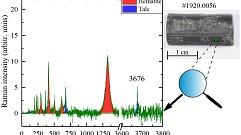
Understanding Written Artefacts on Inorganic Supports at the Atomic-Scale Level
Weathering and Crystal Chemistry of the Rock-Forming Minerals


RFA04
Paleogenomic Studies of Written Artefacts of Different Origin


RFA05 (I)
Pattern Recognition in 2D Data from Digitised Images and Advances Acquisition Techniques


RFA05 (II)
Similarity Measurement of Visual Patterns in Written Artefacts

RFA06
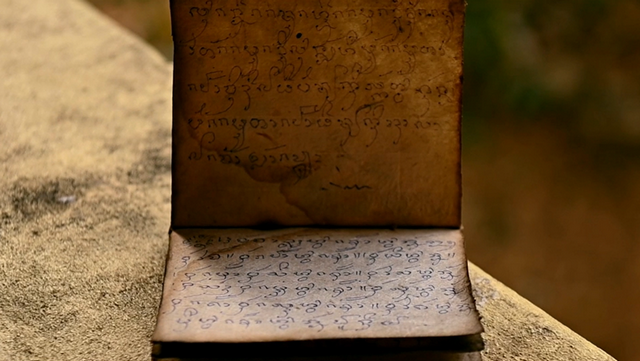
History of Paper of Ethnic Groups in Southwest China and Mainland Southeast Asia (in Zomia)
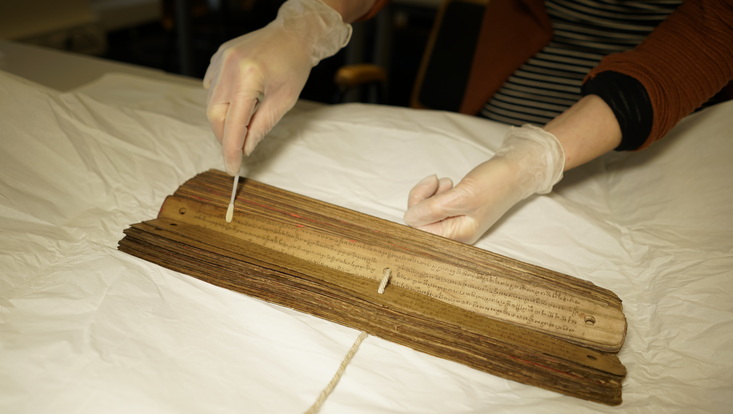


RFA07
Towards a Comprehensive Approach to the Study of South Indian Palm-Leaf Manuscripts
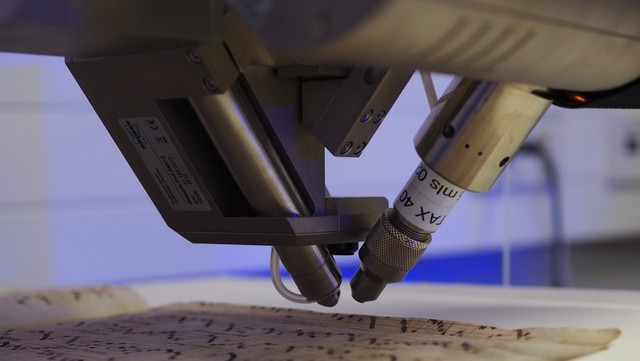


RFA08
Formatting and Erasing Polyphonic Music in Italian Manuscripts from 1350 to 1425
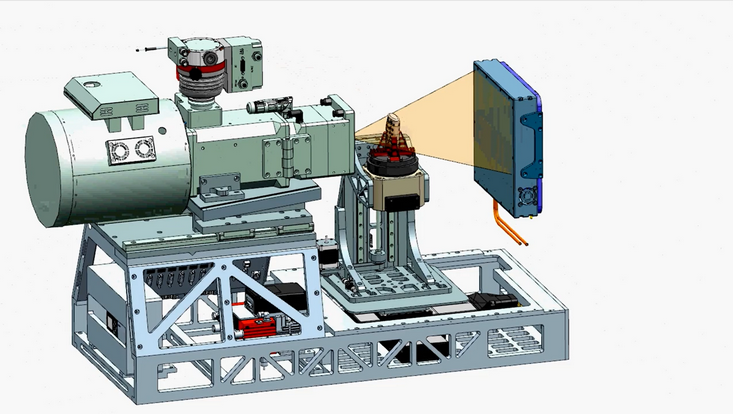


RFA09
Reading Closed Cuneiform Tablets Using High-Resolution Computed Tomography
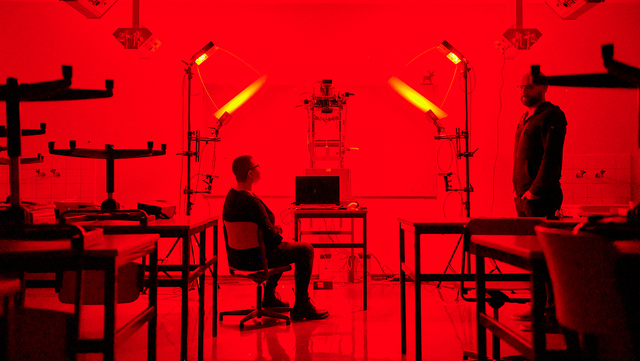


RFA10
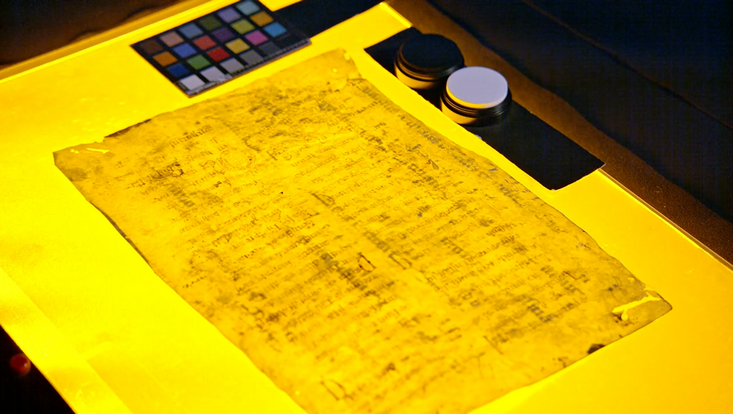
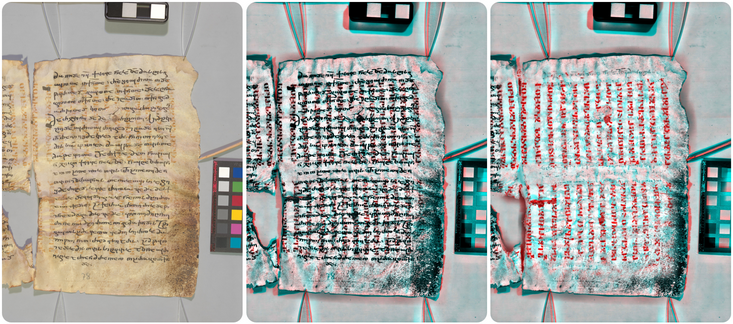
Recovery of Damaged Writing


RFA13
History of Writing: Black Inks and Writing Surfaces


RFA14
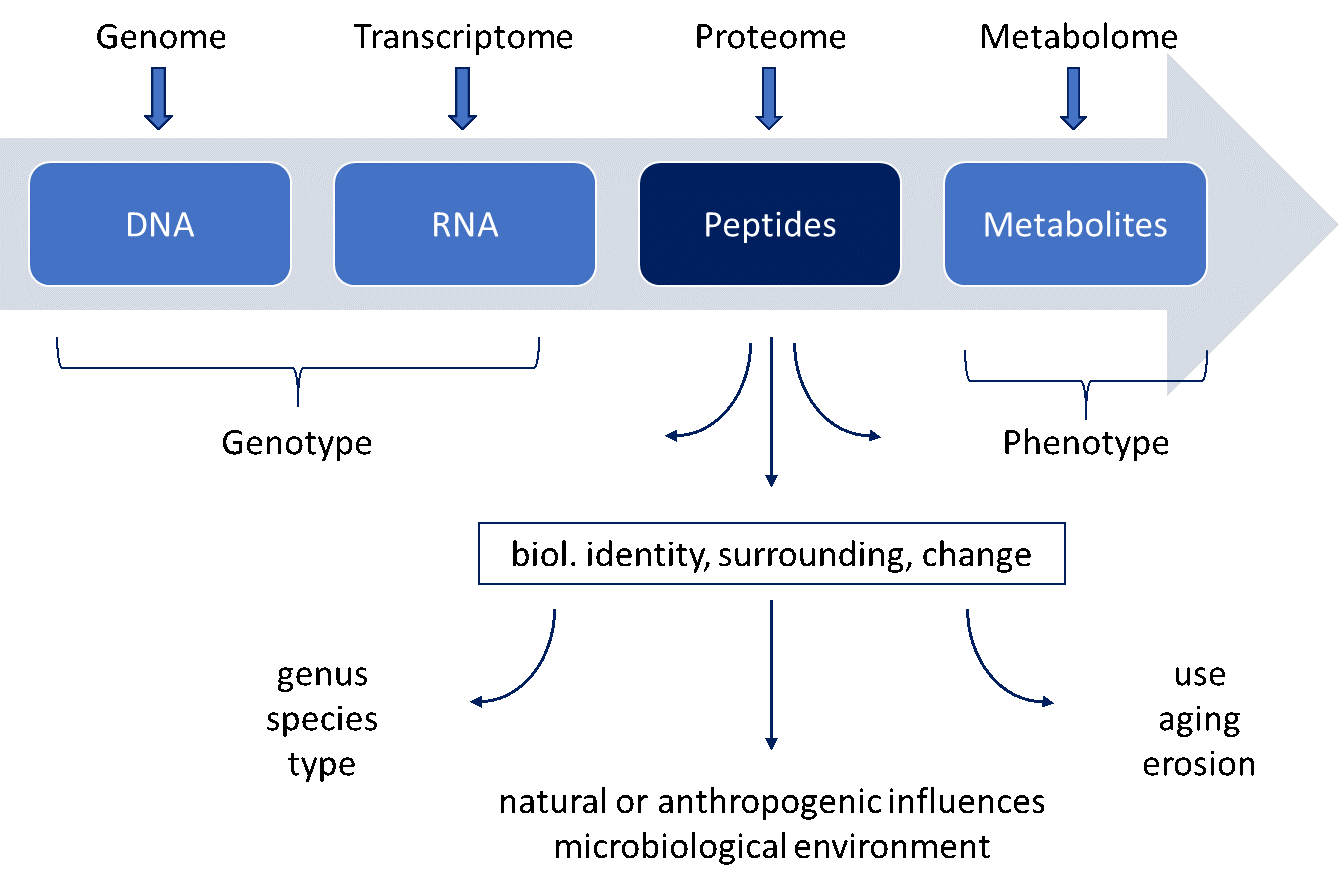
Mass Spectrometric Proteome Analysis of Written Artefacts


RFA15
A Mobile Container Laboratory for Worldwide Use


RFA18
Multiscale Materials Characterisation as a Function of Processein Methods for Novel and Ancient Writing Surfaces


RFA19
Painting the Ancient World: Crystallochemical Characterisation of Pigments and Minerals in Ancient Written Artefacts


RFA20
Measurements of Paper Components


RFA21
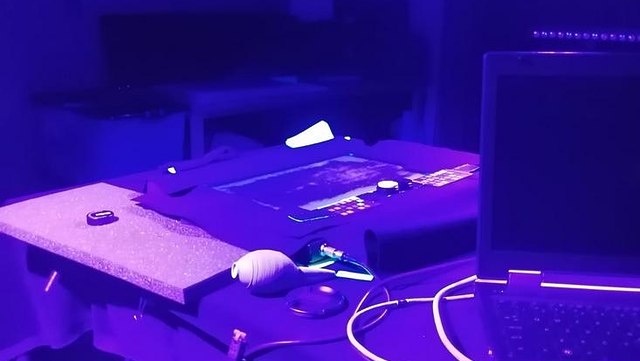
Recovery of Writing in Large Collections

RFA22
Generative AI for Revealing Palimpsests
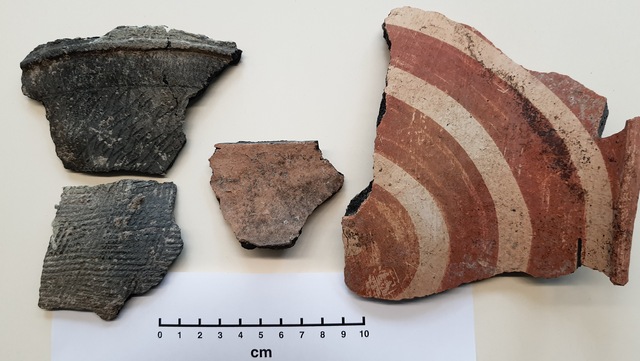

RFA23
Artefacts from excavation sites in Thailand  - Recognizable geometric patterns

Research Outputs

Overview of publications in Research Field A

  • UWA 2019–2025

Last update: 24 July 2024

  • Feedback
  • Legal notice
  • Privacy statement
  • Accessibility
  • Site map

University of Hamburg

Innovating and Cooperating for a Sustainable Future in a Digital Age

  • Follow us on Instagram.
  • Follow us on Facebook.
  • Connect with us on LinkedIn.
  • Follow us on Mastodon.
  • Follow us on Bluesky.
  • Subscribe to our channel on YouTube.
    • Studies
    • Prospective students
    • Continuing education
    • Research
    • Teaching at UHH
    • Doctoral studies
    • Job opportunities
    • Knowledge exchange
    • University
    • Excellence
    • Faculties
    • Alumni
    • Contact
    • Campus Navigator
    • UHHApp
    • Emergencies, safety and security
    • Antidiscrimination
Go to family-friendly higher education institution audit
Go to internationalisation re-audit
Go to the Sustainability Audit page
Go to Diversity Audit
Go to System accreditation

© 2026 University of Hamburg. All rights reserved