• Zur Metanavigation
  • Zur Hauptnavigation
  • Zur Suche
  • Zum Inhalt
  • Zur Subnavigation
  • Zum Seitenfuß
  • University of Hamburg
  • For journalists
  • Staff Service Portal0
  • STiNE
https://www.kus.uni-hamburg.de/aktuelles.json?recentnews=true
  • Institutions and target groups
    • Einrichtungen
      • Faculties

        • Faculty of Law
        • Faculty of Business, Economics and Social Sciences
        • Faculty of Medicine
        • Faculty of Education
        • Faculty of Humanities
        • Faculty of Mathematics, Informatics and Natural Sciences
        • Faculty of Psychology and Human Movement Science
        • University of Hamburg Business School
      • Services

        • Study Information Net STiNE
        • Surfmail
        • Exchange
        • Staff Service Portal
        • Learning Platforms
        • Katalogplus – Catalogue of Hamburg Libraries
        • SharePoint
      • Student facilities and services

        • Campus Center
        • Career Center
        • PIASTA
        • AStA (student council)
        • University Sports
        • University Music
        • Family Office
        • University Language Center
        • General Languages
        • Office of Affairs for Students with Disabilities or Chronic Diseases
        • Departmental libraries
        • Healthy Campus
      • Further facilities and services

        • The Cluster of Excellence CLICCS
        • The Cluster of Excellence CUI
        • The Cluster of Excellence Quantum Universe
        • The Cluster of Excellence Understanding Written Artefacts
        • Hamburg Research Academy
        • Pier Plus
        • Hamburg Center for University Teaching and Learning (HUL)
        • Hub for Crossdisciplinary Learning (HCL)
        • CEN
        • Museums and collections
        • University Archives (in German)
        • Regional Computing Center (RRZ)
        • University Administration
        • Knowledge Exchange Agency
        • The Unikontor Shop (in German)
    • Target groups

      • Prospective students
      • Students
      • International prospective students
      • Young researchers
      • Researchers
      • Instructors
      • Staff
      • Prospective continuing education students
      • Alumni
      • Journalists
      • Refugees (in German only)
    Close
  • /sitemap.json
University of Hamburg - to research, to teach, to educate and form, to homepage

CSMC

CSMCCentre for the Study of Manuscript Cultures
  • About
    • People
    • News
    • Ethics
    • Equity & Diversity
    • Sustainability
    • Logbook: The CSMC Blog
    • Contact & Newsletter
    • Vacant Positions
    • Intranet
  • Research
    • Concepts & Methods Units
    • Project Groups
    • Individual Research Projects
    • Working Groups
    • Affiliated Projects
    • Fellowships
    • Research Events
    • UWA I (2019–2025)
    • SFB (2012–2020)
  • Core Units
    • Laboratories
    • Graduate School
    • Cultural Heritage
    • Library
  • Collaboration
    • with Research Partners
    • with Archives, Libraries, and Museums
    • with Artists
    • with Companies
    • with Schools
    • within the HALM and PIER Networks
  • Publications
    • manuscript cultures
    • Studies in Manuscript Cultures
    • Occasional Papers
    • Software
    • Research Data and Information Systems
    • Written Artefact Profiling Guide
    • Artefact of the Month
    • Mesopotamian Bulletins
    • Videos
    • More Publications

Photo: CSMC

  1. UHH
  2. CSMC
  3. UWA 2019–2025
  4. Research Fields
  5. Research Field A: Artefact Profiling
  6. Measurements of Paper Components

Measurements of Paper Components
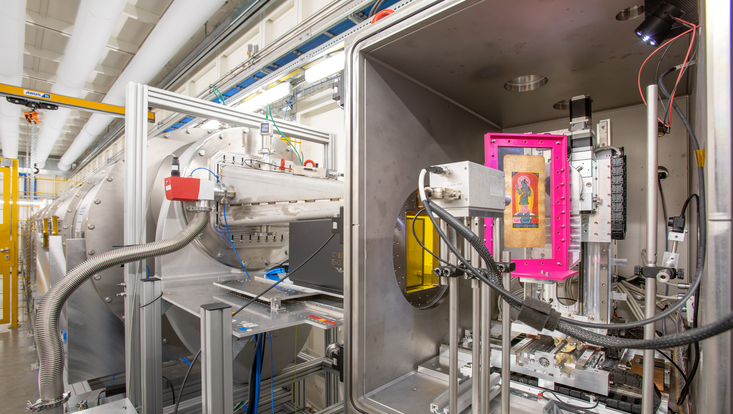
Marta Mayer/DESY

A Tsakali ritual card in a special sample holder during an experiment at the SAXSMAT beamline P62 at DESY.

Paper as a writing support is a very complex and unique material. It is difficult to understand at the molecular level, especially since many of its components are influenced by various environmental factors and subject to deterioration processes occurring at different stages and times. There are almost endless possible combinations of elements, compounds, original raw materials, products of deterioration, and environmental substances. In short, we deal with a very heterogenous, constantly changing material. Thus, in the study of written artefacts, paper analysis poses a challenge for both the natural sciences and the humanities.

At present, paper is most often studied with historical and codicological methods (a comparative study of watermarks, papermaking sieve print, or other technological features) or microscopy (fibre analysis). The character of heritage objects and the requirements of non-destructive testing enhance the challenge. As a result, the history of paper is based almost exclusively on written sources and rarely on material evidence. A few existing studies based on archaeological evidence or material analyses of old manuscripts are rather exceptional. To help conservators in their daily work, conservation science has developed a wide range of analytical methods for preservation measures and to better understand deterioration processes. There is still, however, a need to develop both methods and reference data to obtain the ‘fingerprints’ of specific types of paper.
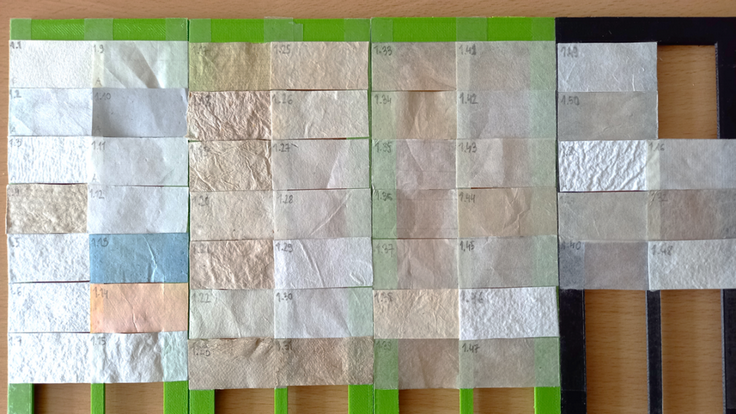
Agnieszka Helman-Ważny

Collection of different papers for comparative research and the data base of X-ray measurements.

Synchrotron X-ray analytical methods are increasingly being used to study historical papers. However, so far, the purpose of such research has been mostly to anticipate the impact of X-ray photons on paper and cellulose-based artefacts, or to better understand deterioration processes. This project, which is part of the UWA-DESY collaboration (with Sylvio Haas on the DESY side), aims to apply small- and wide-angle X-ray scattering to investigate the structure of papers and papermaking additives at the nano- and atomic scale, exploring its potential use for authentication and provenance studies. Based on X-ray scattering signals, information about the local paper structure can be obtained. The focus of this project is to develop a protocol for fingerprinting specific types of paper, so that we can detect the same or very similar types in different heritage objects.

To further understand the possible applications and limitations of the X-ray scattering techniques, we employ a host of complementary analytical methods of paper characterisation and identification in written artefacts, including microscopic, spectroscopic, and image processing techniques. To correlate structural parameters of the paper samples with changes in the manufacturing process, we established a cooperation with a papermaking studio specialising in historical hand-made papers, which enables us to prepare samples in a controlled manner. We also do measurements on artificially aged samples and determine the potential damage this method causes to heritage objects. The database of X-ray scattering measurements for the paper samples collected in this project will hopefully constitute a solid foundation to develop this technique further, and simultaneously contribute to the research on papermaking traditions in understudied areas, such as Southwest China and mainland Southeast Asia.

Project Overview

Project lead: Agnieszka Helman-Ważny, Sylvio Haas

Research Associate: Małgorzata Grzelec

Status: completed (2023–2025)

Project affiliation: Cluster of Excellence Understanding Written Artefacts (UWA I)

Research Field: Artefact Profiling (RFA) 

Project number: RFA20

  • UWA 2019–2025

Last update: 28 October 2026

  • Feedback
  • Legal notice
  • Privacy statement
  • Accessibility
  • Site map

University of Hamburg

Innovating and Cooperating for a Sustainable Future in a Digital Age

  • Follow us on Instagram.
  • Follow us on Facebook.
  • Connect with us on LinkedIn.
  • Follow us on Mastodon.
  • Follow us on Bluesky.
  • Subscribe to our channel on YouTube.
    • Studies
    • Prospective students
    • Continuing education
    • Research
    • Teaching at UHH
    • Doctoral studies
    • Job opportunities
    • Knowledge exchange
    • University
    • Excellence
    • Faculties
    • Alumni
    • Contact
    • Campus Navigator
    • UHHApp
    • Emergencies, safety and security
    • Antidiscrimination
Go to family-friendly higher education institution audit
Go to internationalisation re-audit
Go to the Sustainability Audit page
Go to Diversity Audit
Go to System accreditation

© 2026 University of Hamburg. All rights reserved