CSMC
CSMCCentre for the Study of Manuscript Cultures
Photo: UHH/Denstorf
10 February 2026
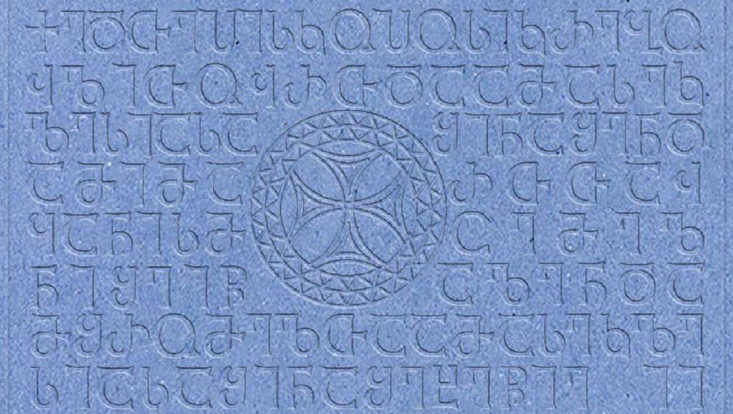
Photo: Digital Kartvelology
The latest volume of ‘Digital Kartvelology’, an open‑access journal devoted to digital approaches in Georgian studies, features several contributions by CSMC researchers. Using a range of methodological tools, they illuminate various aspects of early literacy and textual production in the Caucasus.
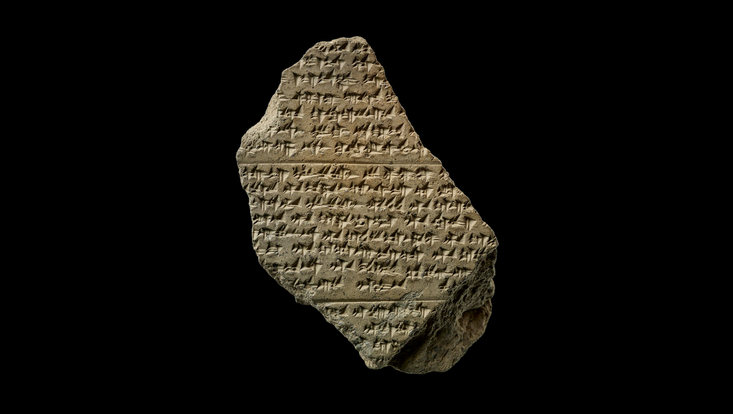
Until recently, the mobile CT scanner ENCI was used primarily to read sealed clay cuneiform tablets. Its applications, however, have broadened considerably. In a study published in Digital Kartvelology, Philipp Paetzold, Samaneh Ehteram, Andreas Schropp, Christian Schroer, and Jost Gippert, together with Lars Krämer and Fabian Isensee from the University of Heidelberg, employed ENCI to examine the internal structures of historical codices.
Working in collaboration with Graz University Library, the team scanned the well‑known Georgian manuscript MS 2058/1, the Sinai Lectionary. High‑resolution 3D reconstructions revealed the spine, sewing supports, cords, threads, and nested quires, without opening the binding or risking any mechanical stress. This non‑invasive approach allowed the researchers to virtually explore the book’s internal architecture while the manuscript remained fully protected. The scans also enabled digital segmentation of characters written in vermilion and iron‑gall inks, facilitating combined structural and textual analysis and providing new ways to study writing practices, rubrication, and possible alterations.
The same issue includes additional contributions from CSMC researchers and members of the DeLiCaTe project (The Development of Literacy in the Caucasian Territories). In one article, Jost Gippert presents the first radiocarbon study of Old Georgian manuscripts. Conducted in 2024–2025 at ETH Zurich in cooperation with Graz University Library and the Korneli Kekelidze Georgian National Centre of Manuscripts in Tbilisi, the project analysed 20 manuscripts, mostly palimpsests and other undated items from the first millennium.
Another article, by Sebastian Bosch and Eka Kvirkvelia, reports on systematic ink analyses of Georgian collections in Graz and Leipzig. Using XRF, Raman spectroscopy, and UV–VIS–NIR microscopy, they examined the metal compositions of red and black inks. By linking these ‘fingerprints’ to securely dated and localised manuscripts within a unified database, their work aims to support the dating and provenance of undated codices through comparative profiling.
Collectively, these studies demonstrate how the diverse methodological approaches developed at the CSMC yields new insights into Georgian manuscripts. Publishing these results in a specialised regional journal is an important step towards making them accessible to philologists, historians, and digital humanists in Georgia and beyond.