CSMC
CSMCCentre for the Study of Manuscript Cultures
Photo: UHH/Denstorf
18 December 2025

Photo: De Gruyter
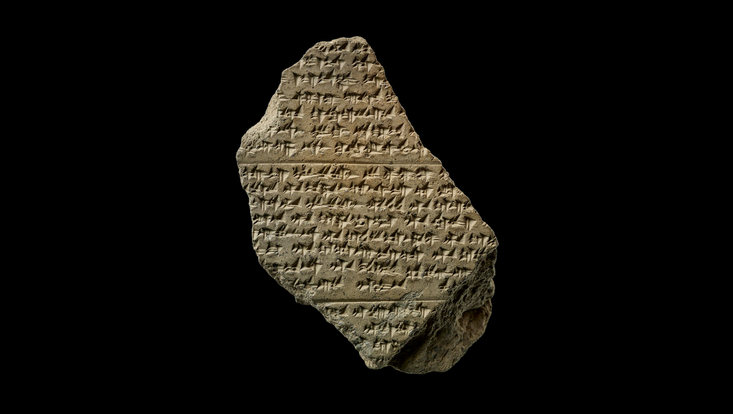
When it comes to the history of ancient cultures, we know that there is much we do not know. The new volume of ‘Studies in Manuscript Cultures’ explores the many forms and implications of missing evidence and examines how researchers can engage productively with these gaps when reconstructing the past.
They are the raw material of every historical analysis and interpretation: sources, either in the form of archaeological finds or transmitted literature. These sources are like pieces of a jigsaw puzzle from which we piece together a picture of the past. Unfortunately, this puzzle is grossly incomplete. Most of the pieces are lost forever, through natural processes or deliberate destruction; and the pieces that have survived to this day are not evenly distributed, but accumulate in some places, leaving other areas completely empty. Based on what we can see, we piece together the rest in ways that are sometimes more and sometimes less plausible – with our extrapolations heavily dependent on our own point of view and on ideas prevalent in the present.
The new volume of Studies in Manuscript Cultures (SMC), number 50 in the series, explores the vast territory of missing evidence. Within this territory, there are three types: completely missing, quantitatively insufficient, and qualitatively insufficient evidence. The first case, the absence of sources, is probably the most obvious. A particularly striking example of a part of history that we understand only rudimentarily due to a lack of material is the culture of the Maya. Only four codices from this great literary tradition have survived, all from the period between the 12th and 15th centuries, with this loss being due not least to the destruction wrought by the Spanish conquerors. In their contribution to the volume, Christophe Helmke and Kerry Hull attempt to reconstruct some of the lost written heritage of the Maya.
Too little evidence can and, less intuitively, too much evidence can also be problematic, as it creates an illusion of completeness. Michael Friedrich, co-editor of the volume, explores the case of ancient China, where the source situation has improved considerably since the 1970s thanks to extensive finds. It is easy to overlook, however, that even these finds are only a drop in the ocean of the written production of Ancient China. Overinterpreting them can distort our perception of the past.
Existing evidence can also lead to false conclusions if it is less reliable than it appears. A particularly complicated situation arises from contradictory sources, which can occur, for example, when comparing literary and archaeological evidence. While some disciplines, such as Assyriology and Egyptology, traditionally attribute greater reliability to the latter, in others it is exactly the opposite. When certain patterns become established in this regard and are ultimately no longer questioned, blind spots grow. ‘Disciplinary boundaries can have disastrous effects on historical reconstruction if only some of the available sources are considered,’ write editors Cécile Michel, Michael Friedrich, and Jorrit Kelder in their introduction. They therefore expressly advocate addressing the problem of missing evidence, of whatever kind, through interdisciplinary collaboration.
Missing Evidence in the Study of Ancient Cultures: Methodological Reflections and Case Studies on Fragmentary Sources originated from a conference at the CSMC in October 2023. Published by De Gruyter, the volume is, like almost all books in the SMC series, open access and can be downloaded from the publisher’s website.