
Ethical Analysis
Concepts & Methods Unit 2
UWA is deeply aware of the ethical implications of its research and the fact that its methods must be in line with the highest ethical standards. We continually reflect upon the fact that studying written heritage is fraught with complex moral conundrums and relies on difficult considerations and choices. CMU 2 will enlarge on one specific topic that has repeatedly emerged in the work of the cluster’s Ethics Working Group and that demands a dedicated forum, the ethics of natural science-based material analysis of WAs. It deals with the fact that the material analysis can have significant consequences for the artefacts themselves. As the artefacts we analyse embody cultural heritage from regions across the world, our methods – even if applied with the best of scholarly intentions – may be inappropriate for the communities who own them.
CMU 2 will rethink the simplistic dichotomy between destructive/invasive vs non-destructive/non-invasive analysis. Against the background of a conflicted history of material analysis in WA studies, it seeks to increase awareness of the changing nature of ethical and sustainable standards over time. Ethical Analysis, hence, will be organised around three main axes, 1) Stress Level Scale (the potential invasiveness and destructivity of any analytical method), 2) Decision-Making processes (avoiding one-size-fits-all proposals and promoting case-sensitive assessments) and 3) Sustainability (avoiding harm to WA in the long run and considering ecological side effects).
‘Ethical analysis makes tensions visible, not pretending that one metric can decide all’
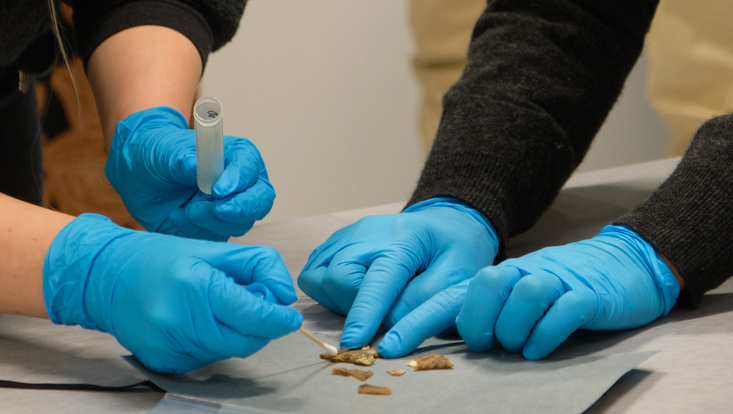
Photo: CSMC
Invasive versus non-invasive, destructive versus non-destructive: analytical methods are often described in binary terms. On closer look, these distinctions become questionable. Claudia Colini, head of ‘Ethical Analysis’, explains why even careful research can have unintended effects and what this means in practice.
Interview