• Zur Metanavigation
  • Zur Hauptnavigation
  • Zur Suche
  • Zum Inhalt
  • Zur Subnavigation
  • Zum Seitenfuß
  • University of Hamburg
  • For journalists
  • Staff Service Portal0
  • STiNE
https://www.kus.uni-hamburg.de/aktuelles.json?recentnews=true
  • Institutions and target groups
    • Einrichtungen
      • Faculties

        • Faculty of Law
        • Faculty of Business, Economics and Social Sciences
        • Faculty of Medicine
        • Faculty of Education
        • Faculty of Humanities
        • Faculty of Mathematics, Informatics and Natural Sciences
        • Faculty of Psychology and Human Movement Science
        • University of Hamburg Business School
      • Services

        • Study Information Net STiNE
        • Surfmail
        • Exchange
        • Staff Service Portal
        • Learning Platforms
        • Katalogplus – Catalogue of Hamburg Libraries
        • SharePoint
      • Student facilities and services

        • Campus Center
        • Career Center
        • PIASTA
        • AStA (student council)
        • University Sports
        • University Music
        • Family Office
        • University Language Center
        • General Languages
        • Office of Affairs for Students with Disabilities or Chronic Diseases
        • Departmental libraries
        • Healthy Campus
      • Further facilities and services

        • The Cluster of Excellence CLICCS
        • The Cluster of Excellence CUI
        • The Cluster of Excellence Quantum Universe
        • The Cluster of Excellence Understanding Written Artefacts
        • Hamburg Research Academy
        • Pier Plus
        • Hamburg Center for University Teaching and Learning (HUL)
        • Hub for Crossdisciplinary Learning (HCL)
        • CEN
        • Museums and collections
        • University Archives (in German)
        • Regional Computing Center (RRZ)
        • University Administration
        • Knowledge Exchange Agency
        • The Unikontor Shop (in German)
    • Target groups

      • Prospective students
      • Students
      • International prospective students
      • Young researchers
      • Researchers
      • Instructors
      • Staff
      • Prospective continuing education students
      • Alumni
      • Journalists
      • Refugees (in German only)
    Close
  • /sitemap.json
University of Hamburg - to research, to teach, to educate and form, to homepage

CSMC

CSMCCentre for the Study of Manuscript Cultures
  • About
    • People
    • News
    • Ethics
    • Equity & Diversity
    • Sustainability
    • Logbook: The CSMC Blog
    • Contact & Newsletter
    • Vacant Positions
    • Intranet
  • Research
    • Concepts & Methods Units
    • Project Groups
    • Individual Research Projects
    • Working Groups
    • Affiliated Projects
    • Fellowships
    • Research Events
    • UWA I (2019–2025)
    • SFB (2012–2020)
  • Core Units
    • Laboratories
    • Graduate School
    • Cultural Heritage
    • Library
  • Collaboration
    • with Research Partners
    • with Archives, Libraries, and Museums
    • with Artists
    • with Companies
    • with Schools
    • within the HALM and PIER Networks
  • Publications
    • manuscript cultures
    • Studies in Manuscript Cultures
    • Occasional Papers
    • Software
    • Research Data and Information Systems
    • Written Artefact Profiling Guide
    • Artefact of the Month
    • Mesopotamian Bulletins
    • Videos
    • More Publications

Photo: CSMC

  1. UHH
  2. CSMC
  3. Registration
  4. Register for a CSMC workshop series

Register for a CSMC workshop series

An Introduction to Studying Manuscripts as Written Artefacts

Workshop series in Arabic (online)

Arabic version below

Convenors:  Joud Nassan Agha(joud.nassan.agha"AT"uni-hamburg.de) and Said Aljoumani
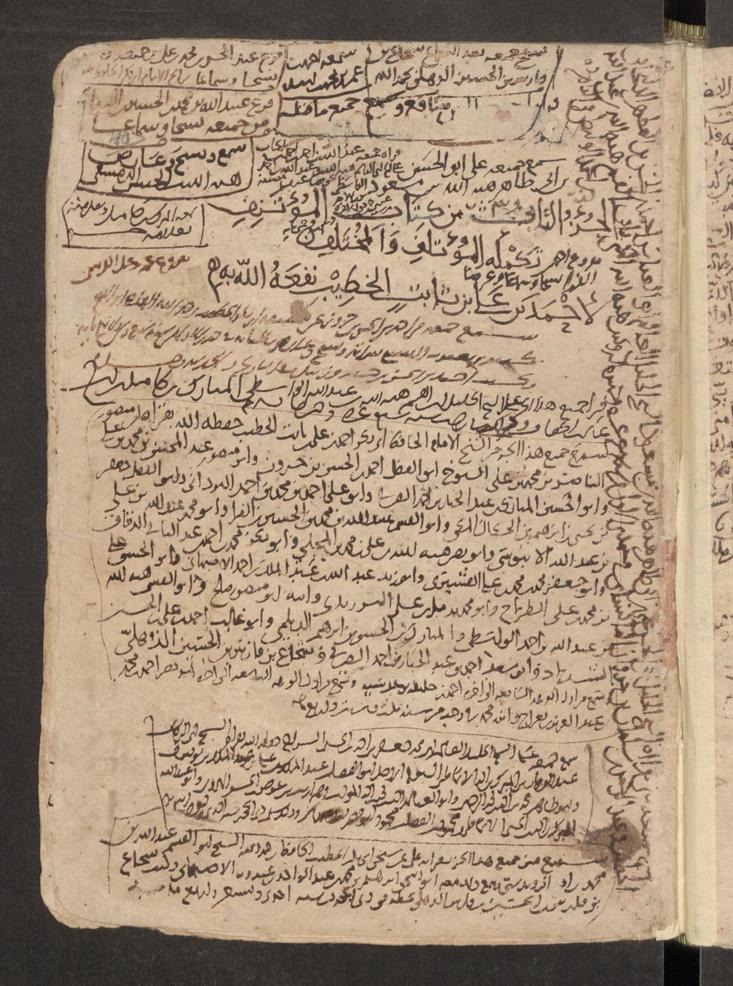
Staatsbibliothek zu Berlin

al-Muʾtanaf takmilat al-muʾtalif wa-l-muḫtalif , 460[1068]

Since the nineteenth century, the study of manuscripts has been carried out in two separate fields. Traditional philology has primarily concentrated on textual analysis, with the goal of reconstructing the original version of a text by comparing its various extant copies. The notion of an authentic and "correct" original text has been key to this analytical framework. In contrast, codicology has placed its emphasis on exploring the physical, material aspects of manuscripts, including, for example, binding techniques and tools or inks, as well as aspects of their paracontent.
This course seeks to combine these two approaches. It takes manuscripts as textual artefacts, i.e., as artefacts that can and need to be analysed with regard to their textual content and their materiality at the same time. The aim of the course is to show how this combined approach can shed light on a manuscript's history, including how the manuscript has changed over time and how it has been transmitted to us. In the course of five lectures focused on different case studies, we will seek to clarify what this approach means theoretically and practically. We will discuss manuscripts, learn from our own and each other’s mistakes, and explore the capabilities of this approach in charting the journeys of manuscripts in time and space, explaining the material changes that they underwent, and in some cases identifying those responsible for these journeys and these changes.
This course will be conducted entirely in Arabic. Course materials will be provided by the instructor before the beginning of the course.
This seminar provides Arabic-speaking students and scholars with an opportunity to familiarize themselves with approaches to the study of written artefacts developed in UWA. The target audience includes UHH-scholars as well as a group of students and scholars based in the Middle East who have already expressed interest in such a training. Offering training programmes in languages other than English or German and making training programmes accessible in the communities in and with which we conduct our research both advance our Equal Opportunity goals.

All sessions will be held in Arabic. They take place online (ZOOM) on Fridays, 1:00 pm — 3:00 pm CET.

Date Topic
27 October 2023

Session 1

Manuscript Notes

10 November 2023

Session 2

Manuscripts as Written Artefacts

24 November 2023

Session 3

'Publication' Notes

15 December 2023

Session 4

The Audition Certificate and its Functions:
Theoretical Considerations

22 December 2023

Session 5

The Audition Certificate and its Functions:
Case Studies


يُعلن مركز دراسة ثقافات المخطوطات- جامعة هامبورغ، عن إقامة دورة تدريبية مجانيَّة بعنوان:


" مدخل إلى دراسة المخطوطات باعتبارها مصنوعات مكتوبة"

المُدرب: سعيد الجوماني

المُنظِّم: جود نعسان آغا (joud.nassan.agha@uni-hamburg.de)

جهة الاتصال: ماريا باولا غريتي (mariapaola.gritti@uni-hamburg.de)

التنسيق: عبر منصة الزوم

لغة المحاضرات: العربية

عدد المشاركين: 15


منذ القرن التاسع عشر، تمَّ تقاسم دراسة المخطوطات بين مجالين، الأول: مجال الفيلولوجيا التقليديَّة، التي ركَّزَت على دراسة النصوص، بحيث بُنِيَت رؤيتها على فكرة وجود نصٍ أصليٍّ صحيحٍ، وأنَّ مهمَّة الباحث إعادة تشكيلِهِ من النُسَخ المختلفة المُتَبقية منه، وهو ما يُعرف بالنشر النقدي للنصوص. وأما المجال الثاني: فهو الكوديكولجيا، الذي انصبَّ تركيزه على دراسة الكيان الماديّ للمخطوط، وخوارج النصوص المرقونة عليه، أي ركز على صناعة المخطوط وخوارج النّص.


وظلَّ هذان المجالان إلى حدٍ كبير، مجالان أكاديميان منفصلان، إلى أن دمجت بينهما الفيولوجيا الماديَّة؛ المُتعامِلة مع المخطوطات على أنها مصنوعات مكتوبة، أي أنها نصٌّ،  وشيءٌ ماديٌّ في الوقت نفسه. سنسعى عبر خمس محاضرات إلى إجلاء المقصود بالفيلولوجية الماديَّة، تنظيراً وتطبيقاً من خلال العمل على نماذج حقيقية.

سنقرأ سوية، ونتعلم من أخطائنا، ونستكشف إمكانات الفيلولوجيا الماديَّة في رسم رحلة المخطوطات في الزمان والمكان، ونفسِّر ما طرأ على هيئاتها الماديَّة من تغييرات، وفي بعض الحالات تحديد المسؤولين عن هذا التغيير ودلالته، وسيتم توفير مواد الدورة من قِبلِ المدرب قبلَ بدايتها.

عنوانات المحاضرات وأوقاتها:

 
عنوان المحاضرة
التوقيت
1
الفيلولوجيا المادية
27/10/2023، 1- 3 ظهراً بتوقيت برلين
2
خوارج النص
10/11/2023، 1- 3 ظهراً بتوقيت برلين
3
قيد تفريغ الكتب
24/11/2023، 1- 3 ظهراً بتوقيت برلين
4
طباق السماع وتوظيفاتها
 
 
4/أ- الجانب النظري
15/12/2023، 1- 3 ظهراً بتوقيت برلين
 
4/ب- الجانب التطبيقي
22/12/2023، 1- 3 ظهراً بتوقيت برلين
 

  • .

Last update: 10 December 2024

  • Feedback
  • Legal notice
  • Privacy statement
  • Accessibility
  • Site map

University of Hamburg

Innovating and Cooperating for a Sustainable Future in a Digital Age

  • Follow us on Instagram.
  • Follow us on Facebook.
  • Connect with us on LinkedIn.
  • Follow us on Mastodon.
  • Follow us on Bluesky.
  • Subscribe to our channel on YouTube.
    • Studies
    • Prospective students
    • Continuing education
    • Research
    • Teaching at UHH
    • Doctoral studies
    • Job opportunities
    • Knowledge exchange
    • University
    • Excellence
    • Faculties
    • Alumni
    • Contact
    • Campus Navigator
    • UHHApp
    • Emergencies, safety and security
    • Antidiscrimination
Go to family-friendly higher education institution audit
Go to internationalisation re-audit
Go to the Sustainability Audit page
Go to Diversity Audit
Go to System accreditation

© 2026 University of Hamburg. All rights reserved