• Zur Metanavigation
  • Zur Hauptnavigation
  • Zur Suche
  • Zum Inhalt
  • Zur Subnavigation
  • Zum Seitenfuß
  • University of Hamburg
  • For journalists
  • Staff Service Portal0
  • STiNE
https://www.kus.uni-hamburg.de/aktuelles.json?recentnews=true
  • Institutions and target groups
    • Einrichtungen
      • Faculties

        • Faculty of Law
        • Faculty of Business, Economics and Social Sciences
        • Faculty of Medicine
        • Faculty of Education
        • Faculty of Humanities
        • Faculty of Mathematics, Informatics and Natural Sciences
        • Faculty of Psychology and Human Movement Science
        • University of Hamburg Business School
      • Services

        • Study Information Net STiNE
        • Surfmail
        • Exchange
        • Staff Service Portal
        • Learning Platforms
        • Katalogplus – Catalogue of Hamburg Libraries
        • SharePoint
      • Student facilities and services

        • Campus Center
        • Career Center
        • PIASTA
        • AStA (student council)
        • University Sports
        • University Music
        • Family Office
        • University Language Center
        • General Languages
        • Office of Affairs for Students with Disabilities or Chronic Diseases
        • Departmental libraries
        • Healthy Campus
      • Further facilities and services

        • The Cluster of Excellence CLICCS
        • The Cluster of Excellence CUI
        • The Cluster of Excellence Quantum Universe
        • The Cluster of Excellence Understanding Written Artefacts
        • Hamburg Research Academy
        • Pier Plus
        • Hamburg Center for University Teaching and Learning (HUL)
        • Hub for Crossdisciplinary Learning (HCL)
        • CEN
        • Museums and collections
        • University Archives (in German)
        • Regional Computing Center (RRZ)
        • University Administration
        • Knowledge Exchange Agency
        • The Unikontor Shop (in German)
    • Target groups

      • Prospective students
      • Students
      • International prospective students
      • Young researchers
      • Researchers
      • Instructors
      • Staff
      • Prospective continuing education students
      • Alumni
      • Journalists
      • Refugees (in German only)
    Close
  • /sitemap.json
University of Hamburg - to research, to teach, to educate and form, to homepage

CSMC

CSMCCentre for the Study of Manuscript Cultures
  • About
    • People
    • News
    • Ethics
    • Equity & Diversity
    • Sustainability
    • Logbook: The CSMC Blog
    • Contact & Newsletter
    • Vacant Positions
    • Intranet
  • Research
    • Concepts & Methods Units
    • Project Groups
    • Individual Research Projects
    • Working Groups
    • Affiliated Projects
    • Fellowships
    • Research Events
    • UWA I (2019–2025)
    • SFB (2012–2020)
  • Core Units
    • Laboratories
    • Graduate School
    • Cultural Heritage
    • Library
  • Collaboration
    • with Research Partners
    • with Archives, Libraries, and Museums
    • with Artists
    • with Companies
    • with Schools
    • within the HALM and PIER Networks
  • Publications
    • manuscript cultures
    • Studies in Manuscript Cultures
    • Occasional Papers
    • Software
    • Research Data and Information Systems
    • Written Artefact Profiling Guide
    • Artefact of the Month
    • Mesopotamian Bulletins
    • Videos
    • More Publications

Photo: CSMC

  1. UHH
  2. CSMC
  3. UWA 2019–2025
  4. Research Fields
  5. Research Field C: Creating Originals
  6. Sheep’s Liver as Written Artifact and the Oracle Lore

Sheep’s Liver as Written Artifact and the Oracle Lore
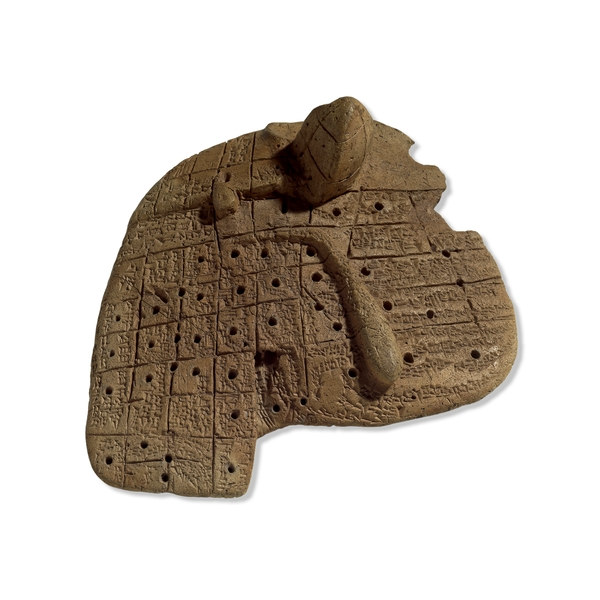
In Ancient Babylonia, the inner parts of the sacrificial sheep were considered to be a medium through which the gods conveyed their divine messages to the human sphere. Well educated scholars knew how to formulate an oracle-question, presented it to the relevant gods and obtain their god’s answer by examining the different formations and features on the entrails of a sheep’s carcass. Especially the liver was considered to be an artifact on which the gods wrote their answer and was hence called by the ancient sources “the tablet of the gods”. Like a clay tablet, the common form of documentation at the time, also the liver carried signs, which were equated to cuneiform signs, adding up to a written message, which contained the decision of the Sun-god on the matter of the oracle. For this reason, experts in the oracle lore also produced liver models made of clay, which allowed the division of the liver into zones for analytic purposes, allowing to study how to read the features appearing on the different parts of the liver as a text. In addition to that, students and experts in extispicy also wrote their learned remarks on these clay models, which in these cases, turned the models into a written artifact perse. The signs on the clay, just like the features detected on organs of carcasses, had an important aspect of language polyvalency, since the cuneiform sign has, more often than not, more than one value in the different languages of the Ancient Near East.
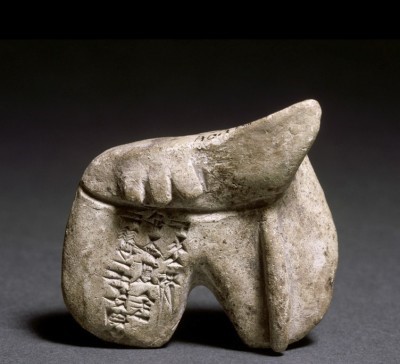
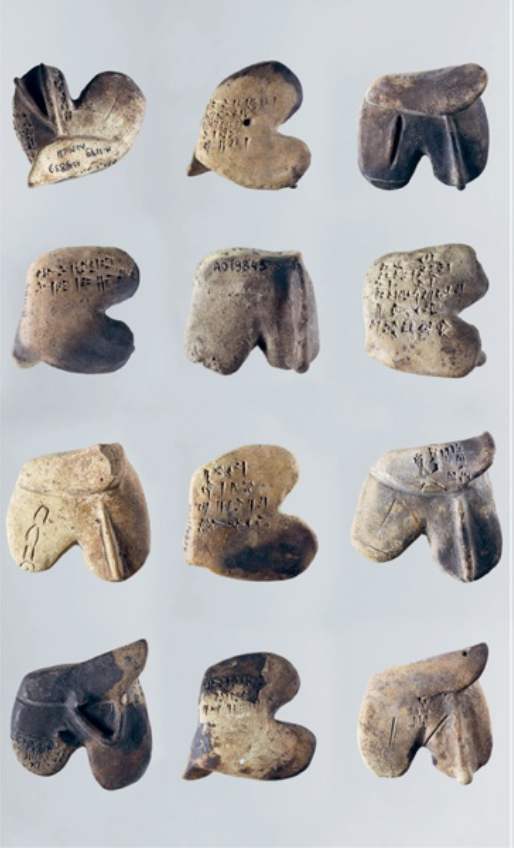
This project hence aims at studying how the inner parts of the sacrificial animals were perceived, and then studied, as a document. This ancient perception of the inner organs of the sacrificial animal offers new light on what can be perceived as a written document by ancient societies and on the kind of materials that can potentially contain written signs and hold a divine message. This perception of biological materials as a medium, calls for a deeper investigation of the subject, as it can offer new light on the nature of what a written document can consist of and on the materials from which it can be fabricated. This study hence intends to offer a comprehensive survey and study of the sources that point, explain and allude to this relation liver/written artifact and to examine how this type of artifact was interpreted in different regions and social context. Since extispicy was considered in the Ancient Near East as one of the branches of higher knowledge, this project also aims at offering new insights as for the role of this type of written document in the history of the study and transmission of this branch of ancient Babylonian science, also beyond the Ancient Near East.

Project Overview

Project lead: Netanel Anor

Status: completed (2024–2025)

Project affiliation: Cluster of Excellence Understanding Written Artefacts (UWA I)

Research Field: Creating Originals (RFC) 

Project number: RFC12

  • UWA 2019–2025

Last update: 28 October 2026

  • Feedback
  • Legal notice
  • Privacy statement
  • Accessibility
  • Site map

University of Hamburg

Innovating and Cooperating for a Sustainable Future in a Digital Age

  • Follow us on Instagram.
  • Follow us on Facebook.
  • Connect with us on LinkedIn.
  • Follow us on Mastodon.
  • Follow us on Bluesky.
  • Subscribe to our channel on YouTube.
    • Studies
    • Prospective students
    • Continuing education
    • Research
    • Teaching at UHH
    • Doctoral studies
    • Job opportunities
    • Knowledge exchange
    • University
    • Excellence
    • Faculties
    • Alumni
    • Contact
    • Campus Navigator
    • UHHApp
    • Emergencies, safety and security
    • Antidiscrimination
Go to family-friendly higher education institution audit
Go to internationalisation re-audit
Go to the Sustainability Audit page
Go to Diversity Audit
Go to System accreditation

© 2026 University of Hamburg. All rights reserved