CSMC
CSMCCentre for the Study of Manuscript Cultures
Photo: UHH/Denstorf
14 June 2026
A very large number of cuneiform texts still need to be deciphered, edited, and analysed in order to reconstruct the history of the ancient Near East and Middle East. Will AI replace Assyriologists in a few years? The question is coming up more and more.
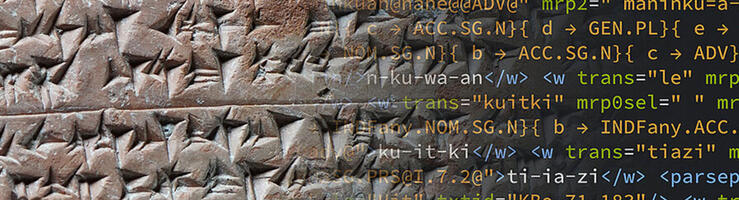
Can we teach computers to decipher cuneiform scripts? I already mentioned this topic in 2019, explaining the complexity of the task posed by a writing system whose sign shapes changed a great deal over more than three millennia of use, employing three systems (logographic, syllabic, and alphabetic), and used by around 15 languages belonging to different linguistic families. Added to this is the fact that it is a handwritten 3D script, and therefore subject to the variations in scribes’ hands.
In May 2023, a team of computer scientists and Assyriologists from Tel Aviv announced that they had created a new programme of the Google Translate type, using neural machine translation, which would allow automatic translation of cuneiform tablets. To do this, the researchers used one of the online databases of cuneiform tablets, the Open Richly Annotated Cuneiform Corpus, which includes texts in Akkadian from different periods and of varied genres.
Upon reading the scientific article, it turns out that the corpus used mainly consists of Assyrian royal inscriptions, often carved in stone and relatively stereotyped, as well as administrative and epistolary documentation from Assyrian rulers written on clay, meaning a total of about 8,000 texts of highly variable length, more than 7,000 of which date to the first millennium BCE.
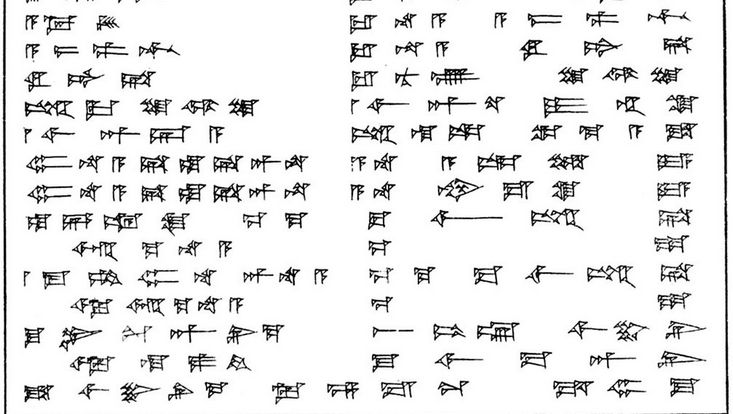
The programme does not work on photographs of the inscribed objects, but on the cuneiform copy of the text made by Assyriologists, whose signs are converted into Unicode characters. Creating cuneiform copies is a fundamental first step for understanding the text, because Assyriologists must identify the correct sign and then the correct reading among multiple possibilities.
The automatic translation programme is tested either using Assyriologists’ transliteration or using the Unicode cuneiform characters. In the first case, according to the authors, the comprehension rate is 3.7/10, and in the second case it is 3.6/10. We are therefore very far from a true translation. And we can imagine how consequential misunderstandings could be, potentially changing the course of history!
It is also worth noting that the website where the authors propose to make their tool available is called The Babylonian Engine. However, the texts in the Babylonian dialect account for less than 4% of the corpus used to train the programme. Finally, the site appears to be already outdated, since the beta and demo versions do not work.
That same year, another project was developed in Germany by a computer scientist at the University of Halle-Wittemberg with Assyriologists from Mainz. The researchers used 3D models of 2,000 tablets from the Hilprecht collection kept at the University of Jena, whose surfaces had been damaged – texts that are therefore difficult to decipher.
Almost 500 texts had already been transcribed and translated. Thanks to an optical character recognition system, the aim is to recognise signs in 3D that have partially faded and convert them into readable text.
Still in 2023, a team from Würzburg, working together with researchers from Mainz, published the Thesaurus Linguarum Hethaeorum digitalis (TLHdig, whose version 0.3 is accessible today). This is a research tool devoted to Hittite texts, a language of the Indo-European family used in Anatolia, mainly in the second half of the second millennium BCE.
Many of the large tablets were broken into numerous pieces, and the researchers are trying to reconstruct the ‘puzzles’. The Thesaurus contains more than 22,000 transcribed texts, enabling searches for Hittite texts in cuneiform or in transliteration.
This thesaurus was also used to create a new AI-based tool called Palaeographicum, which recognises individual variations of cuneiform signs in digitised photos, thereby facilitating the identification of fragments from the same tablet. A next step would be to teach the computer to recognise the different hands of scribes, allowing Assyriologists to analyse the production of each scribe.
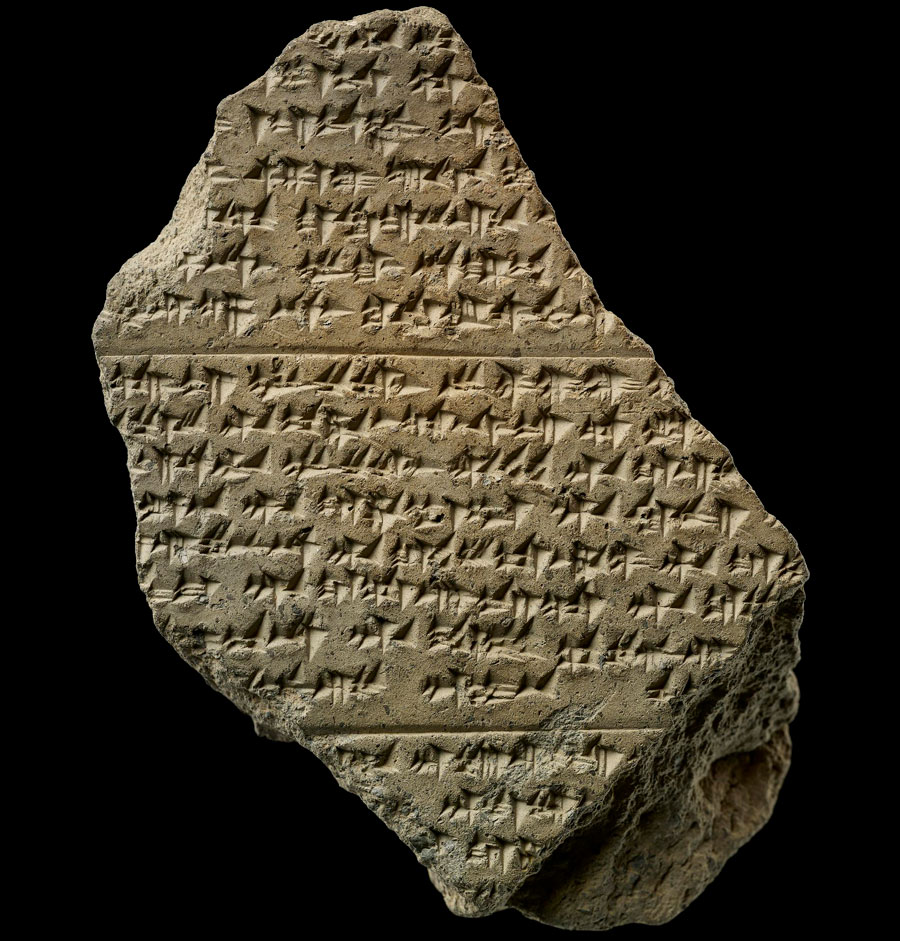
This tool shows an important advance, but it can only be applied to cuneiform tablets of the chancery that were excavated at Boğazkale, the ancient Hattusa (Hattusha), capital of the Hittites. These were produced by trained scribes. Their writing surface is almost flat, and the signs are printed with particular regularity.
Artificial intelligence can therefore provide researchers with a significant support, helping them link together texts that mention the same individual, a geographical site, or a word within a large digitised corpus. But we are still far from machine decipherment of texts. At each stage (reading the signs, transliteration, translation), Assyriologists use their knowledge of sign shapes, the language, and the context in which the text was written to understand its meaning.