CSMC
CSMCCentre for the Study of Manuscript Cultures
Photo: UHH/Denstorf
15 February 2026
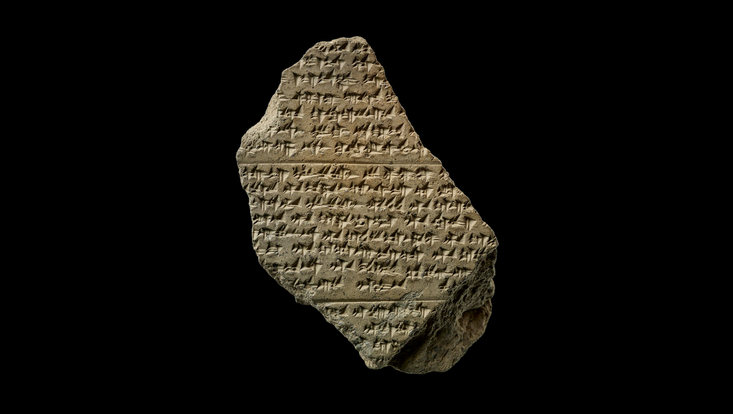
In the 19th century, alongside the first decipherers of cuneiform scripts, many scholars dreamed of making their mark on history by uncovering the secrets hidden in these ‘nail-shaped’ drawings. Some of them got stuck in dead ends, while others had no qualms about letting their imagination run wild.
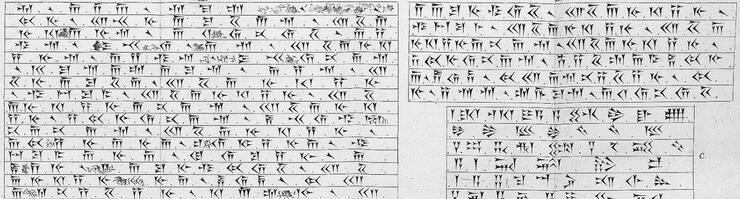
When travellers brought back the first examples of these cuneiform symbols from their expeditions to the East, a debate arose between those who, like Pietro della Valle (1586–1652), regarded them as a form of writing, and those who saw them as decorative elements, such as Thomas Hyde (1636–1703), or, like Johann Albrecht von Mandelslo (1616–1644), cabalistic symbols. Another hypothesis, about signs discovered on volcanic bricks, suggested they were natural volcanic formations.
Once writing became prevalent in the second half of the 18th century, opinions diverged on how the signs should be read. Should they be read from right to left, from left to right, or in a boustrophedon fashion, alternating direction? S. F. Günther Wahl (1760–1834) argued for the latter, while Jean Chardin (1643–1713) suggested a vertical reading. Rudolf Erich Raspe (1737–1794) also leaned toward this last solution: he noticed a similarity between the writing of ancient Persia and Chinese characters, and even went so far as to suggest that it transcribed Chinese. Charles Vallancey (1731–1812), by contrast, proposed a link with ogham writing, used to record Irish in the middle of the first millennium of our era.
These wrong turns inspired an anonymous pamphlet published in English in 1837: ‘Scholars are divided and argue at length over how the letters should be read in order to be understood, since whether from right to left, from left to right, or vertically, remains an unresolved question concerning this strange alphabet. [But whatever] the correct key may be – the ‘Open Sesame’ to reveal the glorious treasures hidden beneath – let the serious philologists explain it, even if they have not yet discovered much.’
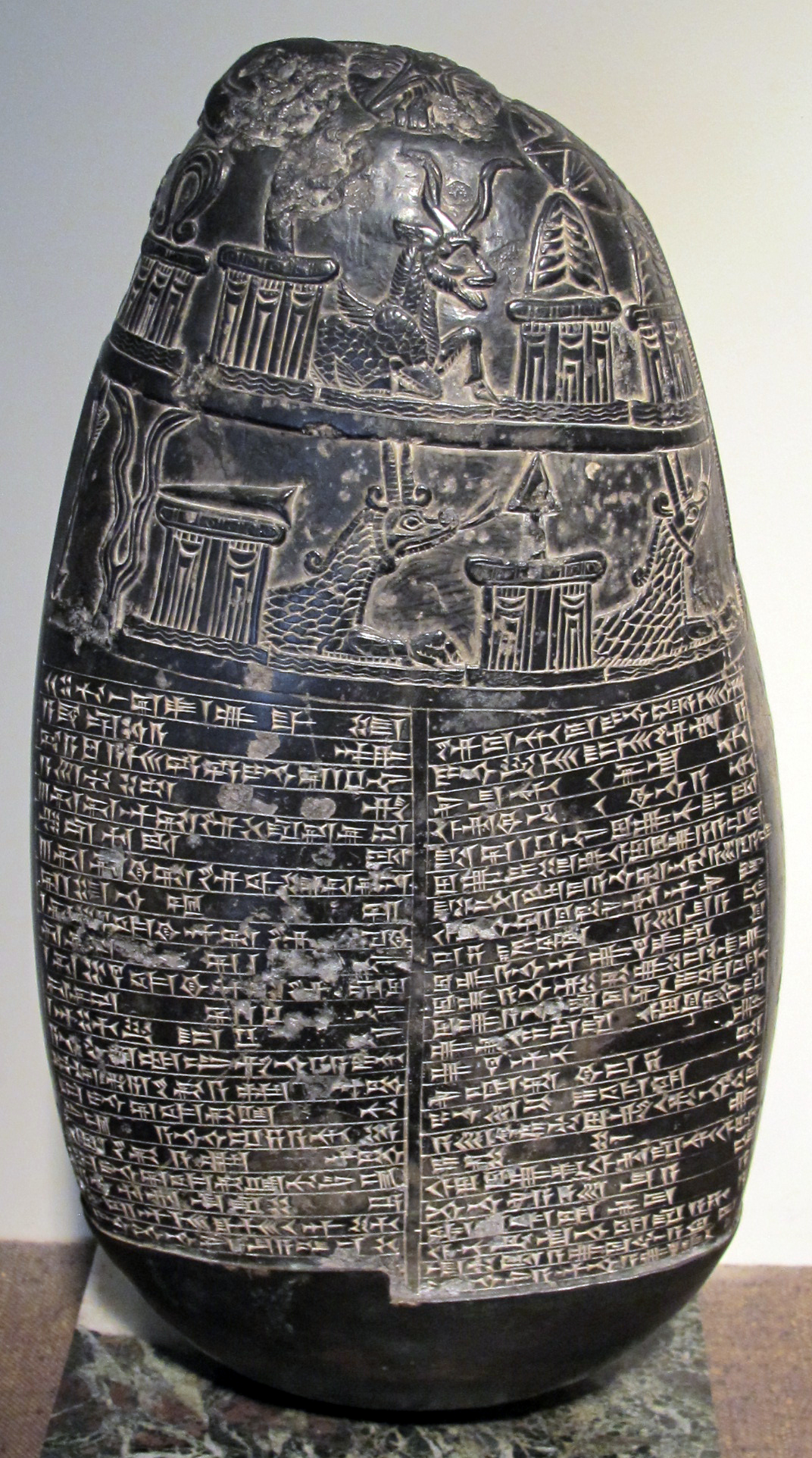
In 1786, the introduction into Europe of a first object bearing a complete inscription, by the botanist André Michaux (1746–1802), marked a turning point in scholars’ work. By 1801, Anton Lichtenstein (1753–1816) proposed a complete translation, the very first and by far the most eccentric! A professor of theology at the University of Helmstedt and a pastor, he made connections on the one hand with the estrangelo, an ancient form of the Syriac alphabet, and on the other with the kufic, the angular Arabic script used from the 7th century onward, also known as ‘early Abbasid’ script. He therefore believed he was dealing with Aramaic, read from right to left, and found in each cuneiform character the kufic letters by removing all the unnecessary ‘claws’.
According to A. Lichtenstein, the inscription on the stele describes a ritual in which mourning women go to the temple on the day of the dead and are comforted there by priests: ‘Women who wear garments of mourning, listen to the orders I give you (…) The army of heaven does not feed us with vinegar except to provide remedies suited to restore our health. Although it often separates so many faithful friends, it later reunites them forever. (…) Weakness, do not forget, is the lot of women; too often you are blind to your own faults (…) Yes, be pure, chaste, devout, and full of reverence: let your love be entirely devoted, and without sharing, to your husbands.’ He adds that he is giving here ‘a faithful translation, albeit a little free, of this monument which I have deciphered exactly in its entirety.’
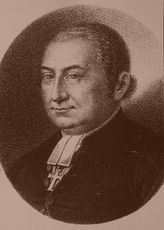
In fact, the text of this 11th-century BCE stele is a deed: a father donates agricultural land to his daughter on the occasion of her marriage. A. Lichtenstein anticipates potential disbelief from some: ‘I
must expect that more than one orientalist scholar will reject my discovery, or perhaps try to demonstrate its falsity, precisely because it would seem to reproach them harshly for not noticing this striking, obvious resemblance between the main features that make up the letters of cuneiform writing and elements of the kufic alphabet or estrangelo, and for, because of their prejudices, ignoring this similarity.’
Once cuneiform characters were ‘deciphered’, scholars tried to find connections with languages they knew well. That is how one of them proposed to see Russian in the name of the Babylonian king Nebuchadnezzar, interpreting it as ‘Ne-boch-ad-ne-tzar’, which he translated as ‘There is no other god than the Tsar’ (anonymous, 1877).
These missteps illustrate the difficulty cuneiform scripts posed when they were rediscovered, and the credit that must rightly be given to the real decipherers: Georg Grotefend, Henry Rawlinson, Edward Hincks, Jules Oppert, François Thureau-Dangin, followed by many others.
For more details, see C. Michel, ‘False leads and mystifications in the decipherment of cuneiform scripts’, in Zahra Hashemi, Amaury Havé, Mathilde Jean, Théo Mespoulet, Hugo Naccaro, Sidonia Obreja, Clélia Paladre, Josselin Pinot, and Salomé Sepeau (eds.), Another Brick in the Wall. Mélanges en l’honneur de Martin Sauvage, Subartu LIV, Turnhout: Brepols, 2026, pp. 3–17.