CSMC
CSMCCentre for the Study of Manuscript Cultures
Photo: UHH/Denstorf
17 January 2026
On 17 February, the Chinese zodiac will enter the Year of the Fire Horse. The Horse is the seventh of twelve Zodiac signs in China. The Fire Horse comes around every sixty years and is accompanied by a kind of astrological curse that is said to affect the births of girls. But what about our Zodiac?

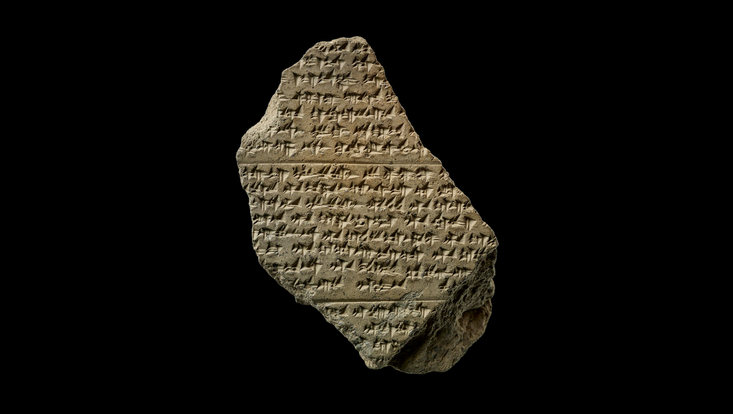
The Zodiac is a band of the celestial sphere centered on the ecliptic, framing the apparent path of the Sun. This band is divided into twelve equal parts bearing the names of the constellations closest to it. The Zodiac originated in Mesopotamia alongside astrology. It is based on careful observations of celestial phenomena made with the naked eye over several millennia. For these ancient inhabitants of Iraq, observing celestial and weather-related phenomena mainly served two purposes: establishing the calendar and constructing omens about the future.
Many names of stars and constellations are Sumerian and therefore date to before 2000 BCE, when the Sumerian language ceased to be spoken. From the beginning of the second millennium BCE onward, word lists provide the names of the planets visible to the naked eye, as well as of constellations and the brightest stars. It is also from this period that the first astrological texts appear, whose omens are linked to lunar and solar eclipses. Celestial bodies were in fact regarded as messengers through which the gods communicate with human beings. Therefore, their movements and positions are interpreted positively or negatively.
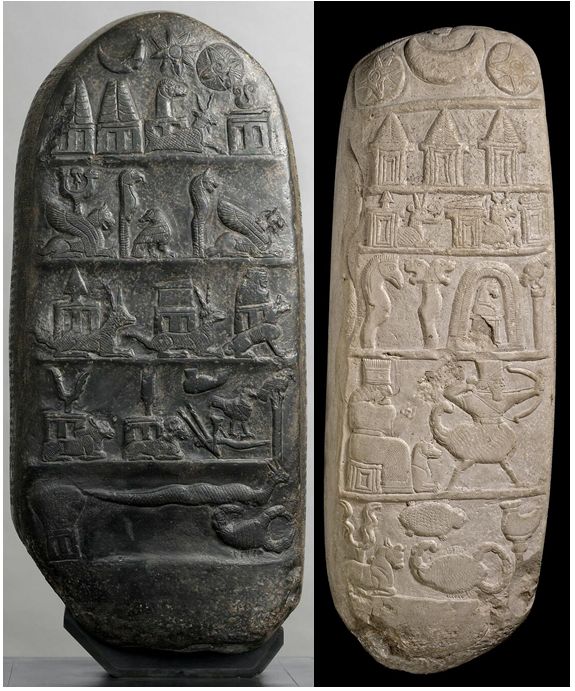
The Babylonian Epic of Creation (Enuma eliš), a poem of 1,100 lines, explains how the god Marduk organised the stars in the heavens: he drew the stars and constellations and fixed the meridian. The stars attached to the celestial vault move with it, while the five planets known at the time, as well as the Sun, the Moon, comets, and shooting stars, make up the ‘wandering’ celestial bodies. Star configurations, described as the images of the gods, influence human life and destiny. Depictions of constellations appear on stone stelae; you find the scorpion, the Sagittarius, the Capricorn…
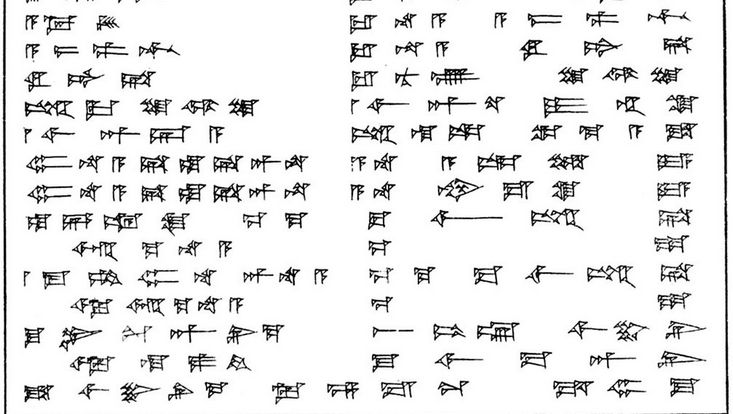
From the second half of the second millennium BCE onward, large astrological series were compiled, such as ‘When Anu and Enlil’ (Enuma Anu Enlil), which offers a compilation of 7,000 omens drawn from sky observations on 70 cuneiform tablets. These omens are linked to the movements of the Moon and Sun, to Venus’s rising and setting, and also to eclipses.
Another text from the same period, ‘The Plough Constellation’ (the Great Bear, Mul Apin), lists 71 stars and constellations arranged on three parallel paths to the equator. It specifies the heliacal risings of many stars and describes the astrologers’ procedures for predicting the movements of the Sun, Moon, and planets. Among the constellations, 18 are classified separately because they lie on the orbit of the Moon, the Sun, and the planets; this is the first definition of the Zodiac belt, described as the ‘path of the Sun/the Moon’. The year is then divided into four astronomical seasons. The constellations are visible only for six months of the year.
In the first millennium BCE, astrologers at the king’s court produced daily observation reports and tried to predict eclipses. A text dated 419 BCE gives, for the first time, the twelve Zodiac signs as defined by the constellations they contain:
* The Archer (Aries/’the Ram’)
* The Stars (Taurus)
* The Twins (Gemini)
* The Crab (Cancer)
* The Lion
* The Ear of Grain (Virgo)
* The Balance (Libra)
* The Scorpion
* Sagittarius
* The Fish-Goat (Capricorn)
* The Giant (Aquarius)
* The Swallow and the Tails and Annunîtum (=Andromeda) (Pisces)
Horoscopes appear at the same time. They begin with ‘The child was brought into the world in such a year, month, day, and hour’, and give the positions of the planets within the Zodiac, the time intervals until the Moon and Sun rise, and then refer to the corpus of ‘birth omens’.
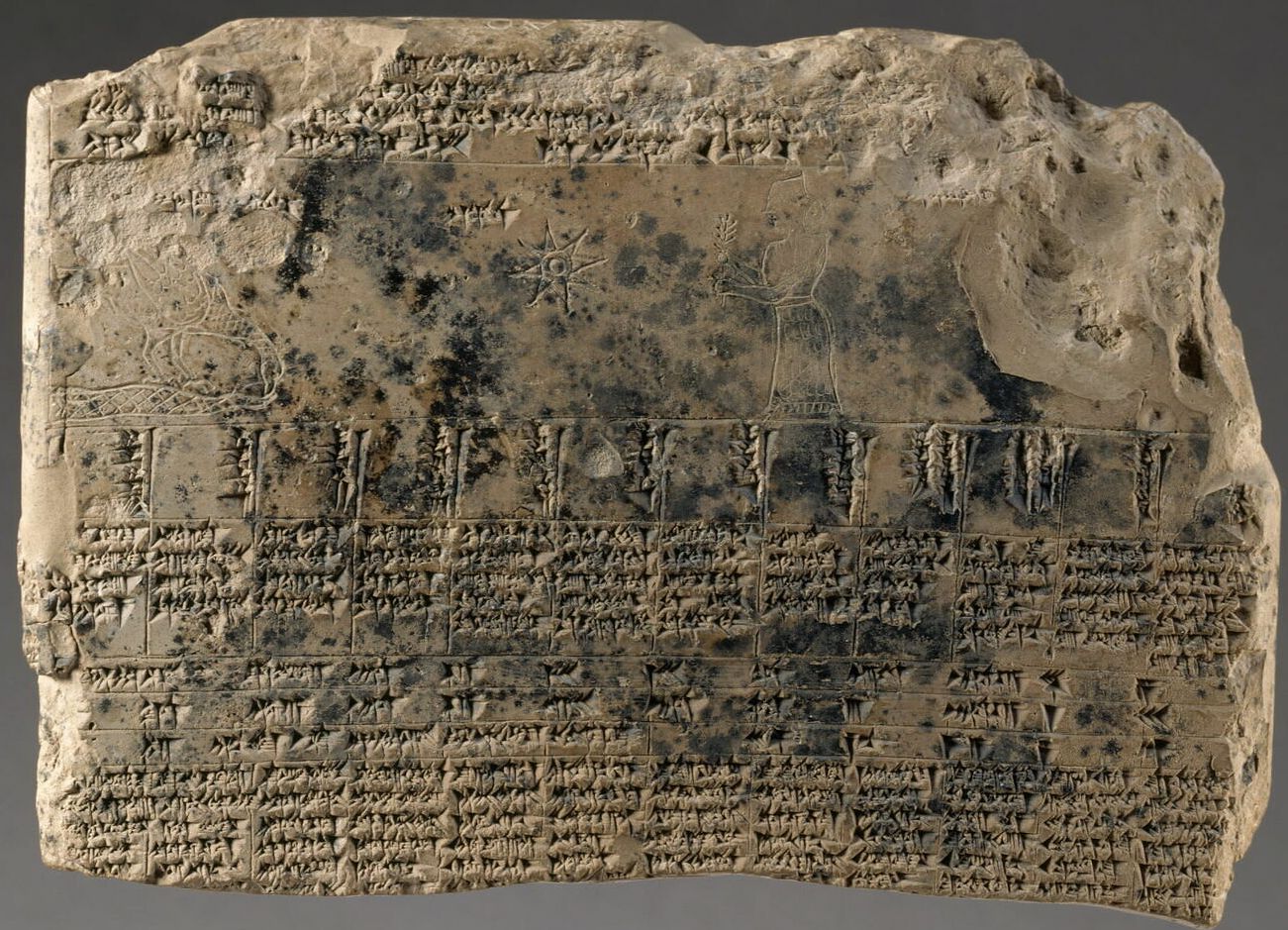
From 220 BCE onward, the Babylonians wrote astronomical almanacs divided according to the twelve months of the year, noting the position of the Moon and planets along the ecliptic and the twelve zodiac constellations; they predicted lunar and solar eclipse dates with greater precision.
Babylonian astronomical reports and almanacs were used by the Greeks – Eudoxus of Cnidus in the 4th century, Hipparchus in the 2nd century BCE, and then Ptolemy in the 2nd century CE. Ptolemy describes our twelve zodiac constellations, which therefore were borrowed directly from the Babylonians. Their names were translated and adapted into Greek.