CSMC
CSMCCentre for the Study of Manuscript Cultures
Photo: UHH/Denstorf
6 August 2025
While many heads of state around the world cling to their office by any means – changing their country’s constitution at the risk of erasing democracy – power in other countries is passed on to the sons who succeed their father.
But to found such a dynasty, one still needs children. That was the problem faced by Etana, king of Kish, who had no descendant.
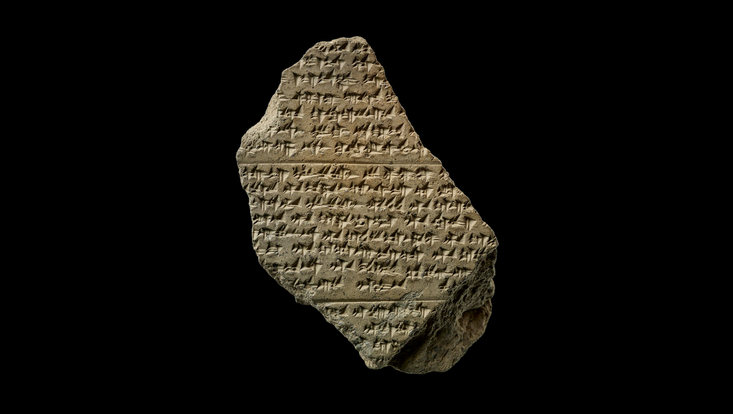
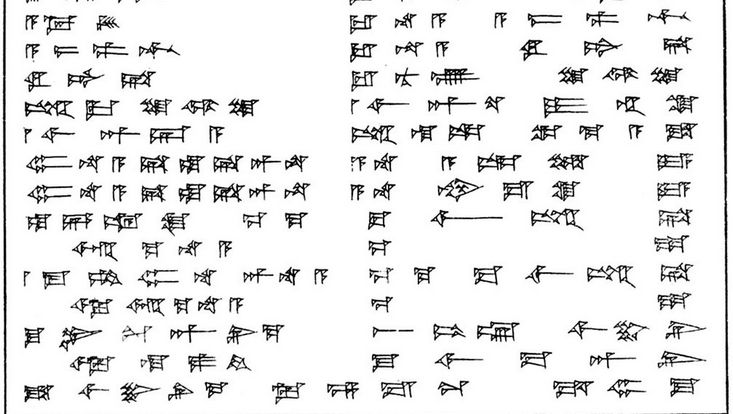
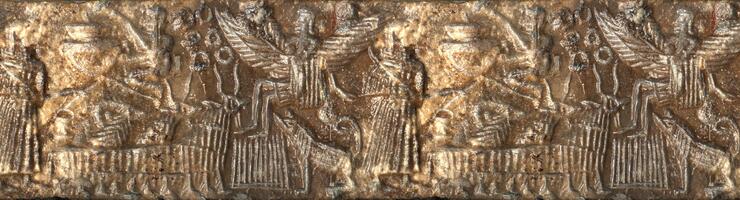
Three versions of the Etana myth written in Akkadian have survived, known through several copies. The oldest versions date to the early second millennium BCE, but the myth already existed in the third millennium BCE, as shown by scenes on cylinder seals from the Akkad period (2335–2200) depicting the hero riding on the back of an eagle. The most complete text comes from the Library of Ashurbanipal at Nineveh and dates to the 7th century. The story originally covered three tablets, perhaps four, of about 150 lines each. According to a catalogue of cuneiform literary works, its author is Lu-Nanna, one of the sages of the city of Ur.
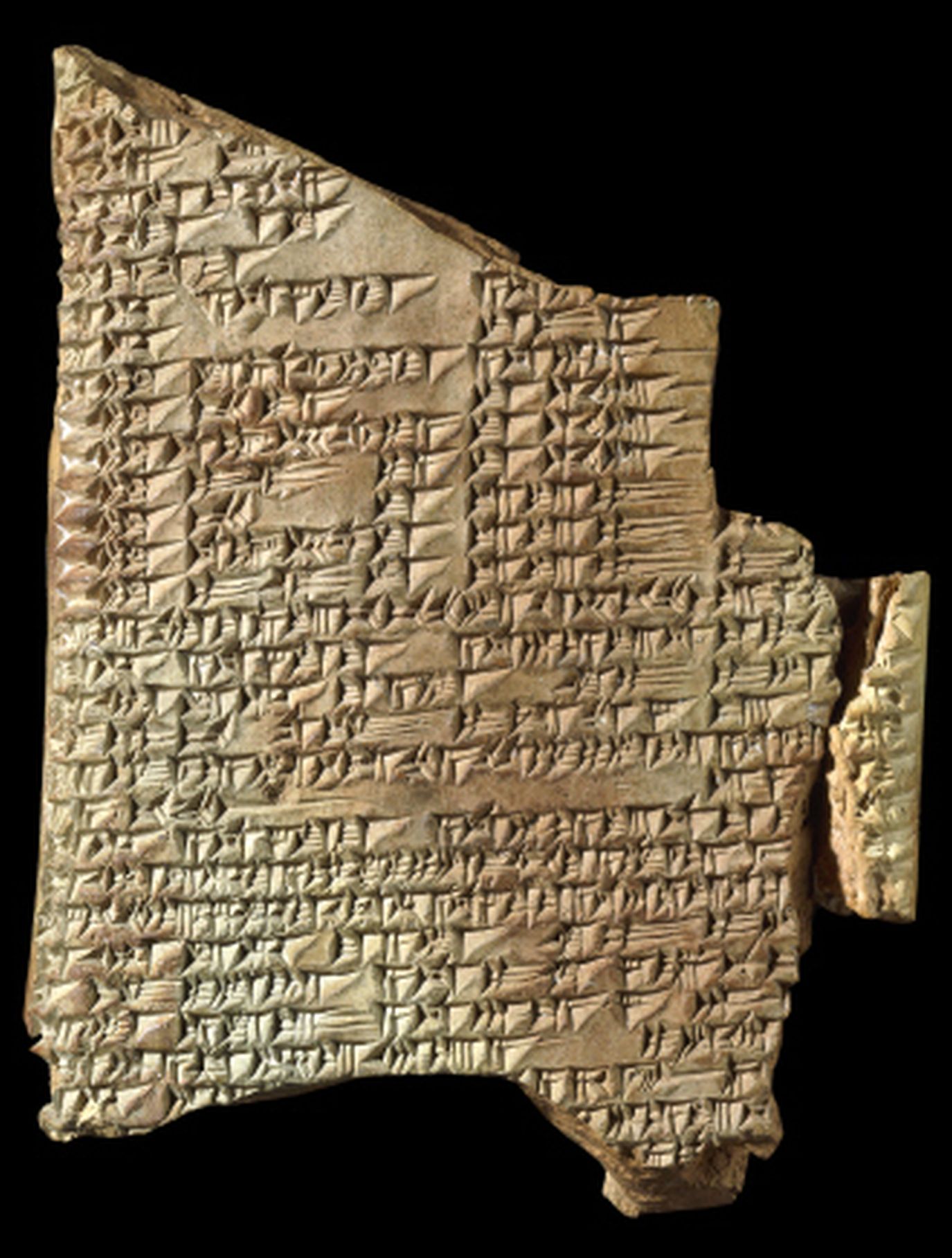
The narrative begins after the creation of humankind, at a time when people were starting to live in large urban centres, including the city of Kish. It was then that the gods realised they had failed to create appropriate political institutions to manage such large settlements.
The creators of the four regions of the world, the founders of all creation
By their command, all the people were summoned to celebrate
They had not installed a king among the abundant populations.
Advised by Ishtar and under the authority of Enlil, the gods invented kingship and its attributes and appointed Etana as king of Kish. The Sumerian king list confirms that, after the Flood, kingship was indeed first exercised at Kish. However, Etana would be the thirteenth ruler there. He is defined as ‘the shepherd, the one who climbed to heaven, who put all the lands in order.’ Depending on the version, he reigned for between 635 and 1,500 years.
Although Etana was a king who lived to a great age many times over, he was still mortal. Then arose the problem of transmitting kingship. Ideally, it should return to the king’s son, but Etana had no child. He set out to find the plant of childbirth for his wife – a plant held by the goddess Ishtar – and to do so, he needed access to the divine world.
A long fable then cuts into the story. It features a snake and an eagle. Near the sanctuary built by Etana for the storm god Adad, a poplar grew; a snake lived at its base, and in its branches an eagle had built its nest. The animals had formed a pact of friendship and shared the spoils of their hunting to feed their young. But the eagle broke the pact by devouring the snake’s hatchlings. As a result, Shamash condemned the eagle to die of starvation at the bottom of a pit.
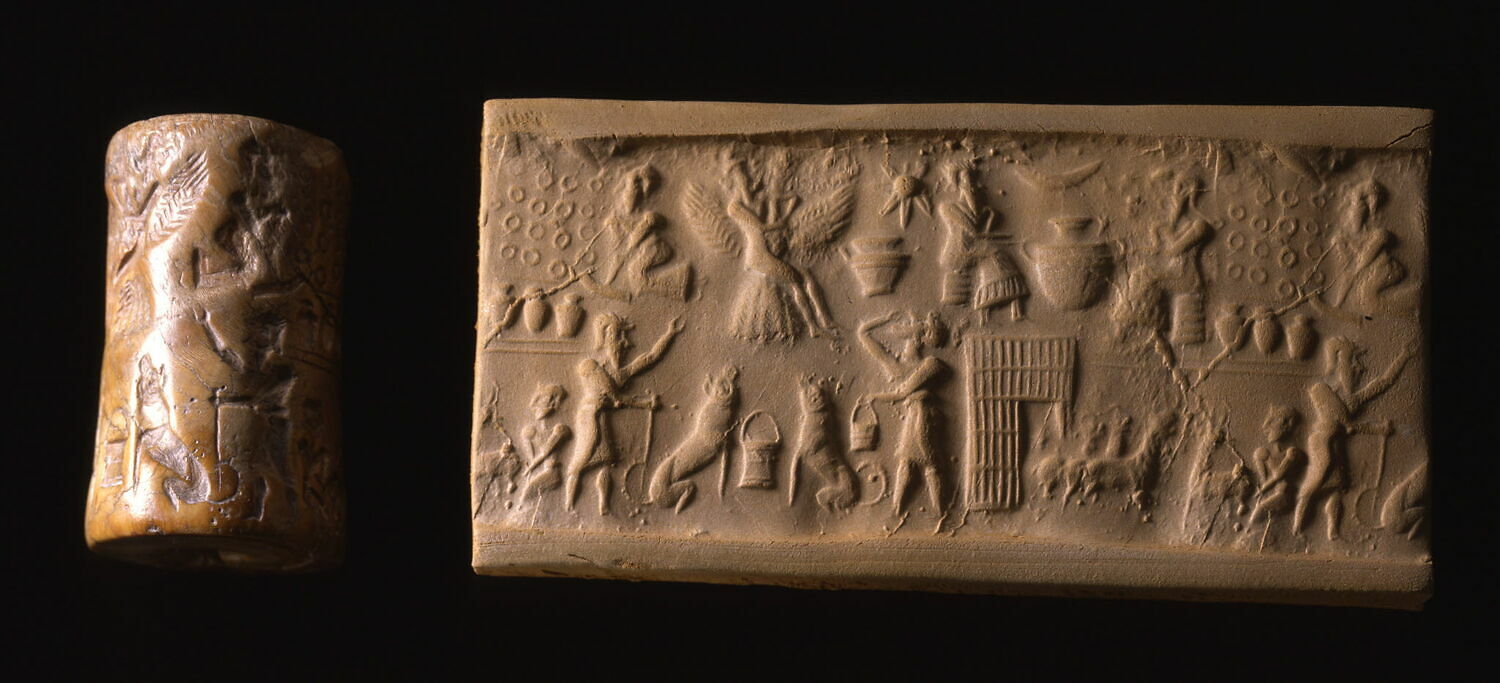
Meanwhile, Etana begged the god to provide him with that famous plant for childbirth. Shamash then guided him to the pit where the eagle was wasting away. In exchange for healing the eagle, Etana was promised a ride on its back up to the heavens, where the gods lived and the coveted plant was located. Seated on the eagle’s back, Etana rose into the air and discovered a world that seemed to shrink.
He placed his arms on his sides, he placed his hands on the feathers of its wings.
He lifted it by a double league, and:
— ‘Look, my friend, at the country – how is it?’
— ‘The vast sea is as small as a cattle pen.’
He lifted it by a second double league, and:
— ‘Look, my friend, at the country – how is it?’
— ‘The country has turned into a garden, and the vast sea is as small as a water trough.’
He lifted it by a third double league, and:
— ‘Look, my friend, at the country – how is it?’
— ‘I looked, but I cannot see the country anymore, and my eyes are no longer able to see the vast sea!’
The adventure came to an abrupt end. Once they reached the threshold of the gods’ domain, Etana and the eagle fell back to earth. If Etana had managed to enter the realm of the gods, he would immediately have gained immortality and solved, once and for all, the problem of transmitting kingship. But just as Gilgamesh, in search of the plant that would grant eternal life, failed, Etana fell short just before the goal. The end of the last tablet is broken, but we can infer that Ishtar took pity on Etana and granted him the plant of childbirth, allowing his wife to give birth to an heir. In fact, the Sumerian king kist shows that Etana’s son succeeded him on the throne.
Even if some people cling to power, this myth reminds us that humans cannot escape their mortal condition and claim superiority over the divine world.