• Zur Metanavigation
  • Zur Hauptnavigation
  • Zur Suche
  • Zum Inhalt
  • Zur Subnavigation
  • Zum Seitenfuß
  • University of Hamburg
  • For journalists
  • Staff Service Portal0
  • STiNE
https://www.kus.uni-hamburg.de/aktuelles.json?recentnews=true
  • Institutions and target groups
    • Einrichtungen
      • Faculties

        • Faculty of Law
        • Faculty of Business, Economics and Social Sciences
        • Faculty of Medicine
        • Faculty of Education
        • Faculty of Humanities
        • Faculty of Mathematics, Informatics and Natural Sciences
        • Faculty of Psychology and Human Movement Science
        • University of Hamburg Business School
      • Services

        • Study Information Net STiNE
        • Surfmail
        • Exchange
        • Staff Service Portal
        • Learning Platforms
        • Katalogplus – Catalogue of Hamburg Libraries
        • SharePoint
      • Student facilities and services

        • Campus Center
        • Career Center
        • PIASTA
        • AStA (student council)
        • University Sports
        • University Music
        • Family Office
        • University Language Center
        • General Languages
        • Office of Affairs for Students with Disabilities or Chronic Diseases
        • Departmental libraries
        • Healthy Campus
      • Further facilities and services

        • The Cluster of Excellence CLICCS
        • The Cluster of Excellence CUI
        • The Cluster of Excellence Quantum Universe
        • The Cluster of Excellence Understanding Written Artefacts
        • Hamburg Research Academy
        • Pier Plus
        • Hamburg Center for University Teaching and Learning (HUL)
        • Hub for Crossdisciplinary Learning (HCL)
        • CEN
        • Museums and collections
        • University Archives (in German)
        • Regional Computing Center (RRZ)
        • University Administration
        • Knowledge Exchange Agency
        • The Unikontor Shop (in German)
    • Target groups

      • Prospective students
      • Students
      • International prospective students
      • Young researchers
      • Researchers
      • Instructors
      • Staff
      • Prospective continuing education students
      • Alumni
      • Journalists
      • Refugees (in German only)
    Close
  • /sitemap.json
University of Hamburg - to research, to teach, to educate and form, to homepage

CSMC

CSMCCentre for the Study of Manuscript Cultures
  • About
    • People
    • News
    • Ethics
    • Equity & Diversity
    • Sustainability
    • Logbook: The CSMC Blog
    • Contact & Newsletter
    • Vacant Positions
    • Intranet
  • Research
    • Concepts & Methods Units
    • Project Groups
    • Individual Research Projects
    • Working Groups
    • Affiliated Projects
    • Fellowships
    • Research Events
    • UWA I (2019–2025)
    • SFB (2012–2020)
  • Core Units
    • Laboratories
    • Graduate School
    • Cultural Heritage
    • Library
  • Collaboration
    • with Research Partners
    • with Archives, Libraries, and Museums
    • with Artists
    • with Companies
    • with Schools
    • within the HALM and PIER Networks
  • Publications
    • manuscript cultures
    • Studies in Manuscript Cultures
    • Occasional Papers
    • Software
    • Research Data and Information Systems
    • Written Artefact Profiling Guide
    • Artefact of the Month
    • Mesopotamian Bulletins
    • Videos
    • More Publications

Photo: CSMC

  1. UHH
  2. CSMC
  3. UWA 2019–2025
  4. Research Fields
  5. Research Field E: Archiving Artefacts
  6. Archival Practices in Ancient Iraq

Archival Practices in Ancient Iraq
Nicole Brisch

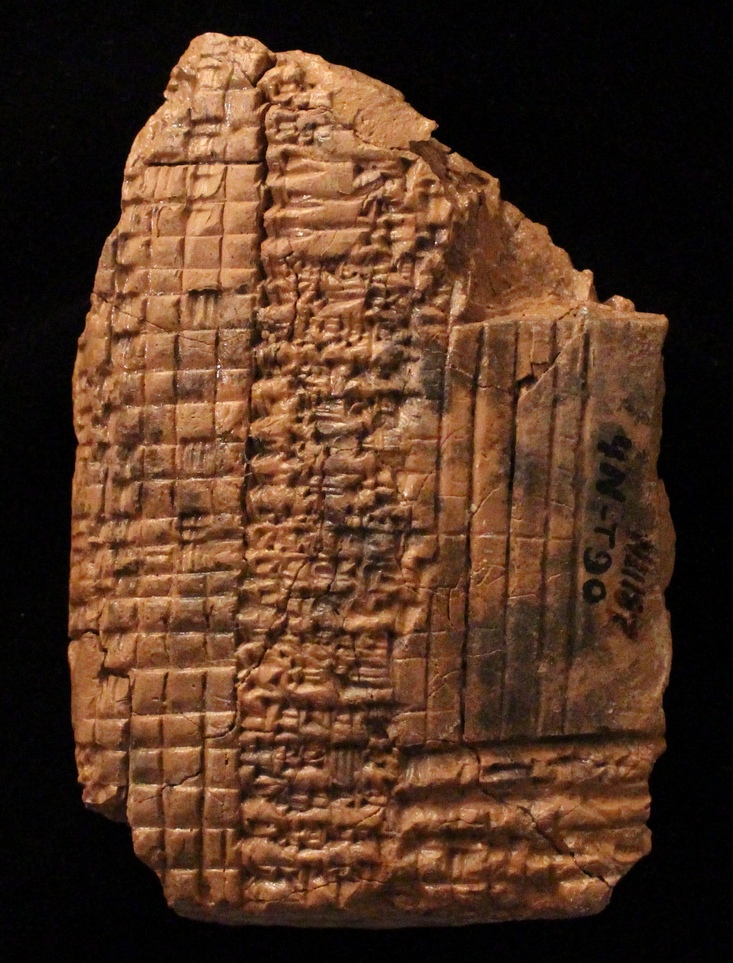
Cuneiform tablet showing tabular formatting that was used for the administration of food offerings to Mesopotamian gods. The tablet was excavated in Nippur, Iraq. Museums number: NBC 11188; Yale Babylonian Collection, Yale University.

The city of Nippur, located in southern Iraq, was the religious center of Mesopotamia during the third and second millennia BCE. The site, which has been excavated since the late 1800s, has yielded a large number of written artefacts, among others around two thousand administrative documents dating to the first half of the second millennium BCE. This research project focuses on two archival assemblages from Nippur, both of which were probably related to the administration of temples, though the institutional affiliation of these archival texts is still subject to further research.

The first assemblage consists of archival texts related to the administration of food offerings for the main gods of Nippur. The archive mentions bread, beer, porridge, short-bread, and flour among the offerings for some of the most important deities in the Mesopotamian pantheon. The archive shows some innovative practices related to writing techniques, such as the development of tabular formatting for the purpose of accounting. Though spread-sheets are ubiquitous today, the systematic use of tabular formatting in accounting is a process that developed slowly in the written record of Mesopotamia and the administrative records from Nippur, in which the tabular formatting may have been a preference of individual scribes, was the first step towards a more systematic use of mathematical tables for the purpose of accounting.

The second assemblage is made up of archival texts that may have been part of a centralised institution at Nippur and that may have been subordinate to the palace or royal administration. It is dated to a rather short time-frame of about thirty years, specifically the second half of the reign of king Rim-Sin of Larsa (r. 1822–1763 BCE). These archival texts use an unusual dating system that may have been imposed on scribes by the royal administration. The extent to which the Rim-Sin-administration reformed the calendar is still not fully understood, but the new calendar seems to have consisted of ‘super-years’ with up to twenty-five months, while still only using the names of previously existing months. Some of these months also deviate from the standard month length of thirty days. In connection with a re-evaluation of this calendar system, this research project also fully catalogues and fully edits the archival texts that are the basis of this research. This research project furthermore attempts to identify individual administrators and, if possible, their institutional affiliation. This allows for a better understanding of royal influence on archival practices in the ancient Near East.

Project Overview

Project lead: Nicole Brisch

Research Associate: Johannes Groß

Status: completed (2023–2025)

Project affiliation: Cluster of Excellence Understanding Written Artefacts (UWA I)

Research Field: Archiving Artefacts (RFE)

Project number: RFE21

  • UWA 2019–2025

Last update: 28 October 2026

  • Feedback
  • Legal notice
  • Privacy statement
  • Accessibility
  • Site map

University of Hamburg

Innovating and Cooperating for a Sustainable Future in a Digital Age

  • Follow us on Instagram.
  • Follow us on Facebook.
  • Connect with us on LinkedIn.
  • Follow us on Mastodon.
  • Follow us on Bluesky.
  • Subscribe to our channel on YouTube.
    • Studies
    • Prospective students
    • Continuing education
    • Research
    • Teaching at UHH
    • Doctoral studies
    • Job opportunities
    • Knowledge exchange
    • University
    • Excellence
    • Faculties
    • Alumni
    • Contact
    • Campus Navigator
    • UHHApp
    • Emergencies, safety and security
    • Antidiscrimination
Go to family-friendly higher education institution audit
Go to internationalisation re-audit
Go to the Sustainability Audit page
Go to Diversity Audit
Go to System accreditation

© 2026 University of Hamburg. All rights reserved