
Archival Practices and Preservation Methods in Ethiopian Manuscript Tradition
Focusing on the ʿUrā Kidāna Məḥrat monastery in Goǧǧām
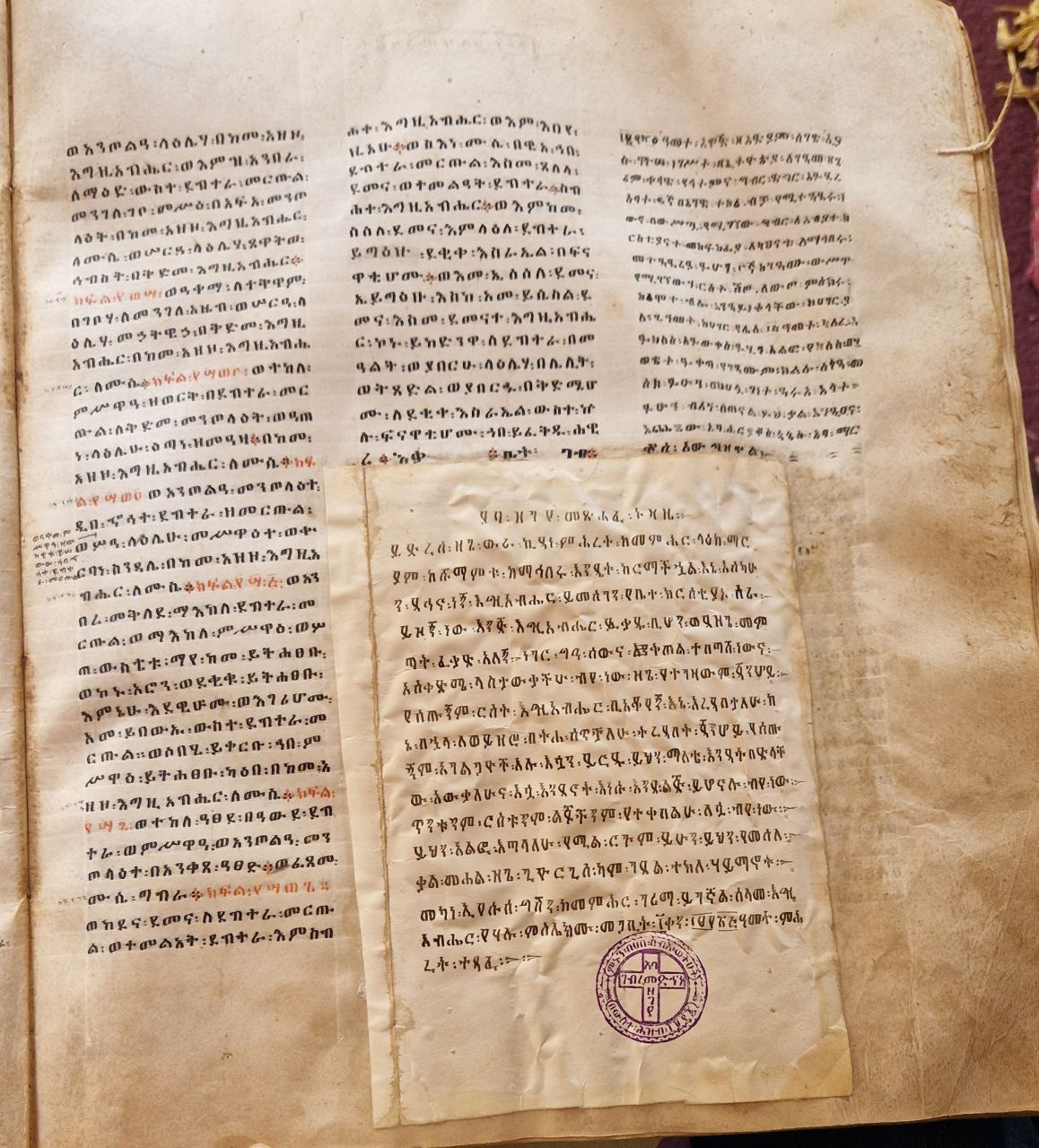
The ecclesiastical centers of Ethiopia hold vast archives of historical, legal, administrative, and other documents, as well as thousands of ancient biblical, canonical, and liturgical manuscripts. The monastic archive studies comprise four main elements: archiving technique, archival documents, material element, and manuscript preservation method, which are interconnected and, in some cases, interchangeable. This project aims to investigate the tradition of archiving and preserving archival documents in the monastery of Ethiopia, with a focus on ʿUrā Kidāna Məḥrat Monastery, located on the Zage peninsula of Lake Ṭānā and founded in the fourteenth century.
ʿUra Kidāna Məḥrat monastery has a huge manuscript collection and a structured archival arrangement. Based on the inventory of the monastery’s manuscripts and precious objects, the register lists more than 351 manuscripts. Besides its biblical and liturgical manuscript collection, the monastery also possesses a rich archival corpus of administrative documents, religious and secular, that has not yet received scholarly attention. In this research, the monastery’s archival documents and the tradition of archiving documentary texts are examined. The production and preservation processes of archival documents, and their socio-economic and historical significance in constraining and reconstructing the local and national history of the country, are discussed.
Project Overview
Project lead: Dirbwork Bitsu Kassa
Status: completed (2023–2025)
Project affiliation: Cluster of Excellence Understanding Written Artefacts (UWA I)
Research Field: Archiving Artefacts (RFE)
Project number: RFE18