• Zur Metanavigation
  • Zur Hauptnavigation
  • Zur Suche
  • Zum Inhalt
  • Zur Subnavigation
  • Zum Seitenfuß
  • University of Hamburg
  • For journalists
  • Staff Service Portal0
  • STiNE
https://www.kus.uni-hamburg.de/aktuelles.json?recentnews=true
  • Institutions and target groups
    • Einrichtungen
      • Faculties

        • Faculty of Law
        • Faculty of Business, Economics and Social Sciences
        • Faculty of Medicine
        • Faculty of Education
        • Faculty of Humanities
        • Faculty of Mathematics, Informatics and Natural Sciences
        • Faculty of Psychology and Human Movement Science
        • University of Hamburg Business School
      • Services

        • Study Information Net STiNE
        • Surfmail
        • Exchange
        • Staff Service Portal
        • Learning Platforms
        • Katalogplus – Catalogue of Hamburg Libraries
        • SharePoint
      • Student facilities and services

        • Campus Center
        • Career Center
        • PIASTA
        • AStA (student council)
        • University Sports
        • University Music
        • Family Office
        • University Language Center
        • General Languages
        • Office of Affairs for Students with Disabilities or Chronic Diseases
        • Departmental libraries
        • Healthy Campus
      • Further facilities and services

        • The Cluster of Excellence CLICCS
        • The Cluster of Excellence CUI
        • The Cluster of Excellence Quantum Universe
        • The Cluster of Excellence Understanding Written Artefacts
        • Hamburg Research Academy
        • Pier Plus
        • Hamburg Center for University Teaching and Learning (HUL)
        • Hub for Crossdisciplinary Learning (HCL)
        • CEN
        • Museums and collections
        • University Archives (in German)
        • Regional Computing Center (RRZ)
        • University Administration
        • Knowledge Exchange Agency
        • The Unikontor Shop (in German)
    • Target groups

      • Prospective students
      • Students
      • International prospective students
      • Young researchers
      • Researchers
      • Instructors
      • Staff
      • Prospective continuing education students
      • Alumni
      • Journalists
      • Refugees (in German only)
    Close
  • /sitemap.json
University of Hamburg - to research, to teach, to educate and form, to homepage

CSMC

CSMCCentre for the Study of Manuscript Cultures
  • About
    • People
    • News
    • Ethics
    • Equity & Diversity
    • Sustainability
    • Logbook: The CSMC Blog
    • Contact & Newsletter
    • Vacant Positions
    • Intranet
  • Research
    • Concepts & Methods Units
    • Project Groups
    • Individual Research Projects
    • Working Groups
    • Affiliated Projects
    • Fellowships
    • Research Events
    • UWA I (2019–2025)
    • SFB (2012–2020)
  • Core Units
    • Laboratories
    • Graduate School
    • Cultural Heritage
    • Library
  • Collaboration
    • with Research Partners
    • with Archives, Libraries, and Museums
    • with Artists
    • with Companies
    • with Schools
    • within the HALM and PIER Networks
  • Publications
    • manuscript cultures
    • Studies in Manuscript Cultures
    • Occasional Papers
    • Software
    • Research Data and Information Systems
    • Written Artefact Profiling Guide
    • Artefact of the Month
    • Mesopotamian Bulletins
    • Videos
    • More Publications

Photo: CSMC

  1. UHH
  2. CSMC
  3. Registration
  4. Digital Lunch Seminar Series

Digital Lunch Seminar Series

Spring 2022
Convenor: Markus Fischer

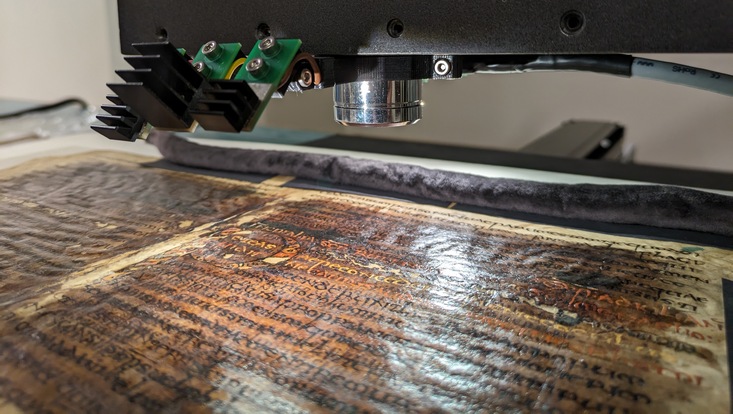
Written artefacts are material objects that bear writing in the broadest sense – from notation systems for language, music and other performative arts, to pictures, diagrams, maps or simply scribbles. Since the turn of the millennium, the study of written artefacts, such as manuscripts or inscriptions, has taken a quantum leap in terms of theory, methodology and the diversity of research materials. Traditionally, the study of written artefacts in the humanities has focused mostly on textual contents. In contrast, newer approaches take a holistic perspective and begin with the material object as such, thus integrating material analyses. This allows for novel insights into the history of writing cultures from the production of the first manuscripts and inscriptions approximately 5,500 years ago to handwriting in the digital age, as well as for elaborating cross-cultural, cross-regional and cross-epochal patterns through combining the expertise of various disciplines. On the one hand, the close cooperation between the natural sciences, computer science and the humanities allows us to reconstruct the cultural techniques involved in the production and use of written artefacts; on the other hand, this cooperation enables us to obtain information about the appropriate handling of such artefacts, which represent valuable cultural assets. 

The Digital Lunch Seminars Series covers a broad spectrum of topics in the research of written artefacts. At CSMC and the Cluster of Excellence ‘Understanding Written Artefacts’, this research brings together over 40 disciplines from the humanities, natural sciences and computer science. The seminars are presented by pairs of researchers, each with their own methods and research questions about the objects they are dealing with. The seminars provide in-depth scientific knowledge on the respective topics and address all researchers within and outside the respective field of expertise.

After a short introduction to the topic by the chairperson, there will be two lectures of 20 minutes each. At the end of each session there will be time for discussion, questions and answers. If you are unable to attend one of the events, it is possible to obtain a video of the lecture from the respective speakers.

Schedule: Mondays, 12:00 pm – 1:00 pm

Date Titel Contributors
11 April Clay Tablets – What is Hidden in Clay Envelopes? Speakers: Cécile Michel (Assyriology), Christian Schroer (Physics); chair: Michael Friedrich (Sinology)
9 May Palm Leaf Manuscripts – Cultural and Material Insights Speakers: Giovanni Ciotti (Tamil Studies), Patrick Huber (Physics); chair: Eva Wilden (Tamil Studies)
13 June Making Maps of Tibet – Uncovering the Knowledge of their Production

Speakers: Diana Lange (Tibetology), Oliver Hahn (Chemistry, Archaeometry); chair: Jörg B. Quenzer (Japanology)

11 July DNA – The Preserved Memory of Biological Materials Speakers: Anna Schulz (Chemistry, Paleogenetics), Stephan Seifert (Chemistry, Bioinformatics); chairs: Markus Fischer (Food Chemistry), Ralf Möller (Computer Science)

Abstracts and Contributors

Clay Tablets: What Is Hidden in Clay Envelopes?

Monday, 11 April 2022, 12:00 pm – 1:00 pm

Cuneiform represents the earliest form of writing. Developed by the Sumerians in Mesopotamia in the second half of the fourth millennium BCE, it was adopted by a dozen different people speaking various languages. It was used during more than three millennia all around the Middle East. More than a million cuneiform clay tablets have been found until today. Among these, legal texts and letters were wrapped in a clay envelope bearing the impressions of the cylinder seals of the people concerned. The envelope gave legal validity to the contracts and protected the confidentiality and the material integrity of the letter during its journey. Since the middle of the third millennium BCE, people sent each other many letters which tell of kings and their ruling, as well as of the mundane and private lives of families. To read the message, the envelope, and thus the artistic seal, had to be broken. However, sometimes a letter did not reach its recipient and remained in its clay envelope for thousands of years. Opening it would destroy the seal impressions. In order to read the tablets enclosed in their clay envelope, we have been developing a portable high-resolution X-ray tomographic scanner for encased tablets, which will make it possible to read the text on the tablet without breaking its envelope or alter the artefact in any way. This tomographic scanner has to be transportable in order to be used in the field and in museums around the world for imaging the interior of cuneiform letters and other artefacts. The main technical challenge is to reconcile the physical limitations of X-ray imaging with practical boundary conditions imposed by work in museums and collections, since it is not possible to take the objects out of the collections. This includes the development of special feature extraction and visualisation tools, including 3D printing of replica. The new instrument will be employed for documenting ancient encased cuneiform tablets, including those stored in the Louvre in Paris, and for systematic studies in museums and collections around the world.


Cécile Michel is an Assyriologist and a specialist for the history of Mesopotamia and Anatolia during the 2nd millennium BCE. She is a Senior Researcher at the National Center for Scientific Research (Nanterre, CNRS, France) and professor at Universität Hamburg. Being a member of the international group of scholars in charge of deciphering the 23,000 cuneiform clay tablets found at Kültepe Kaneš (Central Anatolia), she is also a member of the Kültepe archaeological team. Her research focuses on private archives, the materiality of tablets, palaeography, literacy and education, trade and economy, Mesopotamian society, family, gender and women, chronology, geography, history of mathematics and material culture (food, animals, stones, jewels, metals, textiles). She is also involved in experimental archaeology, writing cuneiform clay tablets with their clay envelope.

Between 2014 and 2018, Cécile Michel acted as President of the International Association for Assyriology, and she is now involved in several committees on ethics and scientific integrity. In 2020, her documentary film Thus speaks Tarām-Kūbi. Assyrian Correspondence, co-directed with Vanessa Tubiana-Brun (CNRS – MSH Monde, 47’), which tells the life of Assyrian women 4000 years ago, has received five prizes from archaeology film festivals in the US and Europe. She is the author of a blog, Mesopotamian Bulletins, a plea for the preservation of cultural heritage in Iraq and Syria, which introduces readers to the archaeology and history of the ancient Near East.

Christian Schroer is a Lead scientist for the science programme of the synchrotron radiation source PETRA III at DESY in Hamburg and professor for X-ray Nanoscience and X-ray Optics at the Universität Hamburg. His main field of research is X-ray microscopy and X-ray optics that have a wide range of applications in physics, chemistry, the life, materials and geosciences, as well as in nanotechnology and archaeometry. He pursued his doctoral studies in mathematical physics at the Research Centre Jülich (doctoral degree at the University of Cologne in 1995). After a visit to the University of Maryland as postdoctoral fellow, he worked as a research and teaching associate at RWTH Aachen in the field of X-ray optics and microscopy. Finishing his Habilitation in 2004, he joined DESY in Hamburg as a staff scientist. From 2006 to 2014, he was professor for structural physics of condensed matter at Technische Universität Dresden, before he moved back to Hamburg to take on his current position.

Palm Leaf Manuscripts: Cultural and Material Insights

Monday, 9 May 2022, 12:00 pm – 1:00 pm

The first half of the presentation provides a brief overview of the significance of palm leaves as material for the production of manuscripts in South, Central and South East Asia. 

The features of palm leaves and the interplay of these writing supports with their environment have had a profound impact not only on the way in which manuscripts as well as written artefacts at large have been produced and used, but also on the way we access the literary and intellectual histories of these vast geographical areas.

The second half of the presentation will first present successful studies on an old palm-leaf manuscript with an atomic force microscope (AFM). The aim of the AFM study was to analyse the palm-leaf’s surface properties, like topography and mechanical stiffness, with a very high spatial resolution in the nanometer range. Complementary experiments on native, unprocessed palm leaves will also be presented and discussed with regard to potential processing methods of palm leaves towards their usage as writing supports.


Giovanni Ciotti is Principal Investigator of the 'Palm-Leaf Manuscript Profiling Initiative (PLMPI)' at the Cluster of Excellence ‘Understanding Written Artefacts’ at the Centre for the Study of Manuscript Cultures of the Universität Hamburg. His main research interests are comparative manuscript studies, the history of manuscripts in Tamil Nadu, Sanskrit-Tamil linguistic and literary interactions, and Indian grammatical literature and its influence on the formation of modern Western linguistics.

Patrick Huber is the director of the Institute for Materials and X-Ray Physics at Hamburg University of Technology. Within a cooperative professorship he is also the head of the research group on ‘High-Resolution X-Ray Analytics of Materials’ in the Photon Sciences of Deutsches Elektronen-Synchrotron DESY. His main research interests are the exploration of the physico-chemical and material properties of nanoporous materials.

Making Maps of Tibet: Uncovering the Knowledge of their Production

Monday, 13 June 2022, 12:00 pm – 1:00 pm

Particularly since the 18th century, Tibetan landscapes have been mapped by different agents, for different reasons and in different ‘cartographic languages’ that resulted in different visual representations of the area (see Diana Lange’s research project Maps as Knowledge Resources and Mapmaking as Process: The Case of the Mapping of Tibet). While the graphic content and the language are central to the identification of maps and can provide insights into the concept and system of rules, ideas and beliefs that led to their production – the materiality of maps provides insights into manufacturing processes and the practical and technical knowledge of the mapmakers. Maps of Tibet were made of various materials and with different techniques. There are printed maps, manuscript maps, but also maps in the form of murals. Maps were printed and drawn with various inks and colours, consisting of different colourants and binders. Like all objects of material culture, these maps include the map makers’ knowledge about the materials they were made of, and the skills and techniques they were made with. They also include the knowledge about the acquisition of these materials or their production. For map scholars, the deciphering of this knowledge is of great importance for the study of maps – on several levels.

Based on two case studies of maps of Tibet we want to emphasise the potential of a detailed examination and scientific analysis of the colourants used for the production of these maps to re-trace the maps’ production.


Diana Lange is Principal Investigator of the project ‘Maps as Knowledge Resources and Mapmaking as Process: The Case of the Mapping of Tibet’ at the Cluster of Excellence ‘Understanding Written Artefacts’ at Universität Hamburg. From 2018 and 2021, she studied the collection of East Asian maps at the Museum am Rothenbaum in Hamburg in the context of the research project ‘Coloured Maps’. Diana Lange holds a PhD in Central Asian Studies from Humboldt-Universität zu Berlin (2008). Her research is located in Area Studies (Tibet and the Himalayas and East Asia) with a specialisation in the history of knowledge and exploration, material and visual culture studies, historical cartography, and cultural interactions. In 2018, she completed her Habilitation (HDR) on the British Library’s Wise Collection at the EPHE in Paris, which is published as An Atlas of the Himalayas by a 19th Century Tibetan Lama. A Journey of Discovery (Brill 2020).

Oliver Hahn received his PhD in Chemistry in 1996. After a stint spent as a research associate in the Department for Restoration and Conservation of Books, Graphic Arts and Archival Materials at the University of Applied Sciences in Cologne, he now works for the BAM Federal Institute for Materials Research and Testing in Berlin. Since 2014, he is also Professor for material analysis at Universität Hamburg, Department of Art History. Hahn is a member of the Cluster of Excellence 'Understanding Written Artefacts'. His areas of special interest include the scientific analysis of manuscripts, drawings, paintings, colorants and inks as well as the preservation of the country’s cultural heritage. Hahn is head of the BAM institute’s Division 4.5 'Analysis of Artefacts and Cultural Assets'. The Division 4.5 keeps a close collaboration with the Centre for the Study of Manuscript Cultures at Universität Hamburg and with the Klassik Stiftung Weimar. Current research projects deal with the non-destructive investigation of drawings and manuscripts by means of different non-invasive analytical techniques.

DNA: The Preserved Memory of Biological Materials

Monday, 11 July 2022, 12:00 pm – 1:00 pm

The DNA of written artefacts contains a lot of information that can help to uncover their rich past and reveal new connections in philological investigations based on, for example, their production material, their state of preservation, and the environmental conditions to which they have been exposed. To make this information accessible, we developed a non-invasive DNA extraction protocol and data analysis workflows that take into account the characteristics of old samples, which are challenging due to the biological degradation of DNA molecules (ancient DNA). After sampling, the obtained DNA is sequenced and the endogenous DNA is compared with references obtained from databases or previous experiments to determine the properties of the written artefact material. In addition, exogenous DNA (e.g. from bacteria) present on the surface of the artefact is also analysed to assess the environmental influences that affected the artefact over time. In order to make the gained knowledge usable and accessible to scientists from different disciplines, the presentation of data and results is an important part of our work.


Anna Schulz is affiliated with the Cluster of Excellence ‘Understanding Written Artefacts’ and the Institute of Food Chemistry at Universität Hamburg. She graduated in Cultural Anthropology and Physical Anthropology at Johannes Gutenberg-Universität Mainz (JGU) before receiving her doctoral degree in Biology at JGU for studying the Neolithisation in Northern Europe. Currently she’s conducting ancient DNA analyses on writing supports ('Paleogenomic Studies of Written Artefacts of Different Origin'). She is interested in paleogenomics and population genomics. 

Stephan Seifert has been working as a junior professor for Chemometrics of Complex Material Systems in the Rresearch Unit Data Linking and at the Hamburg School of Food Science since March 2020. His research is located at the interface between method development/validation of chemometric and bioinformatics methods and their practical applications on spectrometric, spectroscopic and sequence data in various research areas. He is Principal Investigator of the project ‘Bioinformatic Profiling of Written Artefacts’, in which data from state-of-the-art sequencing techniques are analysed with bioinformatic approaches to contribute to the characterisation of the biological identity and the historical background of artefacts. Anchored in the Research Unit Data Linking and cooperating with researchers from the natural sciences and the humanities, the project contributes to the fruitful transfer of knowledge and methods between disciplines and projects.

Prof. Seifert studied chemistry at the Humboldt-Universität zu Berlin and received his PhD in the research group ‘Nanoscale Optical Spectroscopy’ on the classification and characterisation of pollen. From 2016 to 2020, he was a postdoctoral researcher at the Institute of Medical Informatics and Statistics at Christian-Albrechts-Universität zu Kiel, developing and validating machine learning approaches for the study of chronic inflammatory skin diseases such as neurodermatitis and psoriasis.

  • .

Last update: 5 March 2024

  • Feedback
  • Legal notice
  • Privacy statement
  • Accessibility
  • Site map

University of Hamburg

Innovating and Cooperating for a Sustainable Future in a Digital Age

  • Follow us on Instagram.
  • Follow us on Facebook.
  • Connect with us on LinkedIn.
  • Follow us on Mastodon.
  • Follow us on Bluesky.
  • Subscribe to our channel on YouTube.
    • Studies
    • Prospective students
    • Continuing education
    • Research
    • Teaching at UHH
    • Doctoral studies
    • Job opportunities
    • Knowledge exchange
    • University
    • Excellence
    • Faculties
    • Alumni
    • Contact
    • Campus Navigator
    • UHHApp
    • Emergencies, safety and security
    • Antidiscrimination
Go to family-friendly higher education institution audit
Go to internationalisation re-audit
Go to the Sustainability Audit page
Go to Diversity Audit
Go to System accreditation

© 2026 University of Hamburg. All rights reserved