CSMC
CSMCCentre for the Study of Manuscript Cultures
Photo: UHH/Denstorf
13 July 2026
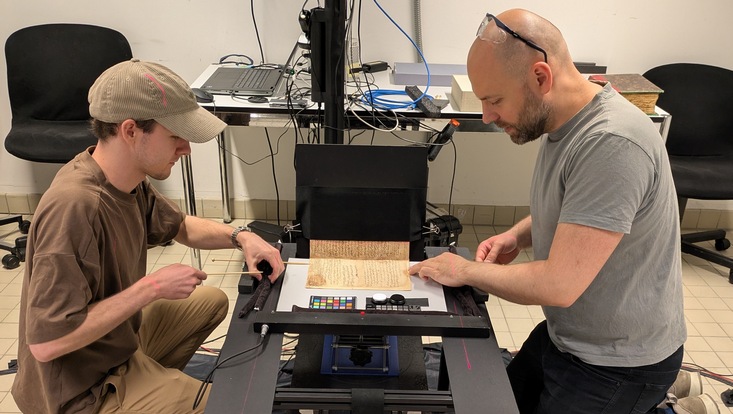
Photo: BnF/CSMC
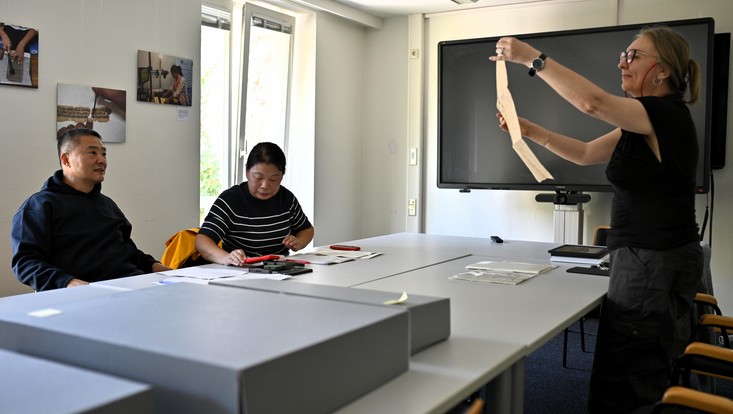
This summer, Kyle Ann Huskin and Ivan Shevchuk spent four intensive weeks as guests of the Bibliothèque nationale de France (BnF) in Paris. They led an in-depth professional workshop for the BnF’s photographers on the application of multispectral imaging (MSI).
The workshop covered both technical aspects of image capture and practical exercises involving different materials and object conditions. ‘The BnF will have excellent operators in the future’, Shevchuk concluded. At the same time, the new method attracted considerable interest within the institution: several visitor groups, as well as around 15 conservators, took part in demonstrations, during which the relevance of MSI data for conservation decisions was particularly emphasised.
Alongside the workshop, Huskin and Shevchuk carried out extensive imaging campaigns. In total, multispectral images of 37 manuscripts were produced, both for the BnF and for research projects at the CSMC. The focus was on selected pages, especially palimpsests, whose hidden text layers can be made visible through MSI. The work had been carefully planned in advance together with Alexandre Tur (BnF), including a screening of the holdings and the prioritisation of the objects.
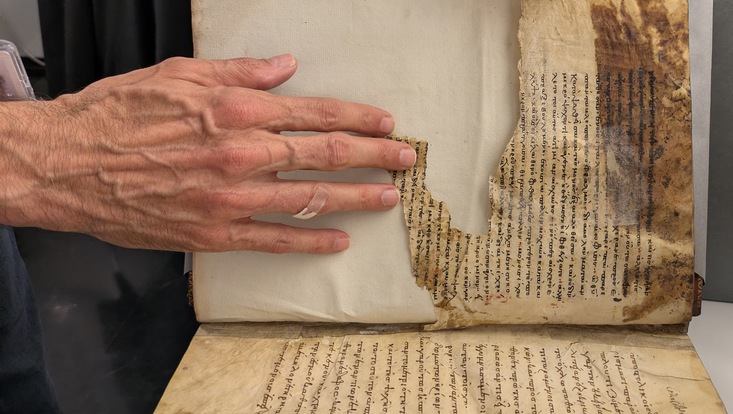
Photo: BnF/CSMC
MSI workshop, 11 June – 10 July 2026
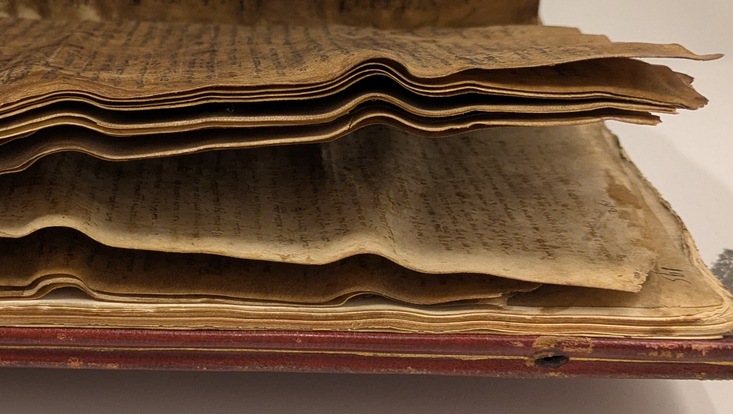
Photo: BnF/CSMC
MSI workshop, 11 June – 10 July 2026
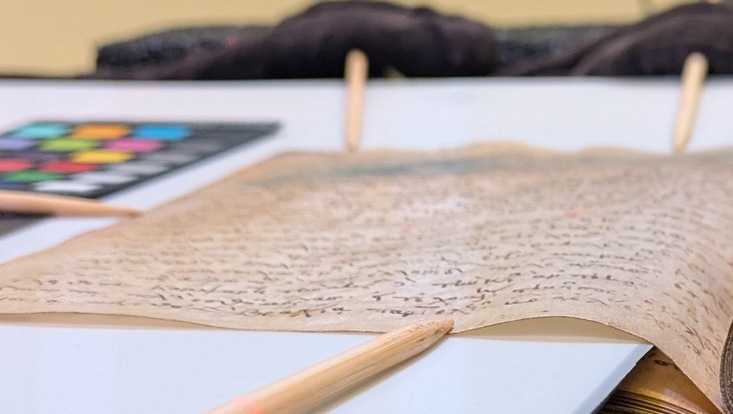
Photo: BnF/CSMC
MSI workshop, 11 June – 10 July 2026
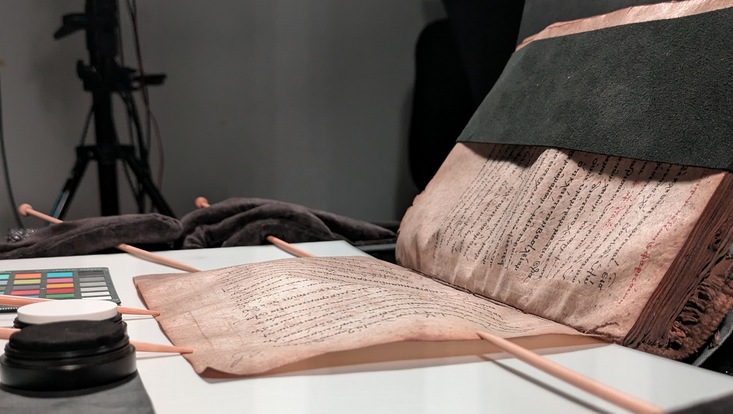
Photo: BnF/CSMC
MSI workshop, 11 June – 10 July 2026
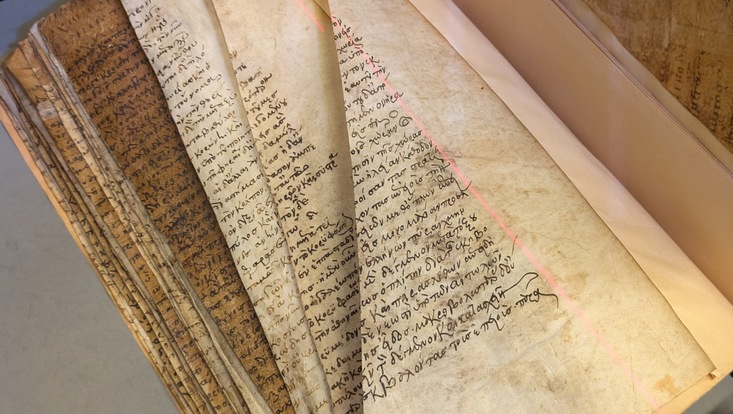
Photo: BnF/CSMC
MSI workshop, 11 June – 10 July 2026
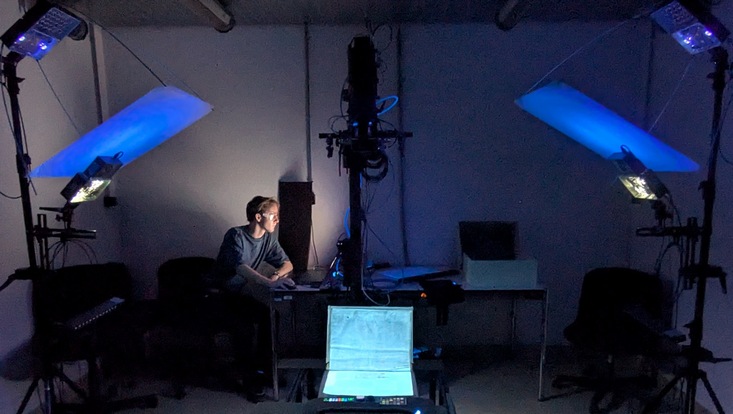
Photo: BnF/CSMC
MSI workshop, 11 June – 10 July 2026
The diversity and condition of the materials posed particular challenges for the team. ‘In my ten years at the CSMC, this was an absolutely unique experience. Normally, I only work on one or two manuscripts per trip. Now there were many, and they were completely different’, says Shevchuk. ‘We had to constantly adapt the MSI camera to new objects. Sometimes it was very bright, highly reflective paper; sometimes dark and wavy parchment, so all the settings had to be changed. Such a conversion can take two to three hours.’
The project was also closely embedded in an international network. On site, Huskin and Shevchuk worked with Gilles Kagan from the Institut de recherche et d’histoire des textes (IHRT) and Owen Milewski (CNRS, ERC project ‘PALAI’). In addition, Shevchuk presented current CSMC research in a lecture at the IHRT, particularly on Manichaean papyri and the use of artificial intelligence in manuscript analysis.
In total, around four terabytes of image data were generated during the stay. These will be further processed in Hamburg in the autumn in a two-week processing session together with the BnF photographers. In the longer term, a joint best-practice protocol for MSI is also planned, to be developed in cooperation between the CSMC, CNRS, and the BnF by the end of the year.