
CSMC
CSMCCentre for the Study of Manuscript Cultures
Photo: Karsten Helmholz
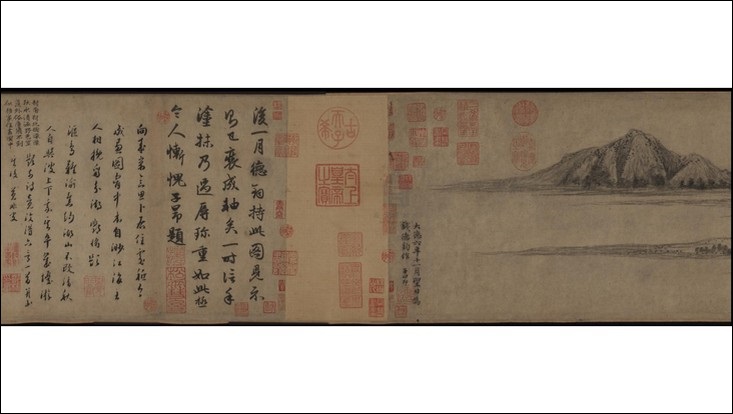
Photo: Palace Museum, Beijing
In the twelth century, in a dramatic shift away from earlier conventions, Chinese literati (文人 wenren) began to write colophons (題跋 tiba) on paintings. Over time, the complexity and nature of these colophons grew and developed into an established practice, binding together the Confucian elite.
The project investigates a corpus of ca. twenty-five select artefacts, covering a time span of over eight hundred years, to systematically study how colophon writing worked, identify patterns and compare these regarding their physical characteristics (format, writing/painting support, mounting and re-mounting, cutting off sections, etc.), the visual organisation of colophons (type of script, placement and order of colophons, position of seals, frontispiece, ruled-line textual units, use of boarder strips, etc.), and textual contents (poems, situational and explanatory notes, laudatory moral texts, historical comments, etc.). Furthermore, the precise role of the various agents (commissioner, painter, calligrapher, mounter, collector, etc.) involved in the production process of these artefacts are closely examined.
This systematic study of colophons written on literati paintings is of immense help to understand these written artefacts in the context of their production, allow to identify copies, and even track down forgeries. It is the aim of this project to identify, describe and interpret strategies colophon writers employed to negotiate social status.
Project Lead