
Polychromy and Sacred Goldsmith Art
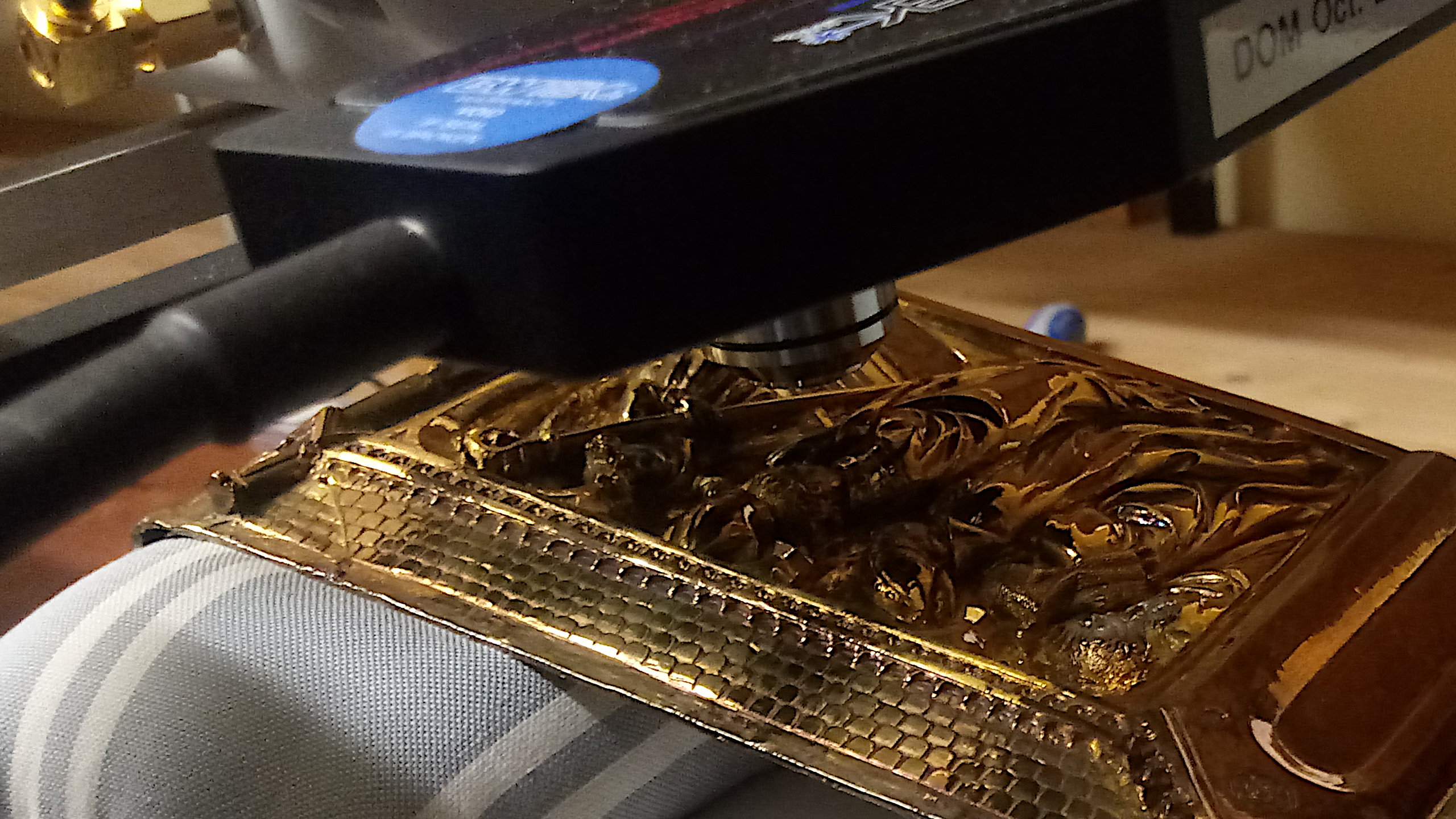
The project, initiated by the MK&G in collaboration with the CSMC’s Mobile Lab, focused on the investigation of previously unanalysed traces of paint on two important late medieval reliquaries from the museum’s collection. These included a silver figure of John the Evangelist (c. 1510) serving as a reliquary on an evangeliary binding, as well as eight silver-gilt relief plaques (dated 1403) from the lost reliquary bust of Saint Servatius in Maastricht.
Combining art historical research with advanced scientific analysis, the project applied non-invasive methods such as X-ray fluorescence (XRF) and Raman spectroscopy to identify microscopic pigment residues. For the first time, it was possible to confirm the use of traditional pigments such as lead white and cinnabar (vermilion) on both objects. These pigments were primarily used to render the so-called “incarnate” areas—faces, hands, and other visible skin parts—as well as details such as lips and attributes.
The results demonstrate that medieval goldsmith works were not purely metallic in appearance, as often assumed today, but originally featured deliberate and meaningful partial polychromy. This coloration created a striking visual contrast between the shimmering gold surfaces—symbolizing the divine—and the lifelike flesh tones, which enhanced the perceived presence and immediacy of the depicted saints.
In addition to the material analysis, the project examined the art historical and devotional significance of this practice. The findings suggest that the selective application of color played a crucial role in intensifying the realism and spiritual efficacy of reliquaries, reinforcing the perception of saints as physically present and accessible to the faithful.
By combining scientific and humanities-based approaches, the project provides important new insights into the original appearance, function, and perception of medieval metalwork. The studied objects now serve as key reference examples for future research on polychromy in goldsmith art.
More
Project coordination: Sebastian Bosch
Cooperation partners:
- Christine Kitzlinger (MK&G)
- Patricia Rohde-Hehr (MK&G)
Further information: