The CSMC in the Media
The work of our researchers is featured regularly in various regional, national, and international media outlets. This page showcases a selection of articles, videos, and audio clips covering some of our most widely reported topics.
X-Ray Specs for the World’s Oldest, Sealed Letters

Photo: Andreas Schropp
New York Times, June 2026
Developed by CSMC and DESY researchers, ENCI is the first mobile CT scanner for cultural heritage objects. Our cross-disciplinary team consisting of Assyriologists, Physicists, and computer scientists uses it to looked inside 4.000-year-old Mesopotamoan letters, as the New York Times reports in this article.
Read the article ($)Archaeologists Find Egyptian Mummy Buried With the ‘Iliad’

Photo: Leah Mascia
New York Times, May 2026
It is a spectecular discovery: at the archaeological site of Oxyrhynchus in Egypt, a sealed papyrus containing part of Homer’s Iliad, Book II — the famous ‘Catalogue of Ships’ — was found on a mummified individual who likely died in the first or second century CE. CSMC alumna Leah Mascia, alongside an interdisciplinary team of specialists, identified and read the text.
Read the article ($)Terra X: Magische Zeichen

Photo: ZDF
ZDF, February 2026
With the help of advanced technological methods, researcher today are able to decipher written artefacts that have kept their mysteries for centuries and millennia. An episode of the science show Terra X deals with some of the most striking cases, featuring the work of the CSMC’s Mobile Lab and our ENCI team (in German).
Watch the videoGemeinsam hüpfen Hirne höher

Photo: CSMC
DIE ZEIT, October 2025
With the CSMC, Hamburg has a uniquely interdisciplinary research hub for the study of written artefacts. On the occasion of the start of the Cluster's second funding phase, DIE ZEIT reported on the distinctive approach of the CSMC and other Clusters of Excellence in Hamburg (in German).
Read the article ($)3.000 Jahre Aufgeschriebenes

Photo: CSMC
taz, September 2025
'Sites of Knowledge' is the name of a series in the taz newspaper that takes readers to innovative venues in the world of research. To mark the successful renewal of its Cluster of Excellence Understanding Written Artefacts, the CSMC opened its doors for the series in autumn 2025 (in German).
Read the article ($)A Deeper Picture of Written Artefacts

Photo: Chekib Mahjoub
EU Research, December 2024
In its winter 2024/2025 issue, the EU Research magazine provided a comprehensive introduction to the research at the CSMC and its Cluster of Excellence UWA, featuring also our affiliated ERC project on the development of literacy in the Caucasian territories.
Read the article‘Man kommt immer auf Neues’
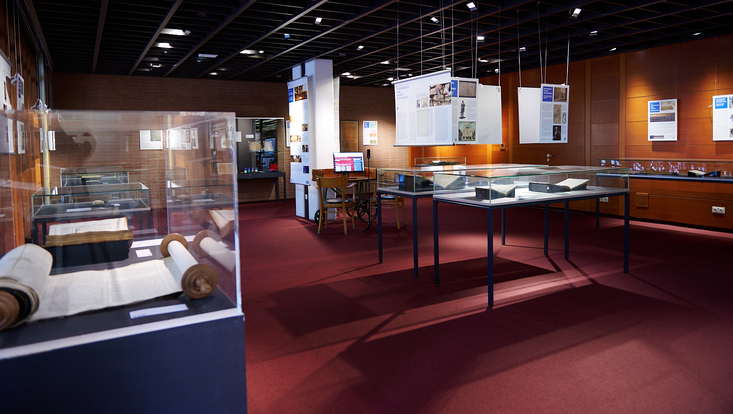
Photo: Karsten Helmholz
taz, September 2023
From summer to autumn 2023, the CSMC and the Hamburg State and University Library (SUB) exhibited extraordinary objects from the SUB’s collection that had been researched by CSMC experts: a window through which the diversity of research into writing from antiquity to the present day became visible. In an interview with the ‘taz’, curator and CSMC co-spokesperson Kaja Harter spoke about the exhibition (in German).
Read the article ($)Kunst oder Kritzelei? Warum Graffiti jetzt zur Wissenschaft werden

Photo: Karsten Helmholz
Hamburger Morgenpost, June 2023
In collaboration with the graffiti history project ‘EINE STADT WIRD BUNT’, the CSMC brought the TAG Conference – the largest academic conference on contemporary graffiti culture – to Hamburg in the summer of 2023. The ‘Hamburger Morgenpost’ reported on the evolution of graffiti in public spaces, from a subculture to a subject of academic research (in German).
Read the article ($)A Container Lab for Written Artefacts
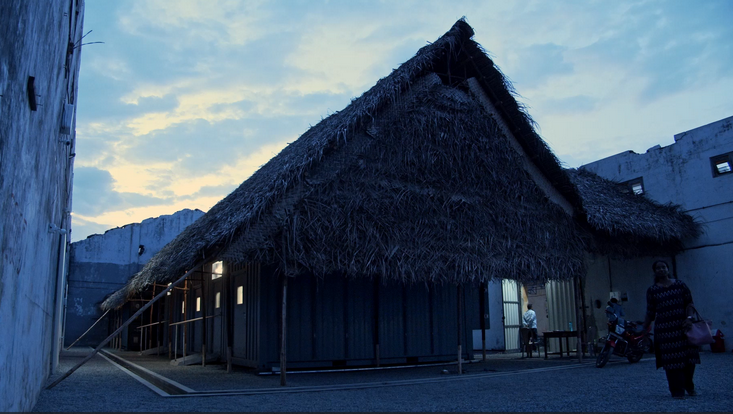
Photo: CSMC
Deutschlandfunk, May 2022
It is not the written artefacts that should be brought to the laboratory, but the laboratory that should be brought to the written artefacts – to put this approach into practice, the CSMC has developed a Container Lab that can be deployed anywhere in the world. Right after its completion, project leader Markus Fischer gave an interview on the science programme ‘Fazit’ on Deutschlandfunk (in German).
Listen to the interview