
J.P. Gumbert Fellows
Dr Jake Benson (August 2026 – October 2026)
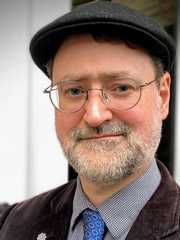
A desire to study Arabic as a teenager led me to study the language at the American University of Cairo. The exposure to historical manuscripts in the city and a chance meeting with a Cairene bookbinder inspired me to learn more about the history of the book and its related trades.
I began my career as an apprentice printer then worked as an offset pressman at Cornell University in Ithaca, NY. During that time, I also studied letterpress printing with a university rare books librarian and also bookbinding with both a local bookbinder and a university library conservator. The work experience and training inspired me to attend Boston's North Bennet Street School 2-year bookbinding programme. My interest in the art of marbled papers preceded my training as a bookbinder and inspired a desire to learn more. After much trial and error, I started producing papers with my own hand-made paints and tools. At the same time, it also inspired me to understand the history of that art, so I visited Turkey to learn more.
Years later, upon learning of Persian sources concerning paper marbling, I studied that language at the University of Maryland, College Park, where I completed a baccalaureate and post-graduate certificate.
From 2012 to 2016, I worked as both curator and senior conservator on a privately funded projet assiting the Dar al-Kutub, the National Library of Egypt, with the preservation, catalouging, and exhibition of their manuscript collections.
In 2016, I commenced an external doctoral candidacy at Leiden University. My dissertation, "The Advent of Abrī: The First Wave of Paper Marbling ca. 1496–1615" which critically examines surviving physical evidence for the art. During that time, I recevied fellowships from the American Insittute for Iranian Studies, Arthur J. Houghton Library at Harvard University, Getty Research Institute, Metropolitan Museum of Art, and Aga Khan Museum, among others.
In 2022–2023, the John Rylands Library, University of Manchester employed me to catalogue their Persian manuscripts, which I continue to assist them with, part-time, courtesy of support from the Soudavar Memorial Foundation. I contribute TEI metadata to both FIHRIST, the UK-based union catalogue for Islamicate manuscripts, and to display alongside digital images in Manchester Digital collections. In addition, I currently freelance for the European Research Council-funded GlobalDecoPaper Project, directed by Prof. Dr. Ilse Sturkenboom at Ludwig Maximilian University, Munich. That project investigates the production and application of decorated papers in pre-modern manuscripts from China to Europe.
|
Dr Benson about his work at CSMC: During my Gumbert Fellowship in Hamburg, I plan to visit several German repositories to examine sixteenth- to early seventeenth-century stammbuchen or alba amicorum, early autographed armorials containing datable decorated papers on behalf of GlobalDecoPaper. I am also finishing my first edited monograph entitled Fluid Flows and Tinted Tracings: Sources on Paper Marbling and Stenciling from East Asia, the Islamic World, and Europe, ca. 996–1960, which compiles thirty-one texts in twelve languages, translated in parallel format. If all goes well, I will submit it to the CSMC series Studies in Manuscript Cultures for publication, open access. . |
Dr Daria Kohler (June 2024 – July 2024)
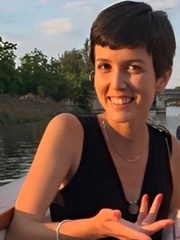
Daria Kohler is a postdoctoral researcher and research manager at the KU Leuven in Belgium. She received her doctorate in Greek and Latin Languages and Literature from the University of Oxford (2022), with the thesis ‘Publication’, papyri, and literary texts: process and presentation. The thesis is a study of the phenomenon of literary publication between 4th century BC and 2nd century AD in Greek and Roman world and combines a reinterpretation of the literary evidence with insights about the materiality of book production, as well as case studies and statistics from Greek and Latin papyri. The thesis was selected for a J.P. Gumbert Dissertation Award (2023).
Together with Prof. Daniel Wakelin (Oxford), Dr Kohler co-edited a Cambridge Element drawing together short essays and case-studies on ‘publication’ in different times and writing cultures by ten contributors. The book, titled Unprinted: Publication Beyond the Press, is due to be published in 2024.
|
Dr Kohler about her work at CSMC: My current book project is a monograph that grows out of my doctoral thesis, on publishing in the Greek and Roman world. During my stay at CSMC, I plan focus on two chapters that deal with the materiality of Ancient Greek and Roman books and their production, which I hope to be able to enrich with comparative material from other writing cultures. I am particularly interested in the materiality of paratexts and in the role of production process for the literary representation of a book. I also look forward to learning about other scholars’ work at CSMC and to attend various events here in Hamburg. |
Dr Jeremiah Coogan (June 2023 – August 2023)
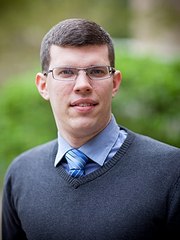
Jeremiah Coogan is Assistant Professor of New Testament at the Jesuit School of Theology. As a historian of the Roman Mediterranean with a particular focus on early Christianity, Dr Coogan interrogates histories of books, reading, and knowledge. His first book, Eusebius the Evangelist (Oxford University Press, 2023) demonstrates how the fourth-century scholar Eusebius of Caesarea used emerging technologies to create new possibilities for encountering the Gospels according to Matthew, Mark, Luke, and John. For over a thousand years, the “Eusebian apparatus” shaped Gospel reading in the Middle East, North Africa, Central Asia, and Europe. This neglected history is central to the formation of the New Testament and to the ongoing reception of Gospel literature. The book has been awarded the CSMC’s J. P. Gumbert Dissertation Award, as well as the Manfred Lautenschlaeger Award for Theological Promise (Heidelberg) and the Alexander-Böhlig-Preis (Berlin). Dr Coogan is co-editor with Candida Moss and Joseph Howley of the forthcoming volume Writing, Enslavement, and Power in the Roman Mediterranean (Oxford University Press), which explores the multifaceted intersections between enslavement and Roman textuality. He has also published numerous articles and essays on Gospel literature, enslavement, and the history of the book. Dr Coogan earned his PhD in Christianity and Judaism in Antiquity from the University of Notre Dame (2020). From 2020 to 2022, he was a Marie Skłodowska-Curie Fellow in the Faculty of Theology and Religion at the University of Oxford.
|
Dr Coogan about his work at CSMC: During my time at the CSMC, I will continue my work on a facing-page annotated edition and English translation of early Gospel prefaces in Greek, Latin, Syriac, Armenian, and Ethiopic. Appearing in manuscripts from across the Mediterranean world, Europe, and the Middle East, these paratexts offer important evidence for late ancient Christian reading, pedagogy, and scholarship. By bringing together primary sources are hard to access or are poorly studied, the resulting volume will serve as a resource for scholars and research students, reintegrating a largely neglected corpus of texts into the study of Gospel reception, early Christian theology, and late ancient pedagogy. While taking into account prior editions when they exist, the project is based primarily on a fresh survey of the manuscript evidence. Many of these texts have not been translated into English; roughly half lack a scholarly edition or a translation into any modern language. The collection of texts will be accompanied by a substantial contextual and methodological introduction. Because the CSMC assembles experts working in a wide range of languages and book cultures—including scholars specializing in each of the relevant languages for my project, as well as experts in other paratextual and pedagogical manuscript practices—it offers an ideal context for my work on this project. |