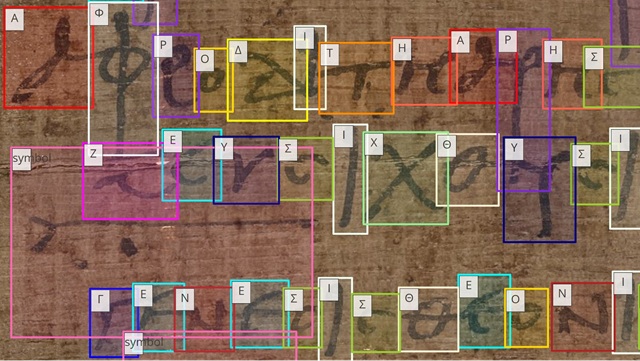
Description
Computational paleography is an emerging field investigating new computational approaches applied on ancient documents. Paleography, understood as the study of ancient writing systems (scripts and their components) as well as their material (characteristics of the physical inscribed objects), can benefit greatly from recent technological advances in computer vision and instrumental analytics. Computational paleography, being truly interdisciplinary, creates opportunities for experts from different research fields to meet, discuss, and exchange ideas. Collaborations between manuscript specialists in the humanities rarely overcome the chronological and geographical boundaries of each discipline. However, when it comes to applying optical, chemical, or computational analysis, these boundaries are often no longer relevant. On the other hand, computer scientists are keen to confront their methodologies with actual research questions based on solid data. Natural scientists working either on the physical properties of the written artefacts or on the production of their digital “avatar” are the third link in this chain of knowledge. In many cases, only a collaboration between experts from these three communities can yield significant results.
In this full-day workshop, we aim to bring together specialists from the different research fields analysing handwritten scripts on ancient artefacts. It targets computer scientists, natural scientists and humanists involved in the study of ancient scripts. Our goal is to offer room to present achieved results as well as starting or ongoing projects and to create the adequate conditions for in-depth discussions. By fostering discussion between these communities, it facilitates future interdisciplinary collaborations that tackle actual research questions on ancient manuscripts which in turn contribute to a wider understanding and accessibility of these major cultural heritage treasures for the society.
The workshop is planned for a full day with oral presentations, lively discussions and tour at the National Library to see the papyrus and manuscript collections. Submissions are of two kinds: full research papers and extended abstracts, see Submission.
If you have any question about the workshop, please send an email to Dr Isabelle Marthot-Santaniello( i.marthot-santaniello"AT"unibas.ch) and Dr Hussein Mohammed( hussein.adnan.mohammed"AT"uni-hamburg.de).
Topics of Interest
We invite contributions on (but not limited to) the following topics, with a focus on ancient and historical handwritten artefacts:
- Handwriting style analysis and classification, including writer identification and retrieval
- Hand-made pattern detection and recognition, including word spotting in historical documents
- Analysis of writing components (clustering, measurement, classification)
- Reconstruction and restoration of damaged handwriting (characters, words, or regions)
- Material analysis leading to handwriting recognition and/or visibility enhancement
- Software tools and infrastructures designed for paleographic research
- NLP applied directly to digitized images (rather than pre-existing transcriptions)
and NLP methods that enhance the understanding of written elements
- Virtual Research Environments, Virtual Libraries and annotated corpora supporting paleographical research (e.g. IIIF-based)
For work on historical documents in general that are not focusing on handwriting or paleography, we recommend you have a look at 8th International Workshop on Historical Document Imaging and Processing (HIP'26)
Dates
Dates
Submission Deadline: May 22, 2026 May 26, 2026 AOE
Acceptance Notification: June 20, 2026 June 22, 2026
Camera Ready: June 27, 2026 June 30, 2026
Workshop: September 4, 2026